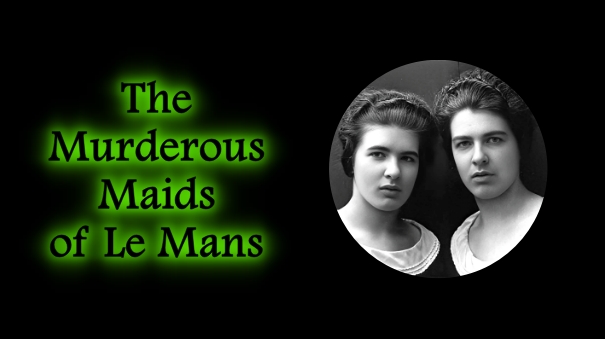
The Gruesome Story of the Papin Sisters
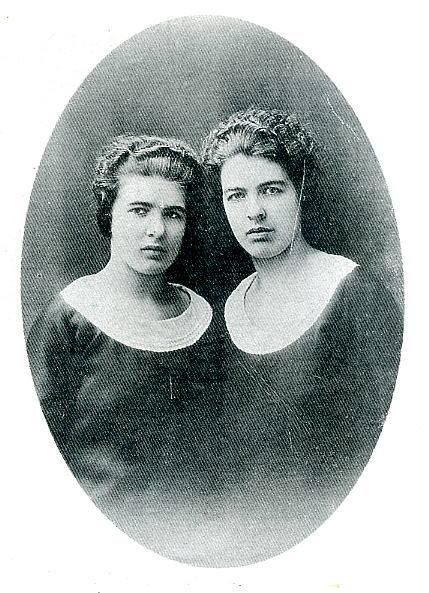
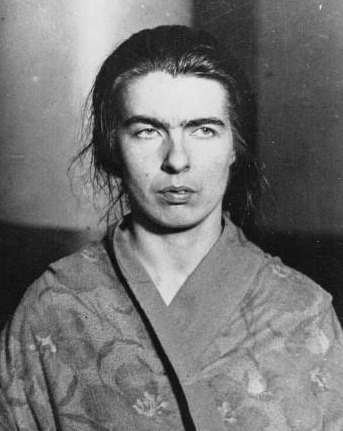
Christine Papin (March 8, 1905 – May 18, 1937)
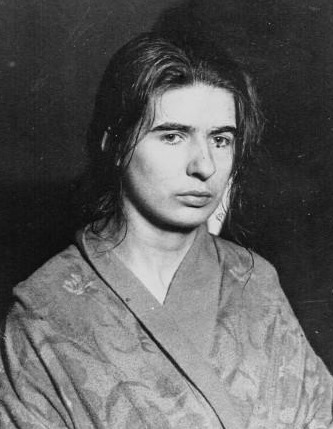
Léa Papin (September 15, 1911 – July 24, 2001 or 1982 – see below)
Christine & Léa Papin were two French sisters, live-in maids, who were convicted of murdering their employer’s wife and daughter in Le Mans, France, on February 2, 1933. The murder had a significant influence on French intellectuals Jean Genet, Jean-Paul Sartre, and Jacques Lacan, who sought to analyze it, and it was thought of by some as symbolic of class struggle. The case has formed the basis of a number of publications, plays, and films as well as essays, spoken word, songs, and artwork.
The Offense:
On the evening of Thursday, February 2, 1933, Monsieur Lancelin was supposed to meet Madame Léonie and Genevieve for dinner at the home of a family friend. Madame Léonie and Genevieve had been out shopping that day. When they returned home that afternoon there were no lights on in the house. The Papin sisters explained to Madame Lancelin that the power outage had been caused by Christine plugging in a faulty iron. Madame Lancelin became irate and began to assault the sisters on the first floor landing. Christine lunged at Genevieve and gouged her eyes out. Léa joined in the struggle and attacked Madame Lancelin, gouging her eyes out as ordered by Christine. Christine ran downstairs to the kitchen where she retrieved a knife and a hammer, bringing both weapons upstairs where the sisters continued their attack. At some point one of the sisters grabbed a heavy pewter pitcher and used it to strike both Lancelin women in the head. Experts that later responded to the scene estimated that the attack lasted about 30 minutes.
Some time later Monsieur Lancelin returned home to find the house dark. He assumed that his wife and daughter had already left for the dinner party and proceeded to the party himself. When he arrived at the home of his friend, he found that his family was not there, either. He returned to his residence with his son-in-law at approximately 6:30 – 7:00pm, where they discovered the entire house still dark except for a light in the Papin sisters’ room. The front door was bolted shut from the inside, so they were unable to enter the house. The two men found this suspicious and went to a local police station to summon help from an officer. Together with the policeman they responded to the Lancelin home where the policeman made entry into the home by climbing over the garden wall. Once inside, he found the bodies of Madame Lancelin and her daughter Genevieve. They had both been bludgeoned and stabbed to the point of being unrecognizable. Madame Lancelin’s eyes had been gouged out and were found in the folds of the scarf around her neck, while one of Genevieve’s eyes was found under her body and another on the stairs nearby. Thinking that the Papin sisters had met the same fate, the policeman continued upstairs only to find the door to the Papin sisters’ room locked. After the officer knocked but received no response, he summoned a locksmith to open the door. Inside the room he found the Papin sisters naked in bed together, while a bloody hammer, with hair still clinging to it, was on a chair nearby. Upon questioning, the sisters immediately confessed to the killing.
The Prosecution:
The sisters were placed in prison and separated from each other. Christine became extremely distressed because she could not see Léa and acted out as a result. At one point prison officials relented and allowed the two sisters to meet. Christine reportedly threw herself at Léa, unbuttoning her blouse, begging her “Please, say yes!” suggesting an incestuous sexual relationship. In July 1933, Christine experienced a “fit”, or episode, in which she tried to gouge her own eyes out and had to be put in a straitjacket. She then made a statement to the investigating magistrate, in which she said that on the day of the murders she had experienced an episode like the one she had just had in prison and this was what precipitated the murders.
The court appointed three doctors to administer psychological evaluations of the sisters to determine their mental state. They concluded that the sisters had no pathological mental disorders and deemed them sane, although medical testimony given during the September 1933 trial noted a history of mental illness in the family. Their uncle had committed suicide, while their cousin was living in an asylum. They also believed that Christine’s affection for her sister was based on family ties, not an incestuous relationship as others had suggested.
After the trial it took jurors only 40 minutes to determine that the Papin sisters were indeed guilty of the heinous crime of which they had been accused.
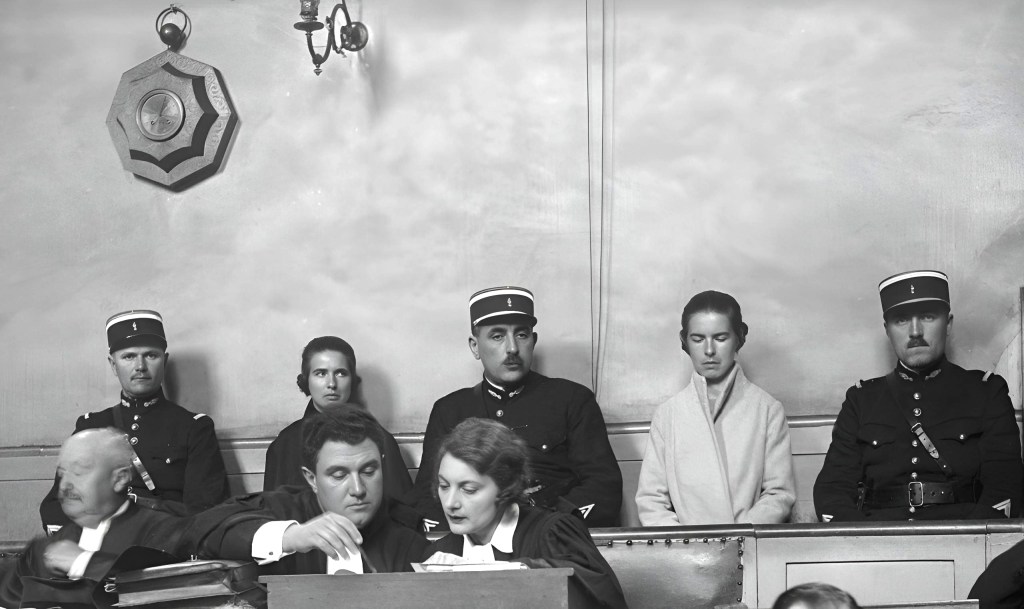
The Sentence:
Léa, thought to be under the influence of her older sister, was given a 10-year sentence. Christine, however, was not so lucky. She was initially sentenced to death at the guillotine, although that sentence was later commuted to life imprisonment. The separation from Léa proved to be too much for Christine. Her condition deteriorated rapidly once they were apart. She experienced bouts of depression and “madness”, eventually refusing to eat. Prison officials transferred her to a mental institution in Rennes, hoping that she would benefit from professional help. Still separated from Lea, she continued to starve herself until she died of cachexia (“wasting away”) on May 18, 1937.
Léa fared better than Christine, serving only 8 years of her 10-year sentence. After she was released in 1941 she lived in the town of Nantes, where she was joined by her mother. She assumed a fake identity and earned a livelihood as a hotel maid. Some accounts state that Léa passed away in 1982, but French film producer Claude Ventura claims to have discovered Léa living in a hospice center in France in 2000 while creating the film En Quête des Soeurs Papin (In Search of the Papin Sisters). The woman he claimed to be Léa had suffered a stroke which had rendered her partially paralyzed and unable to speak. This woman passed away in 2001.
Even though the sisters were deemed sane and fit to stand trial, the psychological community struggled and debated over a diagnosis for the two. After much consideration it was concluded that the sisters suffered from “Shared Paranoid Disorder”, which is believed to occur when groups or pairs of people are isolated from the world, developing paranoia, and in which one partner dominates the other. This is especially true of Léa, whose meek personality was overshadowed by obstinate and dominant Christine.
The case had a huge impact on the community and was debated furiously by the intelligentsia. Some people considered that the murders had been the result of “exploitation of the workers”, considering that the maids worked fourteen-hour days, with only half a day off each week. Intellectuals even empathized with the sister’s oppressive struggle of social classes.
 The Cool Beans
Leave a comment