Aqua Tofana (also known as Acqua Toffana, Acquetta Perugina, and Aqua Tufania and Manna di San Nicola) was a strong poison. It was reputedly widely used in Naples. The poison was also used in Perugia and Rome, Italy. During the early 17th century, Giulia Tofana, or Tofania, a woman from Palermo, ran a successful business. For over twenty years, she sold her large production of Aqua Tofana to would-be widows. She employed several helpers.
The first recorded mention of Acqua Tofana (literally meaning “Tofana water”) is from 1632–33.
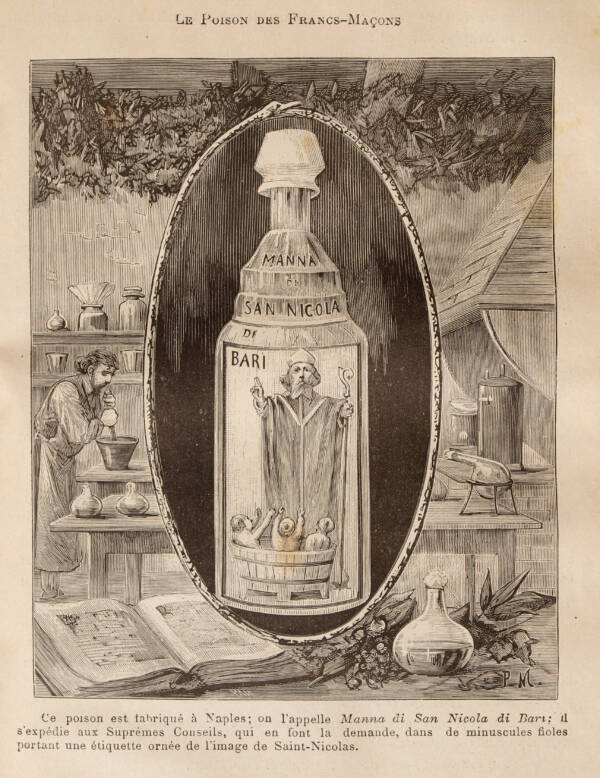
Perhaps an older recipe had been refined by Tofana and her daughter, Girolama Spera, around 1650 in Rome. The ‘tradename’ “Manna di San Nicola”, i.e. “Manna of St. Nicholas of Bari” might have been a marketing device. It was intended to divert the authorities. The poison was openly sold both as a cosmetic and a devotional object. It was available in vials that included a picture of St. Nicholas. Some of her customers claimed to have used it for its advertised purposes and caused deaths only accidentally. This poison is alleged to have caused over 600 deaths. Most victims were abusive husbands. This occurred in a time when women did not have any rights or protection.
Tofana was arrested and confessed to producing the poison, and she implicated a number of her clients, claiming that they knew what they were buying. She was executed in July 1659. There was much disquiet throughout Italy and many of her clients fled, while others were strangled in prison, and indeed many were publicly executed. Between 1666 and 1676 the Marchioness de Brinvilliers poisoned her father, two brothers, amongst others, and was executed on July 16, 1676.
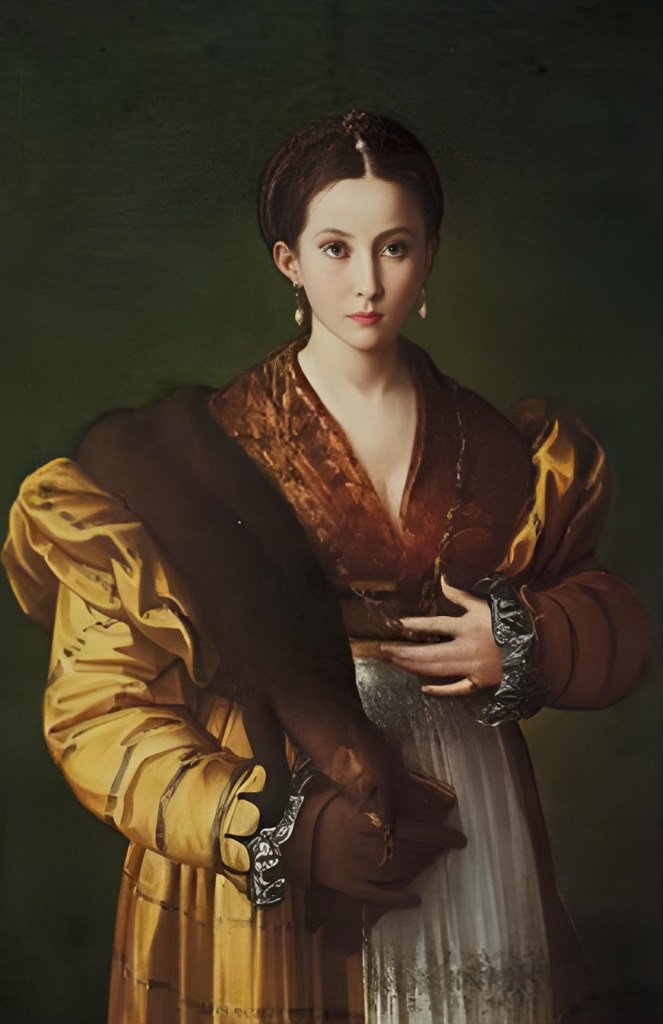
Poisoning by Aqua Tofana could go unnoticed as the substance is clear and has no taste. It is slow-acting, with symptoms resembling those of a progressive disease or other natural causes. The symptoms seen are akin to the effects of arsenic poisoning. Several symptoms were reported by those poisoned by Aqua Tofana. The first small dosage would produce cold-like symptoms. By the third dose, the victim became very ill. Symptoms included vomiting, dehydration, diarrhea, and a burning sensation in the digestive system. The antidote often given was vinegar and lemon juice. The fourth dose would kill the victim. As it was slow-acting, it allowed victims time to prepare for their death, including writing a will and repenting.
The legend that Mozart (1756—1791) was poisoned using Aqua Tofana is completely unsubstantiated. Mozart himself started this rumor. Musicologists Oliver Hahn and Claudia Maurer Zenck studied Mozart’s manuscripts. Their research revealed large amounts of arsenic in the manuscript of Die Zauberflöte. Mozart was working on this opera towards the end of his life. Arsenic is a key ingredient of Aqua Tofana.
 The Cool Beans
Leave a comment