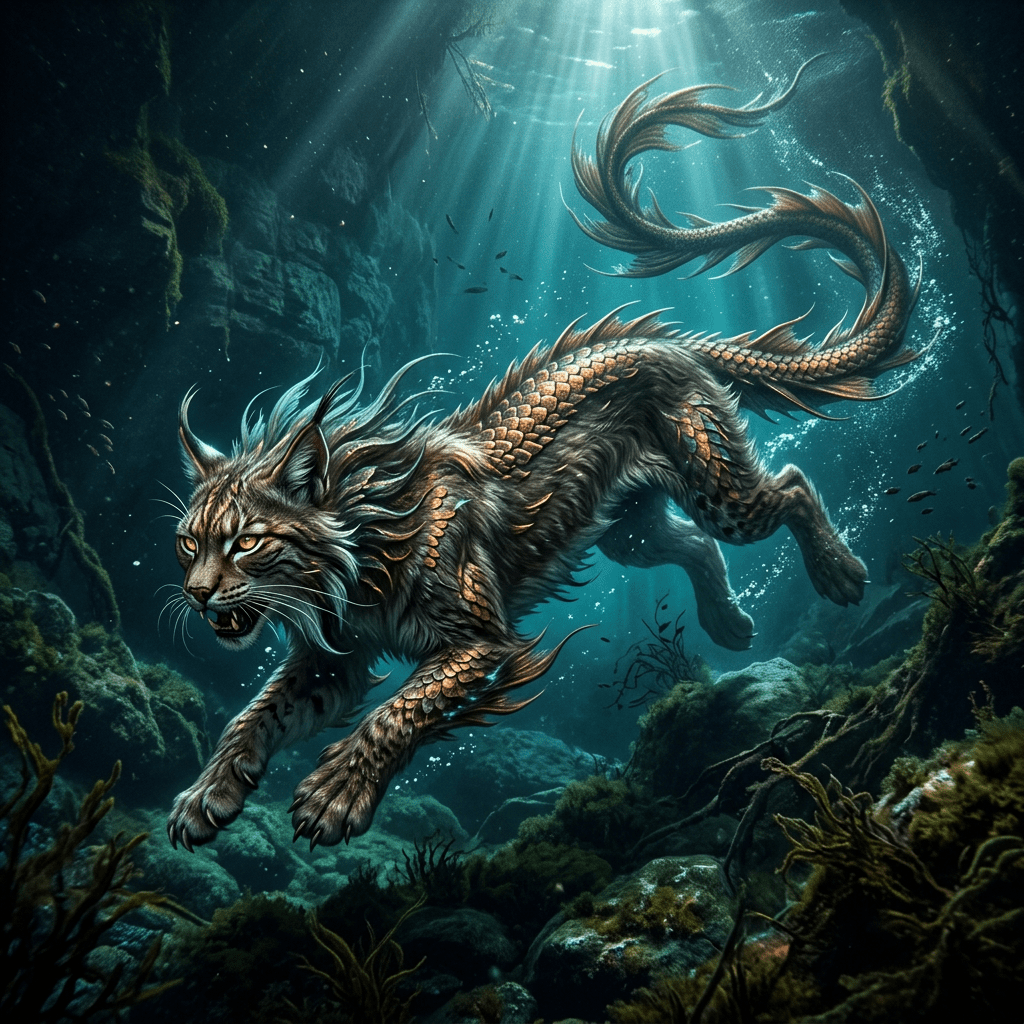
Mishipeshu, the Great Lynx or Underwater Panther, is one of the most powerful and revered figures in Anishinaabe cosmology.
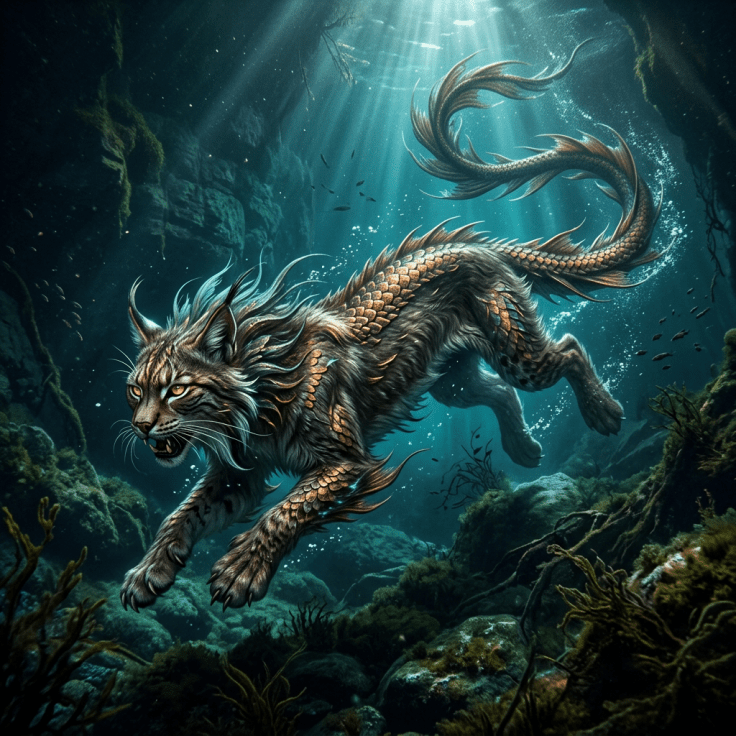
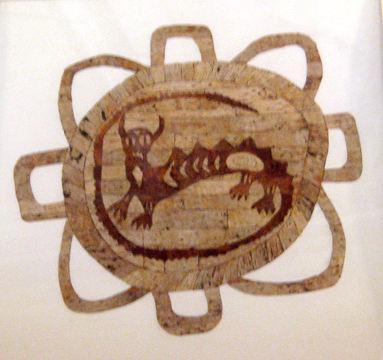
The Mishipeshu is said to have a feline body with a dragon-like face, deer-like horns, and a back covered in copper scales or sharp spikes. They have a massive, powerful tail that creates rapids and whirlpools when it strikes the water. They are often described as the guardian of the copper deposits in the Lake Superior region and viewed as the underwater rival to the Thunderbird, representing the balance between water and sky. The sharp spikes on its back and tail are often interpreted as symbols of the Lake Superior copper it guards, which was a vital resource for Indigenous trade networks. Indigenous stories warn travelers to offer tobacco before crossing the water to appease the creature and avoid being pulled under by its tail.
It is not purely “evil” but rather a volatile force of nature—dangerous to those who disrespect the water but a source of power to those it chooses to aid.
The primary home of Mishipeshu is believed to be the depths of Lake Superior, specifically around Michipicoten Island located in Ontario, Canada approximately 175 km (109 miles) northwest of Sault Ste. Marie.
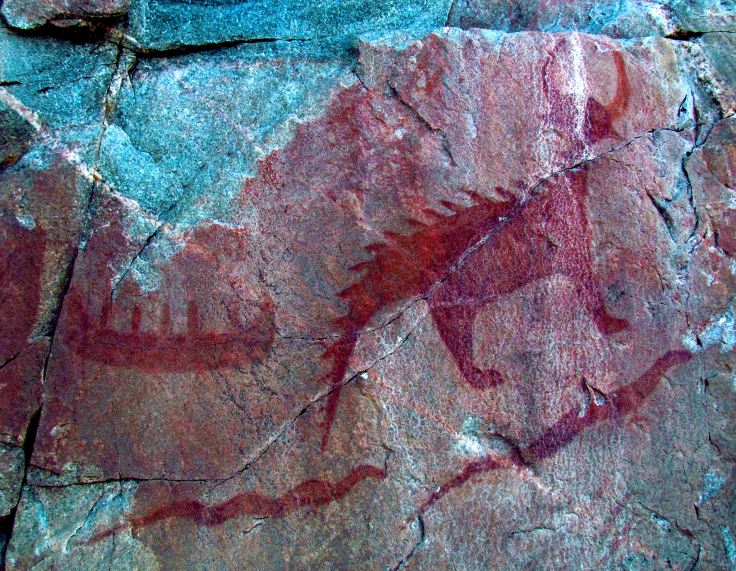
You can see a famous 17th-century pictograph of Mishipeshu at Lake Superior Provincial Park. Jesuit missionaries in the 1600s recorded Algonquin stories of a “monster” that capsized canoes, likely referring to Mishipeshu.


Leave a Reply