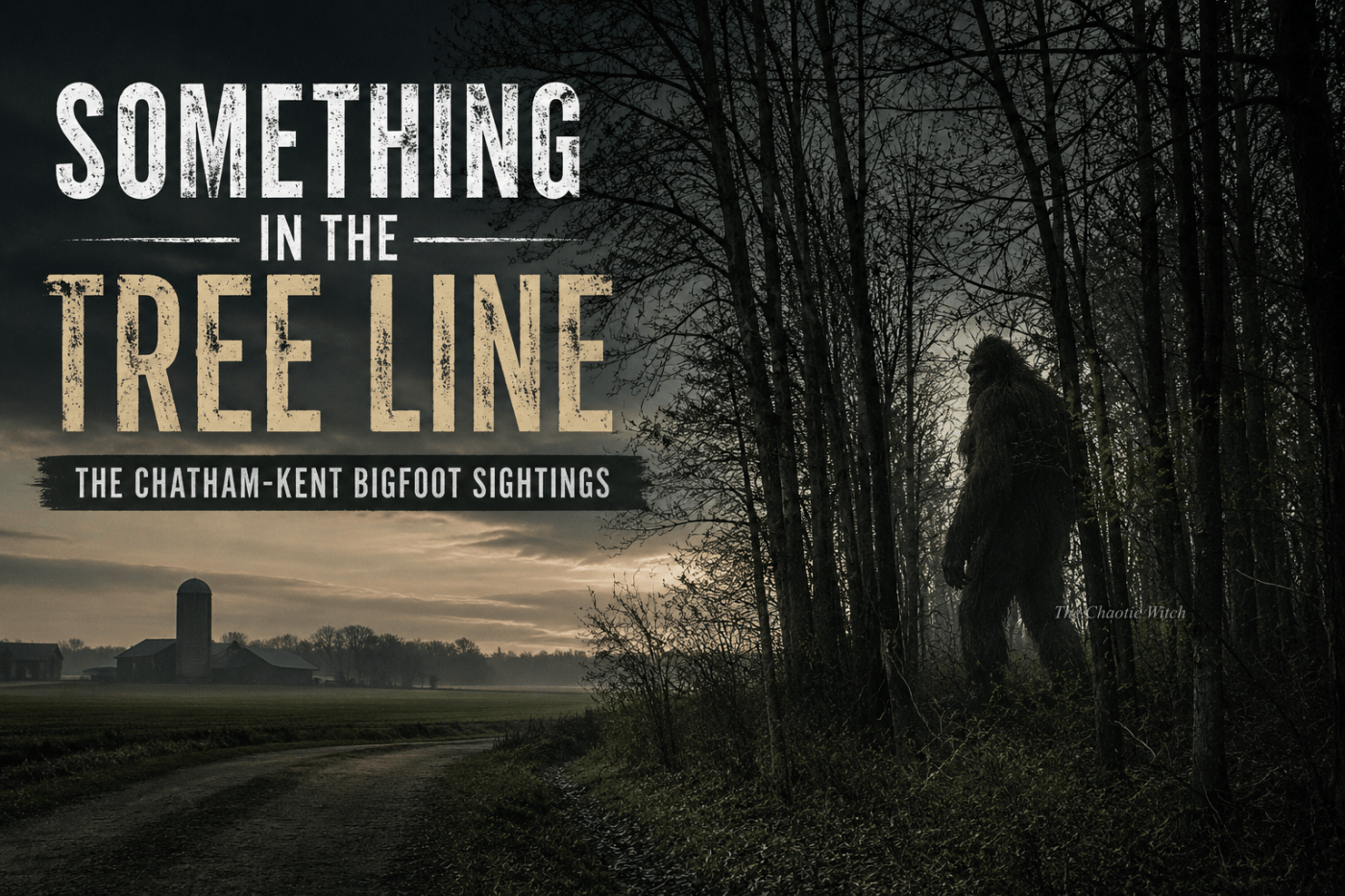
For three days in April 2026, something unusual was reportedly happening in the quiet farmland of southwestern Ontario.
The reports came from Chatham-Kent, an area better known for sprawling agricultural fields, small woodlots and communities along the Thames River than for vast stretches of wilderness. It was hardly the setting most people would imagine for a series of Bigfoot encounters.
Yet between April 3 and April 5, three separate reports emerged from the areas around Dresden, Thamesville and Raglan. Each involved witnesses who claimed to have seen an enormous upright figure covered in dark or cinnamon-coloured hair. The reports were submitted to or circulated through the Bigfoot Mapping Project and quickly began attracting attention within the cryptid community.
The first encounter reportedly happened near Dresden on the morning of April 3.
At approximately 6:15am, a commuter was travelling to work when something near the edge of a field caught their attention. Standing close to a tree line was what the witness described as a large, black, bipedal figure.
The witness estimated it was around seven feet tall.
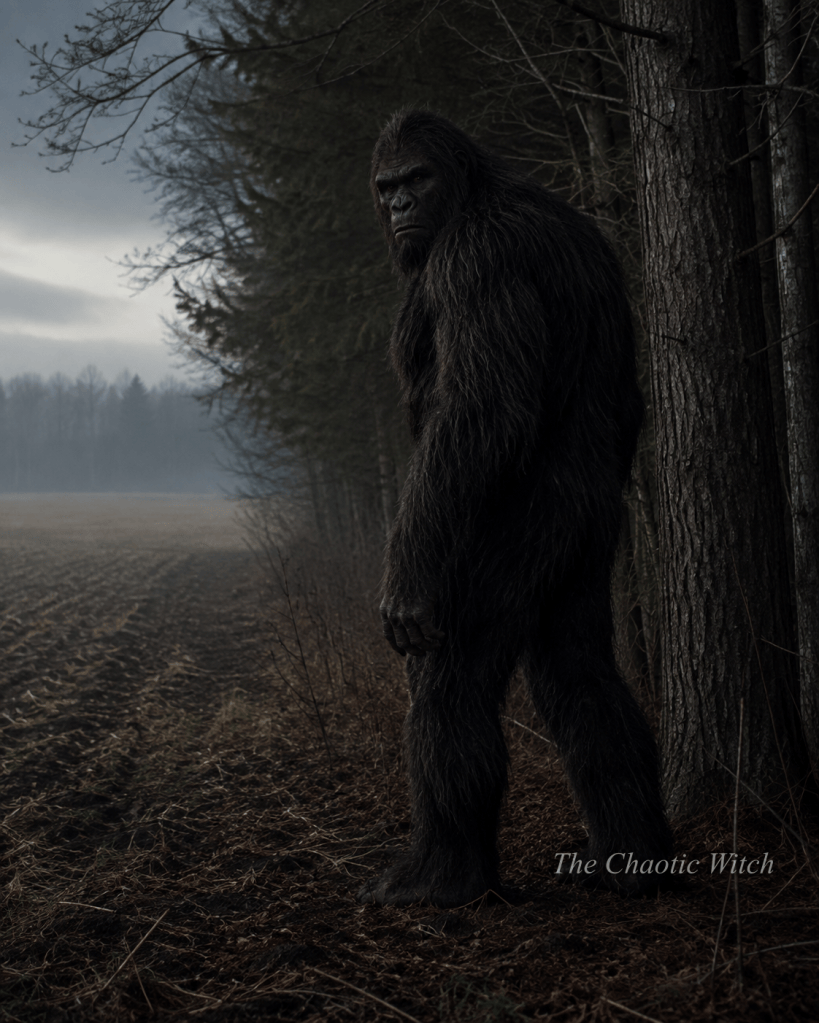
There were apparently no strange screams, wood knocks or other dramatic sounds associated with the encounter. No footprints were reported afterward. The figure was simply seen standing near the tree line as the witness passed.
If that had been the only report, it might have disappeared into the enormous collection of alleged Bigfoot sightings made throughout North America every year.
But the following afternoon, another report emerged. This one came from near Thamesville.
At approximately 4:35pm on April 4, a witness reported being near the edge of a wooded area when the surroundings suddenly seemed to change. According to the account, the birds stopped singing. The wind seemed to disappear.
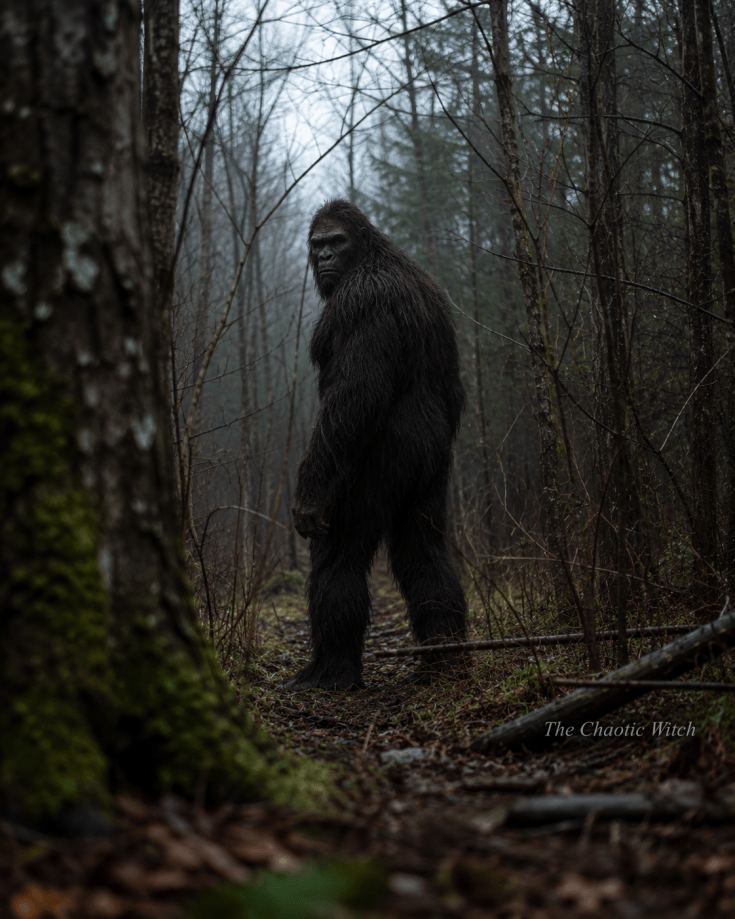
Everything became strangely quiet. Then something stepped from behind the trees. The witness described an enormous upright figure approaching eight feet in height, with broad shoulders and thick, dark hair containing a noticeable cinnamon colouring. The figure was reportedly calm rather than aggressive and appeared to move deliberately.
There was another detail the witness remembered clearly: the smell. A strong earthy odour reportedly accompanied the creature.
According to the account circulated through the Bigfoot community, the figure eventually turned and disappeared back into the wooded area. The witness also reported possible footprints and hearing wood-knocking sounds in the vicinity. None of that physical evidence has been independently verified as originating from an unknown animal.
Two alleged encounters had now occurred on consecutive days in neighbouring parts of Chatham-Kent.
Then came April 5.
At approximately 7:30 that morning, another person was reportedly walking a golden retriever in the Raglan area when the dog suddenly became interested in the nearby wood line. The dog began barking. The witness looked toward the trees and reportedly saw another enormous figure. Once again, the description was remarkably familiar: upright, covered in black hair and approximately seven feet tall.
Three days. Three reports. Three nearby areas.
And each witness was describing something that, at least superficially, sounded remarkably similar. The reports quickly gained attention from Bigfoot researchers. Scott Tompkins, creator of the Bigfoot Mapping Project, compared the sudden concentration of Chatham-Kent reports to another group of alleged Sasquatch encounters that had recently been reported in Ohio. He remarked on how unusual it was to see reports appearing with this kind of frequency over such a short period.
As the story spread, another particularly strange account became associated with the Chatham-Kent sightings.
In that story, a witness reportedly encountered not one creature but two.
The pair were described as different sizes, with one reportedly having more obvious cinnamon colouring. They were allegedly seen scavenging around garbage. Once again, the witness described an unpleasant earthy smell.
Then came the strangest part. The witness reportedly struck wood in an attempt to frighten the creatures away. Something knocked back.
That detail quickly became one of the most memorable parts of the Chatham-Kent story, particularly because wood knocking has long been associated with Sasquatch lore. However, some of these details circulated through secondary retellings after the original reports began receiving attention, so they should not automatically be treated as independently verified elements of the three initial encounters. Later reporting did describe witnesses claiming both an earthy smell and unexplained knocking sounds.
And despite the similarities between the reports, there was a significant problem with the idea that an enormous unidentified primate was wandering through Chatham-Kent.
This wasn’t remote wilderness.
Chatham-Kent is one of Ontario’s most heavily agricultural and least forested areas. Much of the landscape consists of open farmland separated by relatively small woodlots, river valleys and drainage corridors. An animal standing seven or eight feet tall would seemingly have far fewer places to remain concealed there than it would in the enormous forests of northern Ontario or British Columbia.
For believers, however, the landscape wasn’t necessarily as impossible as it appeared.
The Thames River and its associated wooded corridors run through the region, and scattered patches of forest provide cover for ordinary wildlife. Some Sasquatch enthusiasts have suggested that if such a creature existed, these corridors might allow it to travel through agricultural areas without remaining there permanently.
That is speculation, however. There is no evidence demonstrating that an unknown primate was using the Thames River corridor in April 2026.
Skeptics offered much more conventional explanations.
Carleton University philosophy professor Josh Redstone, who has taught about paranormal beliefs, suggested possibilities such as black bears or hoaxers. A black bear standing upright can look surprisingly humanlike, particularly when observed briefly or from a distance. Witnesses can also substantially overestimate an animal’s height when there is nothing nearby providing an accurate sense of scale.
There is also another possibility whenever several similar reports emerge close together.
One sighting can influence another.
Once people in an area begin hearing that someone has supposedly seen Bigfoot, unusual shapes, animals and sounds may suddenly receive much more attention. A glimpse that might ordinarily be dismissed as a bear, person or shadow can take on an entirely different meaning when Sasquatch is already being discussed throughout the community.
That doesn’t mean any of the Chatham-Kent witnesses fabricated what they reported seeing.
It simply means that three reports occurring close together are not necessarily three independent pieces of evidence proving that the same unknown creature was present.
Most importantly, no physical evidence has emerged that settles the question.
There is no body. There is no scientifically verified DNA from an unknown primate. There are no authenticated biological samples demonstrating that Sasquatch was present.
And although possible footprints and unusual sounds have been mentioned in connection with the reports, none has provided scientifically accepted evidence of an unknown animal. A later analysis of the Chatham-Kent cluster likewise concluded that the reports remain unverified witness claims rather than physical proof.
Still, something about the timing makes the story difficult to simply forget.
On April 3, someone near Dresden reportedly saw a seven-foot black figure beside a tree line.
On April 4, someone near Thamesville described an even larger cinnamon-coloured figure emerging from the woods after the surroundings became eerily quiet.
On April 5, a dog walker near Raglan reportedly spotted another seven-foot black figure near the trees.
Whether those witnesses encountered the same thing—or anything unusual at all—is impossible to determine from the evidence currently available.
Perhaps black bears were moving through the area.
Perhaps people were mistaken.
Perhaps someone was playing an elaborate joke.
Perhaps publicity surrounding the first sighting helped influence the reports that followed.
Or perhaps those witnesses genuinely saw something they couldn’t explain.
For now, the Chatham-Kent Sasquatch sightings remain exactly that: reports.
But they produced one of the stranger Canadian cryptid stories of 2026.
For three consecutive days, people in three communities in southwestern Ontario claimed that enormous, dark-haired figures were appearing along the edges of the trees.
And perhaps the strangest part wasn’t what they supposedly saw.
It was where they saw it.
If Sasquatch is supposed to hide in Canada’s deepest wilderness, then for one peculiar weekend in April 2026, it apparently chose to wander through the farm country of Chatham-Kent instead.
A little magic is always waiting. Subscribe and step inside the circle. 🖤🔮✨


Leave a comment