The Final Chapter: The Last Second of Forever
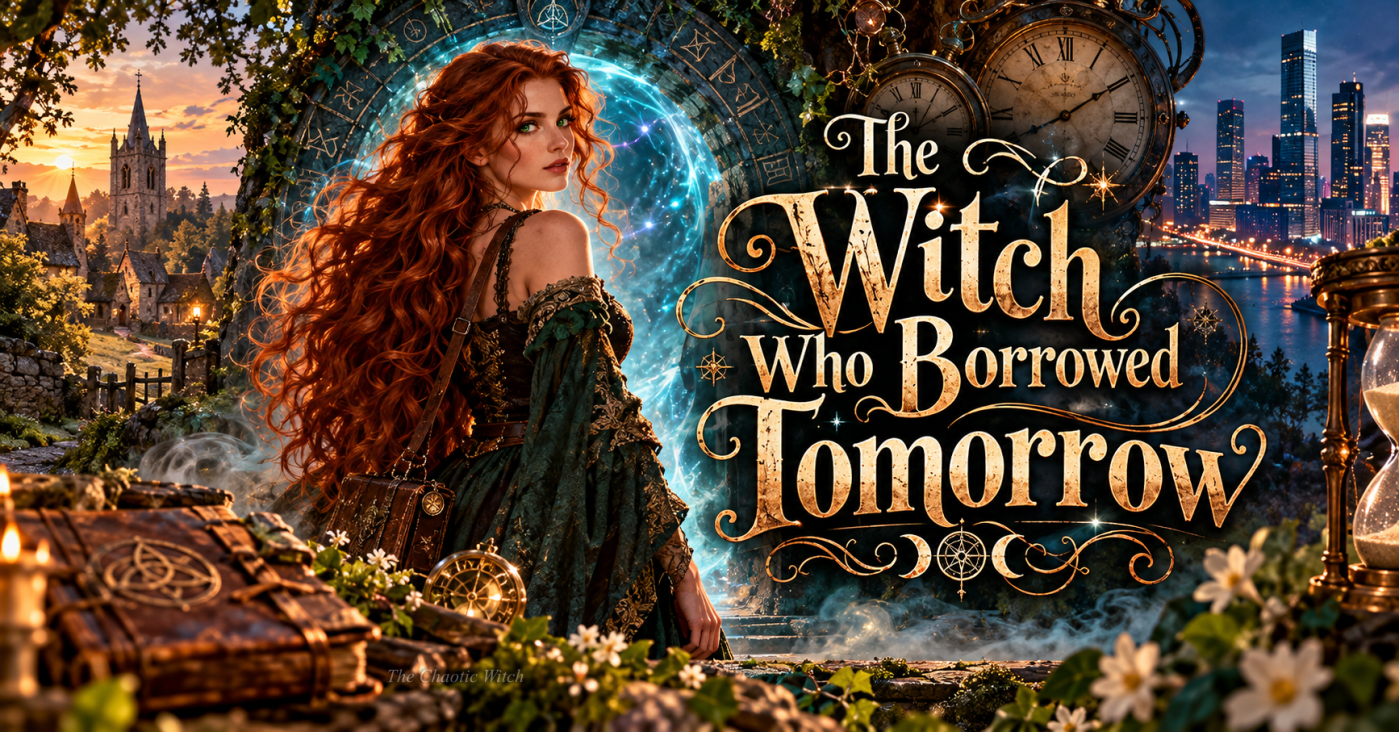
Isolde Ashbourne had lived through more than four centuries of history, yet nothing in all her travels had prepared her for the extraordinary cruelty of falling in love with someone she had already lost. When she first met Lucian in the summer of 1743, she knew him only as the handsome stranger standing beside a stream with a basket of apples. He had dark hair, gentle brown eyes, and a smile that made the world seem considerably less complicated than it was. What he did not know was that the tall, green-eyed woman standing before him, with her waist-length waves of fiery red hair and a silver pendant resting against her chest, had just arrived from a century he could scarcely imagine. He also did not know that she remembered loving him, or that somewhere in the tangled corridors of time, she remembered losing him.
For several weeks, Isolde remained in the village of Ravensmere, telling herself that she was merely gathering information about the mysterious portrait she had discovered in 2026. She rented a room above a bakery, helped the village healer tend to ailing children, and spent her evenings wandering the surrounding countryside. Lucian, who worked as a carpenter and possessed an almost irritating ability to appear whenever she needed assistance, soon became a familiar presence. He was not frightened by her peculiarities. When she spoke of things that had not yet been invented, he listened with amusement. When she accidentally mentioned electricity, he assumed she was referring to lightning. When she informed him that people would one day travel through the sky inside enormous metal machines, he laughed so hard that he nearly fell into a stream.
“You are either the most imaginative woman I have ever met,” Lucian told her one evening, “or the most dangerous.” Isolde smiled and replied that she was probably both. Lucian grinned, admitting that he had suspected as much. Against her better judgment, she fell in love with him. Not suddenly, as she had expected, but gradually, through hundreds of ordinary moments that somehow became extraordinary. It happened when he brought her wildflowers because he had noticed she liked them, when he repaired the broken window in her rented room without being asked, and when he sat beside her during thunderstorms because he had discovered that she enjoyed watching lightning. Most of all, it happened because he never asked her to become smaller, quieter, or less unusual to make other people comfortable.
One evening, beneath the branches of an ancient oak, Lucian asked whether she would stay in Ravensmere. Isolde looked toward the horizon, where the last light of sunset painted the fields gold, and wished with all her heart that she could promise him forever. She told him that she could not explain where she had come from, but he assured her that she did not have to. When she confessed that she could not promise she would always be there, Lucian asked her to promise something else instead. He wanted her to promise that whatever time they had together, they would not waste it worrying about the time they did not have.
Isolde felt tears gather in her eyes. She had travelled through centuries, witnessed wonders beyond imagination, and learned secrets that would have driven kings to madness. Yet this ordinary man, who knew nothing of enchanted doorways or the creatures lurking between seconds, had somehow understood the one truth she had spent years trying to grasp. She kissed him beneath the oak tree, and for the first time since leaving 1617, the ticking inside her bones fell silent.
For three beautiful years, Isolde allowed herself to believe she had escaped the demands of time. She and Lucian married in a little stone church surrounded by wildflowers. They built a cottage near the forest, planted apple trees beside the garden, and filled their home with books, laughter, and the comforting disorder of two people who had discovered they were happiest together. Isolde continued practising her magic, although she took care to keep it hidden from those who might misunderstand. She healed injured animals, helped struggling crops flourish, and occasionally persuaded the rain to wait until Lucian had finished repairing the roof. Lucian knew that his wife possessed abilities he could not explain, but he never pressed her for answers. He simply accepted that she was extraordinary and considered himself fortunate that she had chosen to share her life with him.
Then, in the autumn of 1746, the clocks began ticking again. It happened shortly after midnight. Isolde awoke to a sound she had hoped never to hear again: the terrible, relentless ticking that seemed to come from inside her bones. The silver pendant around her neck burned against her skin, and when she opened her grandmother’s book, words appeared across the parchment. The message warned that the borrowed years were ending and that the Collector had found the thread. Isolde understood immediately. Time had not forgotten her. It had merely been waiting.
The following morning, Lucian discovered her sitting at the kitchen table, surrounded by candles and ancient books. She had not slept, and her green eyes were shadowed with exhaustion. When he asked what troubled her, she finally told him everything. She told him about her birth in 1590, her grandmother’s warning, the door beneath the roots, and the impossible journey that had carried her into the twenty-first century. She explained the Keepers, the Collectors, and the terrible price she paid whenever she crossed from one century into another. She also confessed that somewhere in her future, she remembered losing him.
Lucian listened without interruption. When she finished, he remained silent for so long that she feared she had destroyed everything between them. Finally, he reached across the table and took her hand. “Well,” he said, “that explains why you knew about the steam engine before anyone else.” Isolde stared at him and insisted that she was being serious. Lucian assured her that he was serious too, adding that it had been a remarkably suspicious prediction. Despite herself, she laughed. Then his expression softened, and he told her that whatever she was and wherever she had been, she was still the woman he had married. If something was coming for her, it would have to contend with both of them.
Isolde wanted desperately to believe him. But she knew what the Collectors could do, and she would not allow the man she loved to suffer because of her. That night, she made a decision that would haunt her across centuries. She would leave before the Collector arrived. She waited until Lucian had fallen asleep, packed her grandmother’s book and silver pendant, and wrote him a letter explaining that she loved him more than she had ever believed possible. She begged him not to search for her and promised that, somewhere beyond the boundaries of ordinary time, she would always remember him.
Then she stepped into the garden beneath the moonlight and opened a passage through the years. But before she could enter, Lucian appeared at the cottage door. He called her name, and she turned toward him with tears streaming down her cheeks. She begged him to let her go, but he reminded her of the promise they had made beneath the oak tree. They had agreed not to waste their time worrying about what they did not have. Isolde insisted that this was different because he could die if she stayed. Lucian gently brushed a tear from her cheek and reminded her that he would die one day regardless. That, he explained, was what it meant to be human. When she protested that he did not understand, he asked her to help him understand.
Before she could answer, the garden grew cold. Every leaf on the apple trees turned silver, and the stars above them began disappearing one by one. A crack opened in the darkness, and a figure emerged from it, impossibly tall and thin, its face shifting between countless expressions. The Collector had arrived. It spoke Isolde’s name and announced that her debt was due. Lucian stepped in front of his wife and informed the creature that it would have to wait. The Collector tilted its head, apparently fascinated by the mortal who dared address it, before warning him that human lives were measured in moments and that his was nearly finished.
Isolde raised her hands, summoning a wall of green fire between them and the creature. The Collector recoiled, but the flames began to flicker as the silver pendant against her chest grew unbearably hot. The creature laughed and told her that she could not destroy time, only delay what had already happened. Then it reached through the flames and touched Lucian’s chest. He collapsed.
Isolde screamed and fell beside him, pressing her hands against his heart and pouring every fragment of healing magic she possessed into his body. But there was no wound to mend, no poison to draw out, and no illness to cure. The Collector had stolen his remaining years. Lucian opened his eyes one final time and begged her not to let this be the end of her story. Isolde held him against her, trembling, and whispered that she loved him. He smiled faintly and asked her to remember him. Then he was gone.
Something inside Isolde shattered. The grief that followed was unlike anything she had ever experienced. It was not merely sorrow but a terrible, consuming emptiness that seemed to stretch across every year she had lived and every year she had yet to see. She could have destroyed the cottage, the forest, perhaps even the village with the power rising inside her. Instead, she held Lucian until dawn, whispering his name into the silence. When the sun finally rose, the Collector was gone, but Isolde knew it would return.
She buried Lucian beneath the oak tree where they had first kissed, beside the stream where they had met. Then she opened her grandmother’s book and wrote a single sentence upon the final page: Love is the only thing time cannot steal. The words glowed briefly before sinking into the parchment, and Isolde stepped into the corridor once more.
For centuries, she travelled. She moved through the smoke-filled streets of industrial London, the glittering ballrooms of nineteenth-century Paris, and the terrible battlefields of two world wars. She witnessed the first electric lights illuminating cities, watched humanity reach the moon, and stood beneath skyscrapers that would have seemed impossible to the people of her childhood. Sometimes she intervened, saving lives or preventing small tragedies. Sometimes she could do nothing but watch history unfold, knowing that changing one event might destroy a thousand others.
She became the mysterious red-haired woman mentioned in forgotten diaries, the stranger who appeared during disasters and vanished before anyone could thank her, and the healer whose name surfaced in stories separated by centuries. Yet wherever she travelled, she carried Lucian with her. His laughter lived in her memories, his kindness shaped her choices, and his final words became the promise she made to herself whenever the burden of immortality grew unbearable.
But the memories continued to fade. With every passage through time, she lost another small piece of her past. Eventually, she could no longer remember the exact sound of her mother’s voice or the name of the horse she had ridden as a child. She forgot the colour of her wedding flowers and the words of the song Lucian had sung while working in the garden. Then, one terrible morning in 2026, she realized she could no longer remember his face. She knew that she had loved someone, that he had died, and that the grief had shaped centuries of her existence. But his face had disappeared.
That was the morning she walked into Tremblay & Son. Elias Tremblay was waiting for her. He stood behind the counter, surrounded by hundreds of clocks, looking exactly as he had when she had first met him. His silver hair was neatly combed, his dark eyes thoughtful, and his expression carried the weary patience of a man who had spent far too long watching history repeat itself. He greeted Isolde by name, but she stared at him and asked whether they had met. Elias closed his eyes briefly before answering that they had met many times.
He led her into a room behind the workshop, where a great clock stood against the wall. It was unlike anything Isolde had ever seen. Its face contained thirteen hands, each moving at a different speed, and beneath its glass surface thousands of tiny lights flickered like distant stars. Elias explained that the clock was older than recorded history. It had been built by the first Keepers to maintain the boundaries between moments, ensuring that the past remained the past and the future remained unwritten.
But something had gone wrong. The Collectors, once guardians of the corridors, had begun feeding upon stolen years. Every life they shortened strengthened their power, and every Keeper they hunted weakened the barriers protecting the centuries. For hundreds of years, the balance had been failing. Elias told Isolde that she was the only one who could repair it. When she demanded to know why, he explained that she possessed something the Collectors could not understand. Isolde suggested that perhaps it was her alarming talent for making poor decisions. Elias smiled and admitted that this was also true, but what he meant was love.
He explained that the Collectors could steal years, memories, and even entire moments from history. What they could not comprehend was the bond between people who had loved one another across the boundaries of time. Such bonds existed outside the ordinary sequence of events. They could be forgotten, buried, or hidden, but never entirely destroyed. Isolde thought of the nameless man whose absence still hurt her heart and asked what she must do.
Elias opened a small wooden box and removed a silver key. He told her that she must travel to the first second, the very beginning of time, and stop the clock. Isolde stared at him, then laughed without humour. She observed that the plan sounded remarkably dangerous, and Elias agreed. When she asked whether she would survive, he hesitated before admitting that he did not know.
For a long moment, Isolde studied the key resting in his palm. She thought of the centuries she had wandered, the people she had helped, and the countless lives that would be lost if the Collectors continued stealing time. Then she took the key and agreed to go, although she informed Elias that if she survived, she was taking a holiday. He smiled sadly and told her that he believed she had earned one.
The journey to the first second was unlike any passage Isolde had ever attempted. She stepped through the great clock and entered a darkness so complete that even her magic seemed to disappear. There were no stars, no voices, no memories, and no sense of movement. She could not tell whether she had been falling for a moment or a thousand years. Then she heard a heartbeat. Her own.
A light appeared in the darkness, revealing an enormous clock suspended above an endless sea of silver. Its hands stretched farther than she could see, and each movement sent ripples through the darkness, creating galaxies, worlds, and lives. At the centre of the clock stood the Collector, but it was no longer the thin, shifting creature she remembered. It had grown into something immense, its body formed from countless stolen moments, its face changing between the people whose years it had taken.
Among those faces, Isolde saw Lucian. She stopped breathing. The Collector smiled with his mouth and asked whether she truly believed she could defeat them. Isolde’s hands trembled as she accused it of taking him from her. The creature insisted that it had taken only what time permitted. She told it that it had stolen his life, but the Collector replied that she had spent centuries trying to steal that life back.
The creature extended one enormous hand, and images appeared around them. Isolde saw herself standing beside Lucian in the garden, holding him as he died. She saw herself travelling through history, searching for ways to undo what had happened. She saw all the moments she had tried to change and all the people she had saved. Then she saw something she had never noticed before.
In every century, in every place where she had offered kindness or prevented suffering, the effects of her actions had continued long after she departed. Children she had saved grew into adults who helped others. Families she had reunited created generations of descendants. Small acts of compassion spread through history like ripples across water. Her life had not been a collection of stolen years. It had been a thousand years of love.
Suddenly, she understood. The Collectors had survived by convincing Keepers that time was something to possess, something to control, something that could be taken and stored. But time was never meant to be owned. It was meant to be lived. Isolde stepped toward the great clock, and the Collector shrieked and lunged at her. She raised the silver key and spoke the oldest spell she knew. It was not an incantation of power or destruction, but a blessing her grandmother had whispered over her cradle when she was born. It was a blessing for every life to have its own beginning, its own ending, and the freedom to fill the moments between.
The key began to glow, and the Collector screamed as cracks spread across its enormous body. It shouted that she could not stop time, but Isolde looked directly into its shifting face and told it that she could stop it from stealing time. Then she drove the key into the centre of the clock.
Everything stopped. For one impossible instant, every moment that had ever existed stood perfectly still. The oceans ceased moving, the stars stopped burning, and the hearts of billions of people rested between beats. Isolde stood alone at the centre of forever. Then the clock shattered.
Light erupted through the darkness, carrying the stolen years back to the lives from which they had been taken. Across history, people who had been destined to die too soon were granted the moments that had been stolen from them. The Collectors dissolved into silver dust, their power broken and their hunger finally ended. Isolde felt the force of the explosion tear through her body. She closed her eyes and waited for death.
But death did not come. Instead, she heard a familiar voice calling her name. Isolde opened her eyes and discovered that she was standing beneath an oak tree in a field of wildflowers. The sunlight was warm against her skin, and a gentle breeze moved through her waist-length red hair. A narrow stream flowed nearby, and beyond it stood a small cottage with smoke rising from its chimney.
A man waited beneath the tree. He had dark hair, gentle brown eyes, and a smile she had loved across centuries. Isolde whispered Lucian’s name, and he stepped toward her. For a moment, neither spoke. Then Isolde ran. She threw herself into his arms, and he held her so tightly that she could barely breathe. She buried her face against his shoulder, laughing and crying at once, terrified that if she loosened her grip he would vanish. She whispered that she remembered him and that she remembered everything.
Lucian brushed the hair from her face and told her that he knew. When she asked how it was possible, he explained that when she broke the clock, she had returned the years the Collectors had stolen, including his. Isolde stared at him in disbelief. She reminded him that he had died, and he acknowledged that he had. But now, he explained, they had been given another chance.
She looked toward the cottage and asked what year it was. Lucian told her it was 1746, the very year he had died. But something was different. The apple trees were in bloom, the cottage windows glowed warmly in the afternoon light, and the silver pendant around her neck had changed. The seven interlocking circles were gone, replaced by a single small engraving of an oak leaf. Isolde touched it and realized that there was no ticking inside her bones, no burning magic, and no relentless pull toward another century. For the first time in hundreds of years, she felt entirely present.
Lucian took her hand and invited her to come home. She followed him along the garden path, hardly daring to believe what had happened. Inside the cottage, everything was exactly as she remembered. Her books stood on their shelves, dried herbs hung above the hearth, and the familiar scent of fresh bread filled the kitchen. On the table lay her grandmother’s green leather book.
Isolde opened it and discovered that every page was blank except the last. There, written in Elspeth’s familiar handwriting, was a final message. Her grandmother explained that Isolde had accomplished what none of the Keepers believed possible. She had freed the centuries from those who sought to own them. The Keepers were no longer bound to wander, and the years belonged once more to those who lived them. Elspeth reminded her granddaughter that she had carried the weight of a thousand lifetimes and could now, at last, choose her own.
Beneath the message was one final sentence: Do not spend forever searching for tomorrow when happiness is waiting for you today.
Isolde closed the book and pressed it against her heart. For a long time, she stood silently beside the kitchen window, watching Lucian tend the garden. She had spent centuries chasing answers, fighting monsters, and trying to understand the mysterious workings of time. She had witnessed kingdoms rise and fall, watched humanity reach the stars, and discovered that even the universe possessed secrets it preferred to keep. Yet the greatest gift she had ever received was standing outside with muddy boots, arguing with a stubborn apple tree.
She laughed softly, and Lucian looked up to ask what was so amusing. Isolde initially told him it was nothing, but when he raised an eyebrow and said her name, she smiled and corrected herself. It was everything.
The years that followed were not without hardship. There were storms, illnesses, disagreements, and days when life seemed determined to test their patience. Their garden occasionally failed, the roof leaked more often than Lucian cared to admit, and Isolde continued to possess an extraordinary talent for accidentally enchanting household objects. Once, she persuaded a broom to sweep the kitchen by itself, only to discover that it had developed a personal vendetta against Lucian’s boots. Another time, she attempted to make their apple trees produce fruit early and instead caused every blossom in the garden to turn bright purple.
Lucian claimed that living with a witch was considerably more entertaining than he had anticipated. Isolde informed him that he had married her willingly and therefore had no grounds for complaint. But beneath the laughter and ordinary frustrations, there was a happiness neither had expected to find again.
They grew older together. For the first time in her long existence, Isolde watched the years pass without feeling compelled to chase them. Her red hair eventually developed strands of silver, and fine lines appeared around her green eyes. Lucian’s dark hair turned grey, his hands grew weathered, and his once-quick steps became slower. Neither feared the changes. They had learned what it meant to lose one another, and every ordinary day together felt like a gift.
One autumn evening, many years after the breaking of the clock, Isolde and Lucian sat beneath the oak tree where they had first fallen in love. The sun was setting, and the fields glowed gold beneath the approaching dusk. Lucian reached for her hand and asked whether she ever missed travelling through the centuries and seeing all those extraordinary places.
Isolde considered the question. Sometimes she did miss the wonder of discovering a world she had never imagined. She missed the excitement of stepping into an unfamiliar age, the astonishing inventions, the strange fashions, and the endless possibilities of tomorrow. But she did not miss the loneliness. She did not miss the fear of forgetting, and she did not miss the terrible feeling that her life belonged to everyone except herself.
She admitted that she sometimes missed travelling, but she had seen enough tomorrows for several lifetimes. When Lucian asked what she would rather see now, Isolde rested her head against his shoulder and told him that she wanted another sunrise with him. He kissed the top of her head and promised to do his best to oblige.
Far away, in a London that had not yet been built, a little clockmaker’s shop stood between a café and a narrow alleyway. Its sign read TREMBLAY & SON, and inside, hundreds of clocks continued ticking. Elias Tremblay stood behind the counter, examining a small silver pocket watch that had stopped at precisely 3:17. For the first time in centuries, he smiled without sadness.
He opened a leather journal and turned to its final page. The words written there had changed. The message now declared that the Keeper had chosen to live. Elias closed the book, placed it carefully on a shelf, and extinguished the lamp above his desk. His work was finished.
Somewhere in the English countryside, beneath the branches of an ancient oak, Isolde Ashbourne sat beside the man she loved, watching the stars appear one by one. She had been born in 1590. She had walked through centuries, faced creatures older than memory, and held the fate of time itself in her hands. She had borrowed tomorrows, lost yesterdays, and discovered that even the most powerful magic could not replace the simple beauty of being alive.
In the end, she had not needed forever. She had needed a place to belong, someone to love, and the freedom to let tomorrow arrive when it was ready. As the evening grew cool, Lucian rose and offered her his hand, telling her that it was getting late. Isolde took his hand and stood, her long red hair catching the last golden light of sunset.
“Late?” she repeated with a mischievous smile. “My darling, after everything I’ve been through, I assure you there is no such thing.” Lucian laughed and drew her close. Together, they walked toward the warm lights of their cottage, leaving the great mysteries of the universe to look after themselves.
And for once, time did not follow her. It simply walked beside her.
The End.
A little magic is always waiting. Subscribe and step inside the circle. 🖤🔮✨


Leave a Reply