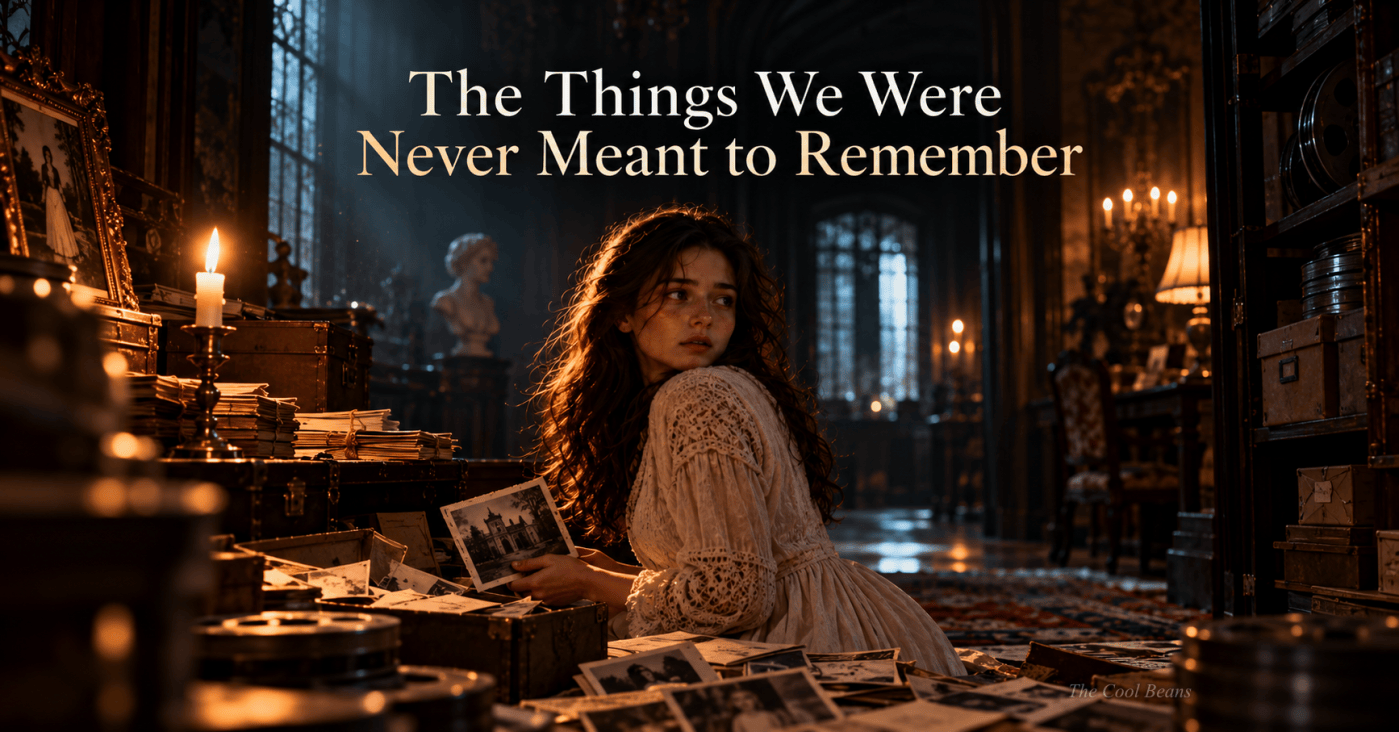
Jessie had spent most of her adult life believing that memories were the one thing nobody could take from her. People could lie, disappear, change their names, or bury the truth beneath years of carefully constructed explanations, but the things she remembered belonged to her. At least, that was what she had always believed. Now, standing in a police office in Hamilton with a brass key in her pocket and the face of Dr. Miriam Cross staring back at her from a computer screen, Jessie was beginning to understand just how much of her life had been shaped by memories someone else had decided she should keep.
The room was quiet after her revelation. Even the officers working at the computers seemed to have lowered their voices. Detective Harris stood beside the whiteboard, studying the photograph of the woman who had apparently spent decades living as Dr. Marion Clarke. Rebecca was examining the financial documents again, while Gabriel remained close enough to catch Jessie if the memories overwhelmed her a second time. Rachel had moved beside Anna, whose expression suggested she was struggling with revelations of her own. Michael sat at the table, staring at the original ledger as though it might finally explain why so many people had suffered for so long.
Jessie barely noticed any of them. Her mind was still trapped in that corridor at St Catherine’s, where two frightened girls had stood beneath flickering lights while smoke gathered along the ceiling. She could remember Julia’s fingers gripping hers, the rough fabric of the blue jacket, and the sound of someone pounding against a locked door. What she could not understand was how she had forgotten something so important. It was not simply a missing detail or a childhood memory distorted by time. It was an entire moment of her life, one that had shaped everything that came afterward.
“Jessie?”
Gabriel’s voice reached her from somewhere beyond the memory.
She looked at him.
“You’ve been standing there for nearly five minutes.”
“I remember choosing her.”
“I heard.”
“No. I mean I remember it happening. I remember the question, Gabriel. Someone asked which one of us should be saved, and I said Julia.”
He glanced toward Detective Harris.
“Do you remember who asked?”
Jessie closed her eyes. She could picture the corridor, the smoke, and the dark-haired boy standing near the doorway. The memory seemed clear until she tried to examine the man who had been speaking. Then everything dissolved into disconnected impressions.
“I don’t know.”
“That’s all right.”
“It isn’t all right. A twelve-year-old child shouldn’t have been asked that question. Neither of us should have been there. And someone knew enough about what happened to spend twenty-four years making sure I didn’t remember it.”
Detective Harris approached carefully.
“Jessie, I understand why you want answers. But I need you to be cautious about treating these memories as established facts. Some of what you’re remembering may prove accurate, but we need independent evidence before we can rely on it.”
Jessie studied him for a moment.
“You’re worried I might be remembering things that didn’t happen.”
“I’m concerned that your memories may have been influenced by what you’ve learned recently. That doesn’t mean they’re false. It means we have to investigate them.”
She nodded reluctantly.
It was the kind of distinction Rebecca would have insisted upon, and Jessie knew he was right. She had spent too many years uncovering other people’s deceptions to ignore the possibility that her own mind could mislead her.
“Then find me something that proves it,” she said.
“We’re working on that.”
“Start with Peter Vale.”
Harris looked toward the photograph pinned beside Nathan Carter’s name.
“We intend to.”
Jessie reached into her pocket and wrapped her fingers around the brass key.
“And find Dr. Cross. Because if she’s been working under another name all these years, I don’t believe she retired from anything.”
Rebecca looked up from the laptop.
“I may have found something that supports that.”
Everyone turned toward her.
“Northstar Clinical Holdings didn’t simply disappear into a series of corporate reorganizations. It changed ownership several times, but some of the same directors kept appearing under different associated companies. One of those companies leased office space in Hamilton until last year.”
“Where?” Harris asked.
Rebecca hesitated.
“An office building on King Street West. But the lease was terminated eleven months ago. The tenant transferred its records to a document-storage company in Burlington.”
“Do we have the name?”
“Yes. And the storage company has an active account associated with the same trust that received payments through account seventeen.”
Jessie leaned forward.
“Can police obtain those records?”
“If we establish the legal grounds,” Harris replied. “I’ll have our financial investigator review the information.”
Rebecca turned the laptop toward him.
“There’s something else. The account isn’t entirely financial. The payments are attached to reference numbers. I initially thought they identified invoices, but the sequence doesn’t behave like ordinary accounting.”
“What does it look like?” Michael asked.
Rebecca enlarged the spreadsheet.
“Some numbers repeat annually. Others appear once and then disappear. There are sixteen recurring identifiers, but one additional entry is marked separately.”
Jessie looked down at the key.
“Seventeen.”
Rebecca nodded.
“Exactly.”
Anna rose from her chair.
“No.”
Rachel turned toward her.
“Anna?”
“Those weren’t account numbers.”
Rebecca frowned.
“Then what were they?”
Anna’s hands trembled as she reached for the back of the chair.
“Children.”
The silence that followed seemed to stretch across the entire room.
Jessie looked at the spreadsheet again. Sixteen recurring identifiers, each attached to transfers made over many years. A seventeenth entry separated from the others.
“You’re saying they continued tracking the original children?”
Anna nodded.
“Not all of them. Some died. Others were transferred. But Vale wanted to know what happened to the survivors. He believed the conditioning could be studied over an entire lifetime.”
Michael pushed himself away from the table.
“You told us the program ended after the fire.”
“I believed the institution ended. I didn’t know the research continued.”
Jessie stared at the sixteen numbers.
“Those payments weren’t necessarily made to the children, were they?”
Anna shook her head.
“No. They could have gone to anyone responsible for monitoring them.”
Rebecca looked horrified.
“Doctors. Caregivers. Institutions.”
“Or people paid to report on their lives,” Michael added.
Jessie thought about the ordinary years she had believed were entirely her own. The schools she attended, the doctors she visited, the jobs she held, and the strangers who had appeared and disappeared without explanation.
Had someone been watching her all that time?
She hated the question almost as much as she feared the answer.
“Can you identify any of the sixteen?” she asked.
“Not from the numbers alone,” Rebecca replied. “But we may be able to cross-reference the transfers with the records Nathan recovered.”
Jessie turned toward Harris.
“And the thirty-two children connected to Continuity?”
“We’re still working with child protection authorities to establish who they are and whether they’ve been placed at risk.”
“Sixteen original survivors. Thirty-two new children.”
Gabriel looked at her.
“You’re thinking they doubled the number.”
“I’m thinking whoever designed Continuity may have been using the original program as a model.”
Harris nodded slowly.
“That’s a reasonable investigative possibility. It isn’t proof of what the new records mean.”
Jessie looked again at the screen.
For once, she wanted him to be right more than she wanted to solve the mystery.
She wanted those thirty-two names to belong to children who were safe in their homes, living ordinary lives, unaware that someone had entered their information into a system with a terrible history.
But the woman who had once been Dr. Miriam Cross had helped design a program that treated children as interchangeable identities.
Jessie could not imagine that decades had made her more compassionate.
By ten o’clock, the police had arranged for additional officers to investigate the Burlington storage facility and the private consulting company’s former offices. Harris had also requested further information about Peter Vale and the possibility that Dr. Marion Clarke was actually Miriam Cross. None of those leads could be resolved immediately, and Jessie found herself forced to confront a familiar frustration. Evidence required patience. Warrants required justification. Witnesses had to be located, interviewed, and protected. The truth might be waiting inside a filing cabinet thirty minutes away, but knowing where to look did not give anyone the legal right to force it open.
She understood all of that.
She still wanted to scream.
Gabriel persuaded her to eat something from the vending machine. She managed half a sandwich before admitting defeat and handing the rest to Sophie, who had been sitting quietly beside Rachel.
“You’re staring at me,” Jessie told her.
Sophie looked mildly offended.
“I’m observing.”
“That’s what people say when they want staring to sound professional.”
“I’m wondering whether you’re going to do something reckless.”
Jessie raised an eyebrow.
“Have I given you reason to think I might?”
Sophie glanced around the room.
“Would you like that list chronologically or alphabetically?”
Gabriel laughed.
Jessie tried not to.
“Fine. I deserved that.”
Sophie leaned closer.
“I’m serious, Aunt Jessie. Every time we find something important, you look like you’re about to run out of the room and chase it yourself.”
“I haven’t done that.”
“Yet.”
Jessie considered the accusation.
“You’re becoming a lot like your mother.”
“She’s been saying I’m becoming a lot like you.”
“That’s unfortunate for both of us.”
Sophie smiled, but her expression soon turned serious.
“Do you think Julia is still alive?”
Jessie’s amusement vanished.
“Yes.”
“You sounded sure.”
“I’m not sure of anything. But she called us. She was frightened, and someone was close enough to interrupt her, but she was thinking clearly. She wanted us to find the evidence.”
“Why didn’t she tell us where she was?”
“Maybe she couldn’t.”
“Or maybe she doesn’t trust us.”
Jessie looked at her niece.
“That’s possible.”
Sophie hesitated.
“Would you trust someone who had your face?”
Jessie had been asked variations of that question before, but this time she considered it differently. For years, she had viewed Julia as the woman who had been taught to replace her. The implications were disturbing enough without considering how Julia might have experienced the arrangement herself.
“Maybe the better question,” Jessie said, “is whether Julia could trust someone who had spent her whole life being told that Julia was an imposter.”
Sophie looked down.
“I hadn’t thought about it that way.”
“Neither had I. Not until recently.”
Jessie watched Rebecca working across the room.
“I think Julia has spent years trying to prove she deserves to exist. Imagine having to do that when you know the name you’re using belonged to someone else.”
Sophie was quiet for a moment.
“She needs a name of her own.”
Jessie nodded.
“Yes. She does.”
At 10:28 p.m., Harris received the first useful update concerning Martin Bell.
The elderly former financial administrator had been interviewed at his residence with the cooperation of his daughter and care staff. As expected, he could not provide a coherent account of his work for the foundation. He seemed unable to recognize Thomas Wilson’s photograph and repeatedly confused the current year with dates from decades earlier.
But when an investigator showed him a drawing of the blackbird symbol, his behaviour changed.
He began asking for a little wooden bird.
At first, staff assumed he was referring to a decoration in his room. Then his daughter remembered a small carved ornament he had kept inside a locked cabinet for years. She had never known why it mattered to him. According to her, he became upset whenever anyone suggested moving it.
The ornament had been recovered.
Harris displayed a photograph.
It was a blackbird carved from dark wood, its wings tucked against its body. One eye was a tiny brass stud. The other appeared to be missing.
Jessie moved closer.
“Can you turn it over?”
“The investigators have examined it. There’s a narrow opening beneath the base.”
Her pulse quickened.
“What’s inside?”
“A folded paper. We’re documenting it before further examination.”
Rebecca leaned over Harris’s shoulder.
“Is that writing on the wood?”
The detective enlarged the photograph.
Someone had scratched three words into the underside of the bird.
Not all birds fly.
Jessie stared at the sentence.
She remembered Thomas saying something similar when she was a child. They had been watching birds in the garden, and she had asked why the wooden ones on his windowsill never flew away.
“Because some birds have other jobs,” he had said.
“What jobs?”
“Keeping secrets.”
She had laughed.
Now the memory made her feel cold.
“Thomas made it,” Jessie whispered.
Harris looked at her.
“Are you certain?”
“No. But he used to carve little birds. I remember them.”
Rebecca studied the photograph.
“What happened to the missing eye?”
“The investigators noticed the empty setting,” Harris replied. “They haven’t determined whether it was originally fitted with anything.”
Jessie pulled the brass key from her pocket.
“Maybe it wasn’t an eye.”
She held the key toward the screen.
“Maybe it was a lock.”
The detective examined it.
“That possibility can be tested. We won’t force the mechanism.”
Jessie nodded.
She had already learned what happened when people became impatient with Thomas’s inventions. He built things to reveal their secrets only when handled correctly. Anything else risked destroying precisely what they were intended to protect.
Rebecca looked toward the ledger.
“The pendant, the box, the wooden bird. He scattered evidence between objects.”
“Not evidence,” Anna said quietly.
Everyone turned.
“Not at first. They were memory exercises.”
Jessie frowned.
“What?”
“Thomas used to make puzzles for the children. Vale wanted them to associate information with physical objects. Thomas tried to turn the exercises into games so they wouldn’t be frightened.”
Anna looked at the photograph.
“The birds were his favourite. Each one had a different mechanism. He would give the children clues and ask them to work together.”
Jessie thought about her childhood memories, so many of them filled with fear and confusion.
Thomas had been there through much of it.
Not always able to stop what happened.
Perhaps not always brave enough to try.
But sometimes he had found small ways to give them something ordinary.
A game.
A puzzle.
A wooden bird.
And now, decades later, the same games might contain the evidence needed to expose the people who had harmed them.
“I wish he’d trusted us with the truth,” Jessie said.
Anna looked at her sadly.
“I think he was trying to make sure you could find it even if he wasn’t there to explain.”
The detective’s phone rang again before Jessie could answer.
He listened for a few moments, thanked the caller, and ended the conversation.
“We’ve received confirmation that Mr. Bell’s daughter found another item among his possessions. An old photograph.”
Jessie felt the familiar tightening in her chest.
“Of what?”
“Three people standing outside a clinic. One appears to be Thomas Wilson. Another may be Daniel Mercer.”
“And the third?”
Harris hesitated.
“A woman.”
Jessie looked toward Michael.
“The grey coat?”
“No. She’s wearing medical scrubs.”
“Can I see her?”
The photograph appeared on the screen a moment later.
Thomas stood on the left, older than Jessie remembered him but unmistakable. His hair was greying at the temples, and he looked exhausted. Daniel stood beside him, one arm supported in a sling. He was thinner than in the photographs Jessie had kept, but she recognized his face immediately.
Her breath caught.
Daniel.
Alive after the fire.
Not simply a voice on a recording or a name in a letter.
There he was, standing outside a building beneath a cloudy sky, looking directly at the camera.
Jessie reached toward the screen before stopping herself.
The woman beside him wore pale blue scrubs. Her dark hair was tied back, and a medical identification badge hung from her collar.
Rebecca enlarged the badge.
The name was difficult to read, but the first name appeared to be Caroline.
Jessie shook her head.
“I don’t know her.”
Michael stood abruptly.
“I do.”
Jessie turned.
“Who is she?”
He looked at the photograph again.
“Caroline Bennett.”
Rebecca began typing.
“Who was she?”
“A nurse. She worked at St Catherine’s before the fire, but she wasn’t part of Vale’s inner circle. She used to sneak food to the children when they were being punished.”
Anna’s expression softened.
“Caroline.”
“You remember her?” Jessie asked.
Anna nodded.
“She was one of the few staff members who openly challenged Vale. He transferred her after she reported an incident involving a child.”
“What happened to her?”
“I don’t know. I thought she left nursing.”
Michael pointed to the photograph.
“If she was with Daniel afterward, she might know what happened at the clinic.”
Harris looked toward an officer.
“See if we can locate Caroline Bennett.”
Jessie studied the woman’s face.
There was something unsettling about the number of people who had survived the fire but vanished from the story she had been told. Every new photograph seemed to reveal another person who had continued living while Jessie mourned an ending that had never truly happened.
Daniel had survived.
Thomas had survived.
Julia had survived.
Miriam Cross had apparently survived.
And now a nurse who might have known how Daniel spent his final months had appeared in a photograph no one had mentioned for twenty-four years.
Jessie wondered how many more people had been quietly removed from her history.
At 11:03 p.m., Rebecca discovered that Caroline Bennett had worked at a private rehabilitation facility in Ancaster until her retirement nine years earlier. Her nursing registration had expired, but an archived professional listing provided an address associated with a residence in Burlington.
Harris assigned an officer to attempt contact.
Jessie wanted to go herself.
She did not say so.
Gabriel noticed anyway.
“You’re learning,” he murmured.
“Don’t ruin it by commenting.”
He smiled.
For the first time that evening, Jessie allowed herself to sit back and breathe.
Then her phone vibrated.
Another message from the unknown number.
She looked down.
There was a photograph of a small brass plate mounted beside a wooden door.
On the plate were two words.
ROOM SEVENTEEN.
Beneath the photograph was a message.
Daniel was never buried.
Jessie stared at the screen.
She read the sentence again, trying to understand whether it was a cruel manipulation or an impossible revelation.
Gabriel saw her expression.
“What is it?”
She handed him the phone.
His face changed.
Harris came over immediately.
The message was documented, and an officer began examining its technical information.
Jessie barely listened.
Daniel was never buried.
That could mean his body had been cremated.
It could mean Catherine had lied about what happened after his death.
Or it could mean the person sending the messages wanted Jessie to believe something far more dangerous.
That Daniel was still alive.
Jessie would not allow herself to believe it.
Not without evidence.
She had already buried him emotionally more than once. She could not survive building another hope around a stranger’s message.
But she could not dismiss it either.
“Who keeps sending these?” Rachel asked.
“No idea,” Harris replied. “The messages may be designed to provoke a reaction.”
Jessie nodded slowly.
“Then why haven’t they asked me to do anything?”
Rebecca looked up.
“They have.”
Jessie turned.
“What?”
“They told you to find the pendant. They told you to ask Catherine about Daniel’s new name. They’re directing your attention toward specific pieces of evidence.”
“But why?”
Rebecca hesitated.
“Maybe they can’t access those pieces themselves.”
Jessie looked down at the brass key.
The pendant was at the cabin.
The wooden bird was with Martin Bell’s belongings.
And the key had been hidden in Daniel’s box.
Three objects separated across decades and locations.
No single person had been meant to possess all of them.
She began to understand.
“Thomas didn’t trust anyone with the complete evidence.”
Michael looked at her.
“He trusted you.”
“No. He trusted several people with different parts of it. Daniel had the key. Catherine had the pendant. Bell had the wooden bird.”
“And Julia?” Sophie asked.
Jessie thought about the metal box Julia had carried through the fire.
“Julia had the records they thought were the originals.”
Rebecca nodded.
“A diversion.”
“Maybe. But if the box contained copies, she still had something valuable.”
Harris looked toward the whiteboard.
“Which means anyone trying to assemble the complete evidence would need to locate multiple people.”
Jessie pointed toward the photographs.
“And someone has been doing exactly that.”
Thomas and Julia were missing.
Bell had received a visit.
Daniel’s history had suddenly become the subject of anonymous messages.
Emily and Mrs. Alvarez had been taken.
And the pendant remained at a cabin Catherine had been urging Jessie to visit.
The pattern was impossible to ignore.
“Someone wants us to assemble the evidence for them,” Jessie said.
Harris considered the possibility.
“Or wants to make you believe that.”
Jessie nodded.
“Either way, they’re watching what we do.”
A knock interrupted them.
An officer entered and approached Harris.
“Detective, we have an update from the team looking for Dr. Clarke.”
Harris stepped aside to listen.
The officer spoke quietly, but Jessie’s attention sharpened when she saw the detective’s expression.
“What is it?” she asked.
Harris turned toward the group.
“The address associated with Dr. Clarke is no longer occupied. Neighbours say she left approximately three weeks ago.”
“Where did she go?”
“Unknown. But she hired a moving company, and investigators have obtained information about the destination listed on the paperwork.”
Jessie rose.
“Where?”
Harris glanced at his notes.
“A property outside Grimsby.”
Anna made a small sound.
Rachel turned toward her.
“What?”
Anna looked at Jessie.
“Thomas had a cabin outside Grimsby.”
The room seemed to tilt.
Jessie stared at her.
“That’s where Catherine said she left the pendant.”
Anna nodded.
“Then either Catherine knows more than she’s told you, or someone has been using that property without her knowledge.”
Jessie reached for her phone.
Catherine answered on the third ring.
“Jessie?”
“Where exactly is the cabin?”
A pause.
“Why?”
“Because the woman who helped Vale destroy our childhoods may be living there.”
Silence.
Then Catherine whispered something Jessie could not hear.
“Mother.”
“Jessie, you must not go there.”
“That’s the first sensible thing you’ve said all evening. I’m not going anywhere until the police know what’s happening.”
Catherine exhaled shakily.
“Good.”
“But you’re going to tell me something.”
“What?”
“Why did you keep the pendant there?”
“Because Thomas asked me to.”
“When?”
“Twenty-four years ago.”
“Why that cabin?”
Catherine hesitated.
“It was a safe place.”
“Safe for whom?”
Another silence.
Jessie felt her patience thinning.
“Mother, I have spent the last several hours discovering that people I thought were dead lived for years under other names. I’ve learned that Julia helped me escape, that Peter Vale may have been involved, and that Dr. Miriam Cross could still be running the same organization that destroyed our lives. If you know why that cabin matters, tell me now.”
Catherine’s voice was barely audible.
“Because Daniel lived there.”
Jessie closed her eyes.
“When?”
“After the clinic.”
“For how long?”
“Several weeks.”
Jessie gripped the phone.
“You told Rachel he died three days after the incident.”
“I know.”
“Then why are you telling me he lived at the cabin for weeks?”
Catherine began to cry.
It was such an unfamiliar sound that Jessie almost failed to recognize it.
“Because he wasn’t supposed to survive,” her mother whispered.
Jessie felt her stomach turn.
“What does that mean?”
“Daniel was badly injured. The doctors believed he would die. Thomas arranged for him to be moved somewhere safe because Vale’s people were looking for him. We thought he had only days.”
“But he didn’t die.”
“No.”
“Then what happened?”
Catherine struggled to answer.
“He recovered enough to leave. He wanted to find the records. He wanted to stop Miriam. Thomas begged him to wait, but Daniel wouldn’t.”
Jessie’s voice shook.
“Where did he go?”
“I don’t know.”
“Don’t lie to me.”
“I’m not lying.”
“Did you ever see him again?”
Catherine was quiet for so long that Jessie wondered whether the call had disconnected.
Then she answered.
“Once.”
Jessie could barely speak.
“When?”
“Nine years ago.”
The world seemed to stop.
Nine years.
Not twenty-four.
Nine.
Jessie pressed her free hand against the table.
“Where?”
“At the cabin.”
“What did he look like?”
“Older. Tired. He had a scar along his jaw. His hair had gone almost completely grey.”
Jessie felt tears filling her eyes.
“What did he say?”
Catherine began crying harder.
“He asked about you.”
Jessie closed her eyes.
For twenty-four years, she had mourned a man who had apparently remained alive long enough to ask about her fifteen years after she believed he had died.
“Did you tell him where I was?”
“Yes.”
“Did you tell him I thought he was dead?”
Catherine did not answer.
Jessie felt something inside her break.
“Mother.”
“I told him you had a life. I told him you were safe.”
“Did you tell him I loved him?”
There was a small, terrible silence.
Then Catherine whispered, “Yes.”
Jessie covered her mouth.
Gabriel moved beside her, but she raised one hand, asking him to wait.
“What did he say?”
“He said he was glad.”
Jessie’s tears spilled over.
“And then?”
“He told me not to tell you.”
“Why?”
“Because he believed Miriam was still watching the survivors. He thought anyone connected to him would be in danger.”
Jessie shook her head.
“No. That isn’t enough. Daniel knew me. He knew I would never have agreed to that.”
“I know.”
“Then why did he stay away?”
Catherine drew a shaking breath.
“Because he wasn’t Daniel anymore.”
Jessie froze.
“What?”
“He had another name. Another identity. He said the man you remembered had to remain dead if the evidence was ever going to reach the right people.”
“What name?”
Catherine hesitated.
“Mother, tell me.”
Her answer came so quietly Jessie nearly missed it.
“David.”
Jessie stared at the wall.
David.
A simple, ordinary name.
One that might belong to any man walking down any street in Canada.
“David what?”
“I don’t know.”
“Did you see identification?”
“No.”
“Did he tell you where he lived?”
“No.”
Jessie wiped her face.
“Did he come alone?”
Another pause.
“No.”
Jessie’s pulse quickened.
“Who was with him?”
“A woman.”
“The grey coat?”
“No. She was younger. Dark hair. She looked familiar, but I couldn’t place her.”
“Julia?”
Catherine hesitated.
“I don’t know.”
Jessie thought about Julia’s tears in the diner and her determination to protect someone she had never been allowed to know.
“Did Daniel say anything about her?”
“Only that she had spent her life carrying someone else’s name and was finally ready to put it down.”
Jessie closed her eyes.
Julia.
It had to be Julia.
Or someone Catherine wanted her to believe was Julia.
“Why didn’t you tell me any of this?”
Catherine’s voice broke.
“Because every time I thought about telling you, I remembered what happened when I trusted the wrong person. I thought silence was the only way to keep you alive.”
Jessie looked toward the photograph of Dr. Miriam Cross.
“And how many people had to suffer because you kept making that decision for them?”
Catherine did not answer.
Jessie felt the familiar anger rising, but beneath it was something worse.
Grief.
Not for Daniel’s death.
For the years she might have had with him.
For the conversations they never shared.
For birthdays and ordinary afternoons.
For the chance to tell him she had survived.
She ended the call without saying goodbye.
For a long moment, nobody moved.
Then Gabriel wrapped an arm around her shoulders.
Jessie let him.
She had been strong for so long that surrendering even a little of that strength felt unfamiliar.
But she was exhausted.
And for the first time in twenty-four years, she no longer knew whether she was mourning Daniel Mercer or waiting for him to come home.
Shortly before midnight, Detective Harris received confirmation that officers had reached the property outside Grimsby.
The cabin stood at the end of a narrow private road, partly concealed by cedar trees and overgrown shrubs. The building appeared unoccupied. No vehicles were present, and the windows were dark.
There were signs that someone had recently used the property, but officers had not yet established whether Dr. Clarke had ever lived there. The moving company records listed a nearby storage address rather than the cabin itself, and investigators were checking how the two locations were connected.
Jessie listened carefully.
She was not going to mistake proximity for proof.
Not again.
“Is the pendant there?” she asked.
“We don’t know yet,” Harris replied. “Your mother has agreed to speak with the officers and clarify where she left it.”
Jessie nodded.
“Good.”
Harris studied her.
“You understand that even if we recover it, the pendant may not contain anything useful.”
“I understand.”
“And if it does, we may need forensic specialists to examine the mechanism.”
“I understand that too.”
He gave a faint smile.
“You’re making my job easier than I expected.”
“Don’t become attached to the experience.”
Gabriel laughed softly.
Jessie almost smiled.
Then Harris’s telephone rang.
He listened, asked two short questions, and turned away from the group.
By the time he ended the call, his expression had changed.
“An officer has made contact with Caroline Bennett.”
Jessie straightened.
“Is she willing to talk?”
“Yes.”
“Does she remember Daniel?”
Harris looked at her carefully.
“She asked whether the woman looking for him was named Jessie Wilson.”
Jessie felt her heart hammer.
“What did you tell her?”
“That we were investigating matters connected to St Catherine’s and needed to speak with her.”
“And?”
“She said she has been waiting years for someone to ask the right questions.”
Jessie pressed both hands against the table.
“Where is she?”
“At her residence. Officers are arranging an interview.”
Jessie looked at Gabriel.
He knew what she was about to ask before she spoke.
“Can I talk to her?”
Harris hesitated.
“Not before investigators have obtained an initial statement. But I can ask whether she’s willing to speak with you afterward.”
Jessie nodded.
It was not enough.
But it was something.
Caroline Bennett was seventy-six years old, with silver hair, bright blue eyes, and the unmistakable composure of someone who had spent a lifetime calming frightened people. She sat at her kitchen table in Burlington with two police officers and a cup of tea she had apparently forgotten to drink.
The first part of her interview focused on establishing her identity, her employment history, and her connection to St Catherine’s.
She confirmed that she had worked as a nurse at the institution before the fire. She described a system in which certain children were treated as research subjects rather than patients, though she admitted that staff outside Vale’s inner circle had received little reliable information about the purpose of the program.
She also confirmed that Daniel Mercer had survived the fire.
According to Caroline, Daniel had suffered serious injuries while attempting to retrieve documents and help several people escape. He later became involved in efforts to expose the foundation’s activities.
Then she said something that changed the direction of the interview.
“Daniel wasn’t the only one trying to collect evidence.”
The officer leaned forward.
“Who else was involved?”
“Thomas Wilson. A woman named Julia. And another man whose identity I never knew.”
“Was the other man Peter Vale?”
Caroline’s expression hardened.
“No.”
“Do you know Peter Vale?”
“Yes.”
“What can you tell us about him?”
Caroline set down her cup.
“Peter wasn’t simply Vale’s relative. He was the person Vale intended to inherit the program.”
“How do you know that?”
“Because I heard Vale say it. More than once.”
The officer asked her to describe the circumstances.
Caroline explained that Peter had been brought into staff meetings while still a child. Vale treated him as an apprentice, asking him questions about the children and encouraging him to evaluate their behaviour.
“He learned early that affection was a weakness,” she said. “If a child cried, Peter was taught to identify what had caused it and how the information might be used. He wasn’t taught how to comfort anyone. He was taught how to control them.”
“Did he participate in the experiments?”
Caroline hesitated.
“I witnessed him observing interviews and reporting information to Vale. I can’t tell you everything he did when I wasn’t present.”
“Did you ever report your concerns?”
“Yes.”
“What happened?”
“I was removed from the program.”
The officer made a note.
“What can you tell us about Dr. Miriam Cross?”
Caroline’s expression changed.
“She was worse than Vale.”
“In what way?”
“Vale believed he could build a person from the outside. He used punishment, reward, repetition, and fear. Miriam believed identity could be rewritten from within. She wanted children to stop knowing where their own memories ended and the implanted ones began.”
“Did she work with the girl known as Julia?”
Caroline nodded.
“Yes.”
“And Jessie Wilson?”
“Yes.”
The officer leaned closer.
“Were the two girls related?”
Caroline’s eyes filled with tears.
“No.”
“Then why did they look so similar?”
Caroline took a long breath.
“Because Miriam had spent years searching for a child who resembled Jessie closely enough for the experiment to work.”
The officer waited.
Caroline looked down at her hands.
“Julia was never supposed to have a childhood of her own. They wanted her to learn Jessie’s experiences, copy her mannerisms, and accept her identity as if it had always belonged to her.”
“Why?”
“Because Jessie was considered an important subject. Thomas had become protective of her, and Vale wanted to know whether her relationships could be transferred to someone else. He wanted to see whether the people who loved Jessie would eventually accept another child in her place.”
“And did they?”
Caroline looked up.
“Not in the way Vale expected.”
“Can you explain?”
“Julia learned everything they taught her. She could imitate Jessie beautifully. But she never stopped knowing she was Julia. She pretended because pretending kept her safe.”
The officer glanced at his notes.
“Was she aware of what was happening?”
“More than anyone realized.”
Caroline paused.
“And when the fire started, she had a choice.”
“What choice?”
“She could leave Jessie behind and take her place.”
The kitchen fell silent.
Caroline looked toward the window.
“But she didn’t.”
At 12:41 a.m., Detective Harris returned to the room where Jessie and the others were waiting.
He carried a folder.
Jessie stood immediately.
“Caroline?”
“She’s given an initial statement. There are details we need to corroborate, but she has confirmed several important things.”
“Daniel survived.”
“Yes.”
“Julia helped me.”
“According to Caroline’s account, yes.”
Jessie felt tears sting her eyes.
“What else?”
Harris opened the folder.
“She says the original program wasn’t designed simply to replace one person with another. It was intended to test whether identity, relationships, and personal histories could be transferred between individuals through conditioning.”
Rebecca looked horrified.
“And Continuity?”
“We haven’t established how directly the later project relates to the original research.”
Jessie nodded impatiently.
“What did she say about Julia?”
Harris studied her.
“That Julia knew who she was.”
Jessie frowned.
“What?”
“Caroline says Julia pretended to accept the identity they assigned her. But she remained aware that she was a separate person.”
Jessie sat down slowly.
All those years, she had imagined Julia as someone whose mind had been destroyed and rebuilt around Jessie’s memories.
But Julia had known.
She had endured the conditioning while protecting the one thing Vale and Miriam wanted to erase.
Herself.
“She must have been terrified,” Jessie whispered.
Harris nodded.
“Caroline believes she was.”
Jessie looked toward Gabriel.
“And she saved me anyway.”
He took her hand.
“Yes.”
Jessie stared at the table.
For the first time, the woman wearing her face no longer seemed like a mystery she needed to solve.
She seemed like someone Jessie needed to find.
Not to recover the past.
Not to uncover another secret.
But because Julia had spent twenty-four years waiting for someone to recognize her as a person rather than an imitation.
And Jessie was finally beginning to understand how much courage that had required.
Harris hesitated.
“There’s one more thing.”
Jessie looked up.
“What?”
“Caroline says Daniel returned to the clinic several years after the fire.”
Jessie’s heart stopped.
“When?”
“She couldn’t provide an exact date without checking her records. But she believes it was more than ten years afterward.”
Jessie closed her eyes.
Another confirmation that Catherine had lied about his death.
“Did Caroline see him?”
“Yes.”
“Was he alone?”
“No.”
Jessie opened her eyes.
“Who was with him?”
Harris studied the folder.
“A girl.”
Jessie frowned.
“A child?”
“Yes.”
“How old?”
“Approximately ten or eleven.”
Jessie stared at him.
“Who was she?”
Harris took a breath.
“Caroline says Daniel called her his daughter.”
For a moment, Jessie could not understand the words.
His daughter.
Daniel had a daughter.
Somewhere in the years Jessie had spent grieving him, he had apparently built a life that included a child.
She looked toward Gabriel, but his expression offered no explanation.
“Did Caroline know her name?” Jessie asked.
Harris nodded.
“She says Daniel called her Lily.”
Jessie looked down at her hands.
A daughter.
A little girl named Lily.
The thought should not have hurt. Daniel had been alive, and Jessie had been living her own life. Neither of them had known what the other was experiencing. He had every right to love someone else, to have a family, and to build a future beyond the ruins of St Catherine’s.
She understood that.
But grief was rarely reasonable.
For twenty-four years, she had believed their story ended in flames. Now she was discovering that Daniel’s life had continued in directions she had never imagined.
And a child had grown up somewhere, perhaps knowing nothing about the woman her father had once loved.
Jessie forced herself to breathe.
“Is Lily alive?”
“We don’t know.”
“Does Caroline know where she is?”
“Not yet. She said Daniel gave very little information about his personal life.”
Jessie nodded.
She looked toward the photograph of Daniel outside the clinic.
He had been alive.
He had been older.
He had carried secrets.
And he had apparently become a father.
Jessie was still trying to absorb that when Rebecca’s laptop chimed.
She looked at the screen.
Then she stopped moving.
“Jessie.”
Something in her voice made everyone turn.
“What?”
Rebecca’s face had gone pale.
“I found another connection.”
“To what?”
“Caroline Bennett’s employment records. After she left the rehabilitation facility, she continued working privately for a family.”
Jessie frowned.
“What family?”
Rebecca swallowed.
“The Mercer family.”
Michael stood abruptly.
“That’s impossible.”
Rebecca looked at him.
“Why?”
“Because my family has no connection to Caroline Bennett.”
Rebecca turned the laptop.
The record displayed a private care agreement established fifteen years earlier.
The employer’s name was listed as David Mercer.
Jessie stared at it.
David.
The name Catherine had given her.
A name Daniel had supposedly adopted.
But Mercer?
That was Daniel’s original surname.
Why would he change his first name and keep the family name if he needed to disappear?
Michael stepped closer.
“I don’t understand.”
Rebecca scrolled down.
“There’s an emergency contact.”
Jessie felt the familiar cold sensation spreading through her chest.
“Who?”
Rebecca looked up.
“Elizabeth Mercer.”
Michael went very still.
Jessie turned toward him.
“Who is Elizabeth?”
Michael’s face had lost all colour.
“My wife.”
The room fell silent.
Rachel looked between them.
“Michael, I thought your wife died.”
“She did.”
“When?”
Michael struggled to answer.
“Fourteen years ago.”
Rebecca looked back at the screen.
“The care agreement remained active for another six years.”
Michael gripped the table.
“That’s not possible.”
Jessie studied him.
“Michael, did Elizabeth know Daniel?”
“Of course. He was my brother.”
Jessie felt the air leave her lungs.
She had known that Michael and Daniel were connected through the Mercer family, but she had never understood how completely their histories overlapped.
“What happened to Elizabeth?” she asked.
Michael closed his eyes.
“She was diagnosed with a degenerative neurological condition. She became increasingly confused. Eventually she stopped recognizing people.”
“Where was she treated?”
“At a private care facility.”
“Which one?”
Michael opened his eyes.
“Northstar.”
Jessie stared at him.
The same name.
The same organization.
The same financial network.
Rebecca looked horrified.
“Michael, do you have proof that Elizabeth died?”
He looked at her as though she had struck him.
“I attended her funeral.”
“Did you see her body?”
Michael opened his mouth.
Then stopped.
Jessie felt her stomach turn.
“Michael?”
He sank into the chair.
“No.”
The room seemed to grow colder.
“She was cremated,” he whispered. “The facility handled the arrangements. They told me she had died during the night.”
Jessie looked toward Harris.
The detective’s expression had become deeply serious.
“We need to verify the records before drawing conclusions.”
Michael barely seemed to hear him.
“I trusted them.”
Jessie moved beside him.
“Michael.”
He looked up.
“I trusted them with my wife.”
She placed a hand on his shoulder.
There was nothing she could say that would make the discovery less terrible.
For years, Michael had believed he abandoned Thomas. He had believed Daniel died in the fire. He had believed his wife succumbed to an illness in a facility connected to the very organization that had manipulated his memories.
Now every one of those certainties was collapsing.
Jessie recognized the expression on his face.
She had worn it herself.
The moment when grief stopped being something you remembered and became something you had to investigate.
At 1:18am, the police received a call from the officers at the Grimsby property.
They had located a hidden storage compartment beneath a loose floorboard in the cabin’s main bedroom. Catherine had identified the approximate location from memory and authorized the officers to inspect it.
Inside was a small metal tin wrapped in a faded blue cloth.
The tin contained several photographs, two letters, and a blackbird pendant.
Jessie stared at the images Harris displayed on his phone.
The pendant was exactly as she remembered.
Dark metal.
Wings folded close against the body.
A small circular indentation beneath one wing.
And a narrow opening near the base.
The opening looked remarkably similar to the shape of the key she carried.
Harris looked at her.
“We’ll have the objects examined and document their condition before attempting to open anything.”
Jessie nodded.
She wanted to hold the pendant.
She wanted to feel its familiar weight and know that something from her childhood had survived untouched.
But the possibility that it contained evidence was more important.
“What about the letters?”
“They’re being photographed. One appears to be addressed to you.”
Jessie’s heart hammered.
“From whom?”
Harris looked at the photograph.
“The signature appears to be Daniel’s.”
Jessie closed her eyes.
Another letter.
Another attempt to speak across decades of silence.
She wondered how many messages Daniel had left for her, and how many people had decided she was not ready to receive them.
Harris continued.
“The other letter is addressed to a person named Lily.”
Jessie’s eyes snapped open.
“Lily?”
“Yes.”
“The child Caroline described?”
“Possibly.”
Jessie looked at the screen.
The envelope was yellowed and worn. The name had been written carefully across the front.
Lily Mercer.
Jessie stared at it.
A daughter.
Daniel’s daughter.
A little girl who might now be an adult.
A person who could know more about Daniel’s life than Jessie ever would.
Gabriel watched her carefully.
“Are you all right?”
Jessie gave a small, humourless laugh.
“I don’t think that question has had a useful answer for several days.”
He squeezed her hand.
She looked again at the envelope.
“Do we know where Lily is?”
Harris shook his head.
“Not yet.”
Jessie nodded.
“Then let’s find her.”
The next development came shortly after two in the morning.
An officer reviewing archived Northstar records discovered a reference to a patient who had been transferred between two facilities under the name David Mercer. The record was incomplete, but it included a photograph taken approximately nine years earlier.
Jessie stared at the image.
The man was older than Daniel had been in the photographs she remembered. His hair was mostly grey, and a narrow scar ran along his jaw.
But it was him.
She knew the shape of his face.
The slight asymmetry of his smile.
The way one eyebrow sat higher than the other.
Daniel Mercer.
Older.
Alive at least fifteen years after the fire.
Jessie’s hand rose to her mouth.
“Oh, Daniel.”
For several seconds, she forgot the people around her.
She forgot the police station, the missing children, and the secrets still waiting to be uncovered.
All she could see was the face of someone she had loved and mourned for most of her adult life.
He had grown older.
That simple fact overwhelmed her.
She had imagined him frozen forever at the age he had been when she last saw him. In her mind, Daniel was still young, still laughing, still promising that everything would be all right.
But life had continued for him.
His hair had turned grey.
Lines had formed around his eyes.
He had lived long enough to become someone she might have passed on the street without recognizing.
And she had missed all of it.
Jessie began to cry.
Not loudly.
Not dramatically.
Just a quiet, exhausted grief that had nowhere left to go.
Gabriel put his arms around her.
She leaned into him.
For a moment, she allowed herself to mourn the years rather than the man.
Then Harris spoke gently.
“Jessie, there’s something else about this record.”
She wiped her face.
“What?”
“The photograph was attached to a patient identification file. According to the system, David Mercer was transferred to another facility.”
“When?”
“Nine years ago.”
“Where?”
Harris looked toward Rebecca.
She had already begun searching.
“The destination is listed as a private residential care facility,” she said. “But the address doesn’t correspond to an active medical institution.”
Jessie frowned.
“What does it correspond to?”
Rebecca swallowed.
“A property in Niagara-on-the-Lake.”
Anna looked up sharply.
“What property?”
Rebecca read the address.
Anna went completely still.
Jessie noticed immediately.
“Anna?”
The older woman stared at the screen.
“That’s where Miriam lived.”
Jessie felt her heart stop.
“What?”
“Before the fire. She had a house there. Vale used to send certain children for private evaluations.”
Rebecca looked horrified.
“Was it part of the program?”
Anna nodded.
“Unofficially. It wasn’t listed among the foundation’s properties.”
Jessie stared at the address.
Daniel had apparently been transferred to a residence once associated with the woman who had helped destroy his life.
The woman who had manipulated children’s identities.
The woman who might still be directing Continuity.
And suddenly the anonymous message returned to her.
Daniel was never buried.
Jessie looked toward Harris.
“Is the property still standing?”
“Yes.”
“Who owns it?”
Rebecca checked.
“A private holding company.”
Jessie closed her eyes.
“Northstar?”
Rebecca looked up.
“No.”
Jessie opened her eyes.
“Then who?”
Rebecca hesitated.
“The registered owner is a trust.”
“Which trust?”
Rebecca swallowed.
“Blackbird Holdings.”
The room fell silent.
Jessie looked down at the brass key in her hand.
The blackbird pendant.
The wooden bird.
Account seventeen.
Daniel’s letters.
Thomas’s puzzles.
And a property in Niagara-on-the-Lake where Daniel might have been taken nine years earlier.
She thought of the message Julia had sent before the call ended.
Find the pendant. Find what Thomas left you.
Then she remembered something else.
The little girl in the memory.
The one who had stood beside her in the corridor.
Julia had been holding the metal box.
But the box had not been the only thing she carried.
There had been something around her neck.
A second pendant.
Jessie looked toward the photograph of the blackbird recovered from the cabin.
“Rebecca.”
“What?”
“The pendant Thomas gave me wasn’t the only one.”
Rebecca frowned.
“What do you mean?”
“Julia had one too.”
Anna closed her eyes.
“Oh, Jessie.”
Jessie turned toward her.
“What?”
Anna looked as though she had aged ten years in the last hour.
“Thomas made two.”
Jessie’s fingers tightened around the key.
“Why?”
Anna’s voice trembled.
“Because there were two girls.”
Jessie stared at her.
“And what did they contain?”
Anna shook her head.
“I don’t know.”
But Jessie could see the fear in her expression.
“Anna.”
The older woman looked toward the photograph of Miriam Cross.
“Thomas said the truth could only be found when both girls were willing to remember.”
Jessie felt a chill spread through her.
For twenty-four years, she had believed the missing pieces of her childhood were locked inside her own mind.
Now she was beginning to understand that the truth had been divided deliberately.
One part with Jessie.
One part with Julia.
Neither could reveal everything alone.
And somewhere, the woman who had spent decades manipulating them might still be waiting to discover whether the experiment had finally succeeded.
At 2:37 a.m., Jessie’s phone rang.
The number was blocked.
Harris motioned for her to answer while an officer prepared to document the call.
Jessie pressed the speaker button.
“Hello?”
There was silence.
Then a man’s voice spoke.
Older.
Rough.
Almost unrecognizable.
“Jessie?”
Her heart stopped.
She knew that voice.
Not because it sounded exactly as she remembered.
It didn’t.
Time had changed it.
Age had worn away its easy warmth.
But beneath the years, beneath the unfamiliar hesitation, something remained.
A voice she had carried inside her for twenty-four years.
“Daniel?”
The silence on the other end seemed endless.
Then the man answered.
“I’m sorry it took me so long.”
Jessie gripped the edge of the table.
She could not breathe.
Could not think.
Could barely understand that the voice might be real.
“Daniel?”
“Yes.”
She closed her eyes.
For twenty-four years, she had imagined what she would say if she ever heard him speak again.
She had imagined anger.
Questions.
Accusations.
She had imagined demanding an explanation for every stolen year.
But now, with his voice coming through the telephone, all of those carefully prepared words vanished.
“Are you alive?” she whispered.
A pause.
Then a weary, heartbreaking laugh.
“I suppose that’s a fair question.”
Jessie began to cry.
“Where are you?”
“I can’t tell you yet.”
Her eyes opened.
“No.”
“Jessie—”
“No. You don’t get to do that. Not again.”
“I know.”
“You don’t get to call me after twenty-four years and tell me you can’t say where you are.”
“I’m trying to keep you safe.”
Jessie almost laughed.
The words were so familiar.
Catherine had used them.
Thomas had used them.
Every person who had hidden the truth had wrapped their secrets in the same excuse.
“Daniel, listen to me. I am not twelve years old. I am not a frightened little girl waiting for someone else to decide what I can handle. If you’re really Daniel Mercer, you are going to tell me where you are.”
The man was silent.
Then he whispered something Jessie never expected to hear.
“I’m with Julia.”
Jessie stopped crying.
“What?”
“She’s hurt, Jessie. I don’t know how much time we have.”
Detective Harris leaned forward.
“Daniel, this is Detective Harris with Hamilton Police. We can arrange assistance. Tell us your location.”
The man hesitated.
Jessie could hear movement in the background.
A faint metallic sound.
A woman coughing.
Then Daniel spoke again.
“There’s a house in Niagara-on-the-Lake.”
Jessie looked toward Rebecca.
Blackbird Holdings.
The property.
The transfer records.
“Are you there now?” Harris asked.
“Yes.”
“Can you provide the address?”
Daniel began to answer.
Then another voice interrupted.
A woman’s voice.
Calm.
Measured.
Terribly familiar.
“Daniel, you were always such a disappointment.”
Jessie froze.
She recognized the voice from the memory.
The grey coat.
The blackbird pendant.
The woman kneeling before two terrified little girls.
Dr. Miriam Cross.
Daniel spoke sharply.
“Stay away from her.”
There was a struggle.
A crash.
Julia cried out.
Jessie gripped the phone.
“Daniel!”
The woman’s voice returned.
“Jessica. How lovely to hear you again.”
Jessie felt every muscle in her body tighten.
“Miriam.”
A soft laugh.
“You remember.”
“Where are they?”
“Exactly where they belong.”
“You’re going to let them go.”
“Am I?”
Detective Harris signalled to the officers.
They were already moving.
Jessie could hear chairs scraping and telephones ringing as investigators began coordinating a response to the Niagara-on-the-Lake property.
But Miriam seemed completely unconcerned.
“Do you know what I find extraordinary, Jessica? After everything we did, after all the conditioning and all the years, you still believe the truth is something that can save you.”
Jessie looked at the photograph on the screen.
The woman’s pleasant smile.
Her carefully arranged silver hair.
The face of someone who had spent decades pretending to help people while treating their lives as experiments.
“The truth isn’t supposed to save me,” Jessie said. “It’s supposed to stop you.”
Miriam laughed softly.
“Still so much like Thomas.”
“Where are Emily and Mrs. Alvarez?”
A pause.
“Safe enough.”
“That isn’t an answer.”
“It is the only one you’re getting.”
Jessie looked toward Harris.
He shook his head slightly, signalling for her to keep the conversation going.
“Why did you take them?”
“Because you needed to understand that the past is not the only thing you can lose.”
Jessie felt sick.
“They have nothing to do with this.”
“Neither did you, when we first brought you to St Catherine’s.”
The words struck like a physical blow.
Jessie gripped the table.
“What do you want?”
Miriam’s voice softened.
“Something Thomas took from me.”
“The records.”
“Not exactly.”
“The pendant?”
“You’re getting closer.”
Jessie looked down at the brass key.
Then toward Rebecca, who was watching with wide eyes.
“What is inside it?”
Miriam laughed.
“Oh, Jessica. You always were impatient.”
“Tell me.”
“Something that belongs to both of you.”
Jessie felt the blood drain from her face.
Both of you.
Jessie and Julia.
Two pendants.
Two girls.
Two lives deliberately entangled.
“What did you do to us?”
Miriam was silent for a moment.
Then she said, almost tenderly, “I gave you the opportunity to become extraordinary.”
Jessie closed her eyes.
“No. You took two ordinary children and convinced yourselves that hurting them was science.”
For the first time, Miriam’s voice hardened.
“You have no understanding of what we accomplished.”
“I understand exactly what you accomplished. You made children afraid of their own memories. You destroyed families. You taught people to hate themselves for things they never did.”
“You survived.”
“So did Julia.”
A pause.
Then Jessie heard something she had not expected.
Anger.
“Julia was never supposed to survive as Julia.”
Jessie stared at the phone.
There it was.
The truth beneath decades of euphemisms and research terminology.
Julia’s existence had not been the objective.
Her erasure had been.
“Well,” Jessie said quietly, “she did.”
Miriam did not answer.
“And we’re both coming home.”
The line disconnected.
For several seconds, nobody moved.
Then Detective Harris began issuing instructions.
Officers were being sent to the Niagara-on-the-Lake property. The local police service was being contacted, along with emergency medical personnel. Investigators were reviewing the available records and attempting to confirm who was inside the house.
Jessie stood in the middle of the room, shaking.
Gabriel approached.
“Jessie.”
She looked at him.
“That was Daniel.”
“I know.”
“He sounded older.”
Gabriel nodded.
“He would.”
“He sounded hurt.”
“I heard.”
She covered her mouth.
“He’s alive.”
Gabriel wrapped his arms around her.
Jessie held on.
For twenty-four years, she had believed Daniel was dead.
Then she had learned he survived.
Then she had discovered he might have lived under another name.
Now she had heard his voice.
And somewhere in Niagara-on-the-Lake, he was trapped with Julia and the woman who had helped destroy their childhoods.
Jessie pulled away.
“I need to go.”
Gabriel looked at her.
“Jessie—”
“I know. I know what you’re going to say.”
“Then listen to it.”
She stared at him.
“You can’t help them by putting yourself in Miriam’s hands.”
Jessie looked toward Harris.
He was coordinating the response with the calm urgency of someone who understood what might be at stake.
She wanted to run.
Every part of her wanted to leave that room, drive toward the property, and refuse to stop until she found Daniel and Julia.
But Sophie was watching her.
Rachel was watching her.
And somewhere, Emily and Mrs. Alvarez were still missing.
Jessie closed her eyes.
Then she sat down.
“I’m staying.”
Gabriel exhaled.
“Good.”
Jessie looked toward the photograph of Dr. Miriam Cross.
“But when this is over, I want to speak to her.”
Gabriel nodded.
“I think you will.”
Jessie reached into her pocket and took out the brass key.
For twenty-four years, she had lived inside a story written by other people.
Tonight, for the first time, she had heard a voice from that story return.
And it had changed everything.
At 3:11 a.m., the first police units reached the Niagara-on-the-Lake property.
The house stood behind tall iron gates, partly hidden by mature trees. Its pale stone walls were visible through the branches, and a narrow driveway curved toward a covered entrance. There were lights burning on the ground floor, but the upstairs windows were dark.
Officers established a perimeter and attempted contact.
No one answered.
A vehicle was parked behind the house.
Its registration was associated with one of Northstar’s former corporate subsidiaries.
Inside the police office in Hamilton, Jessie sat beside Gabriel, staring at the clock.
Every minute felt impossible.
She imagined Daniel on the other side of those gates.
Julia injured.
Miriam watching them with the same clinical fascination she had once shown toward frightened children.
Then Harris received another update.
The officers had located an open side entrance.
They were moving carefully through the property.
Jessie gripped Gabriel’s hand.
Minutes passed.
Then another call.
Harris listened.
His expression changed.
“Are they alive?” Jessie demanded.
He raised one hand.
She waited.
He asked another question.
Then another.
Finally, he ended the call.
Jessie stood.
“What?”
Harris looked at her.
“The house is empty.”
Jessie stared at him.
“No.”
“The officers found evidence of recent occupancy. There are signs that someone left in a hurry. But Daniel, Julia, and Miriam are not there.”
Jessie felt the room spinning.
“Where did they go?”
“We don’t know yet.”
She looked toward the clock.
3:19am.
Eight minutes.
The police had reached the property eight minutes after the first units arrived, and everyone was already gone.
It was impossible to know whether Miriam had anticipated the response or simply maintained an escape route.
But Jessie knew one thing.
The call had not been an accident.
Someone had wanted her to hear Daniel.
Someone had wanted her to know he was alive.
And someone had made certain the police would find the house empty.
Harris continued speaking, but Jessie barely heard him.
There were signs of a struggle. A broken glass, an overturned chair, blood on the edge of a table. Evidence technicians were being requested and then he said something that caught her attention.
“There’s a message.”
Jessie looked up. “What message?”
“Written on the wall.”
Her pulse quickened. “What does it say?”
Harris hesitated, then he read it aloud. “The experiment was never about which girl would survive.”
Jessie felt cold. “Is that all?”
“No.”
He looked directly at her. “There’s a second sentence.”
Jessie waited.
Harris swallowed. “It was about which one the world would believe.”
For a long moment, Jessie could not speak. She looked toward the photograph of Julia – the woman wearing her face. The girl who had survived by pretending to become someone else and then Jessie understood something that frightened her more than anything she had learned so far.
Miriam Cross had not simply wanted to replace Jessie. She had wanted to discover whether an entire world could be persuaded to accept the replacement.
Families. Doctors. Friends. Police. Everyone.
If enough records were changed, enough memories manipulated, and enough people convinced that the person standing before them was who she claimed to be, then identity itself became something the program could assign.
And the terrifying question was no longer what had happened to two little girls at St Catherine’s.
It was how many times the experiment had been repeated since.
Jessie looked toward the spreadsheet containing sixteen surviving identifiers and the new Continuity records listing thirty-two children.
The numbers blurred.
Then she noticed something.
“Rebecca.”
Rebecca looked up.
“What?”
“How many original children were listed in the earliest surviving records?”
Rebecca checked her notes.
“Seventeen.”
“And how many had recurring financial identifiers?”
“Sixteen.”
Jessie stared at her.
“Which one was missing?”
Rebecca hesitated.
Then her fingers began moving across the keyboard.
She compared the original candidate records with the later financial references.
A long silence followed.
Finally, she looked up.
Her face had gone white.
“Jessie.”
“What?”
“The missing identifier wasn’t assigned to a child who died.”
Jessie felt her stomach turn.
“Then who?”
Rebecca looked at the screen again.
“The original list identifies seventeen subjects. But the surviving financial records track sixteen of them.”
“Yes.”
“The one that disappears from the later records is marked as a completed transfer.”
Jessie’s voice was barely audible.
“Transferred where?”
Rebecca swallowed.
“There’s no destination.”
Jessie stared at her.
“What’s the name?”
Rebecca hesitated.
Then she answered.
“Jessica Wilson.”
The room fell silent.
Jessie looked toward the photograph of the girl wearing her face.
Julia.
And for the first time, a terrible possibility took shape.
What if the reason she had spent twenty-four years believing she was Jessie Wilson was not because Julia had failed to replace her?
What if, on the night of the fire, the world had already accepted the wrong girl?
Jessie looked down at her hands.
At the familiar lines of her palms.
At the scar across her knuckle.
At the brass key Thomas had supposedly hidden for her.
And suddenly she was no longer certain which of the two little girls in the corridor had answered when someone asked who should be saved.
Outside, dawn was still hours away.
Somewhere, Daniel and Julia were missing.
Emily and Mrs. Alvarez were still in danger.
And Jessie Wilson, the woman who had spent her life searching for the truth, had just discovered that the one question she had never thought to ask might be the most important of all.
What if she wasn’t Jessie Wilson?
💜 Enjoying the chaos that is my life? Subscribe to The Cool Beans! It’s cheaper than therapy and slightly more organized 🤣


Leave a Reply