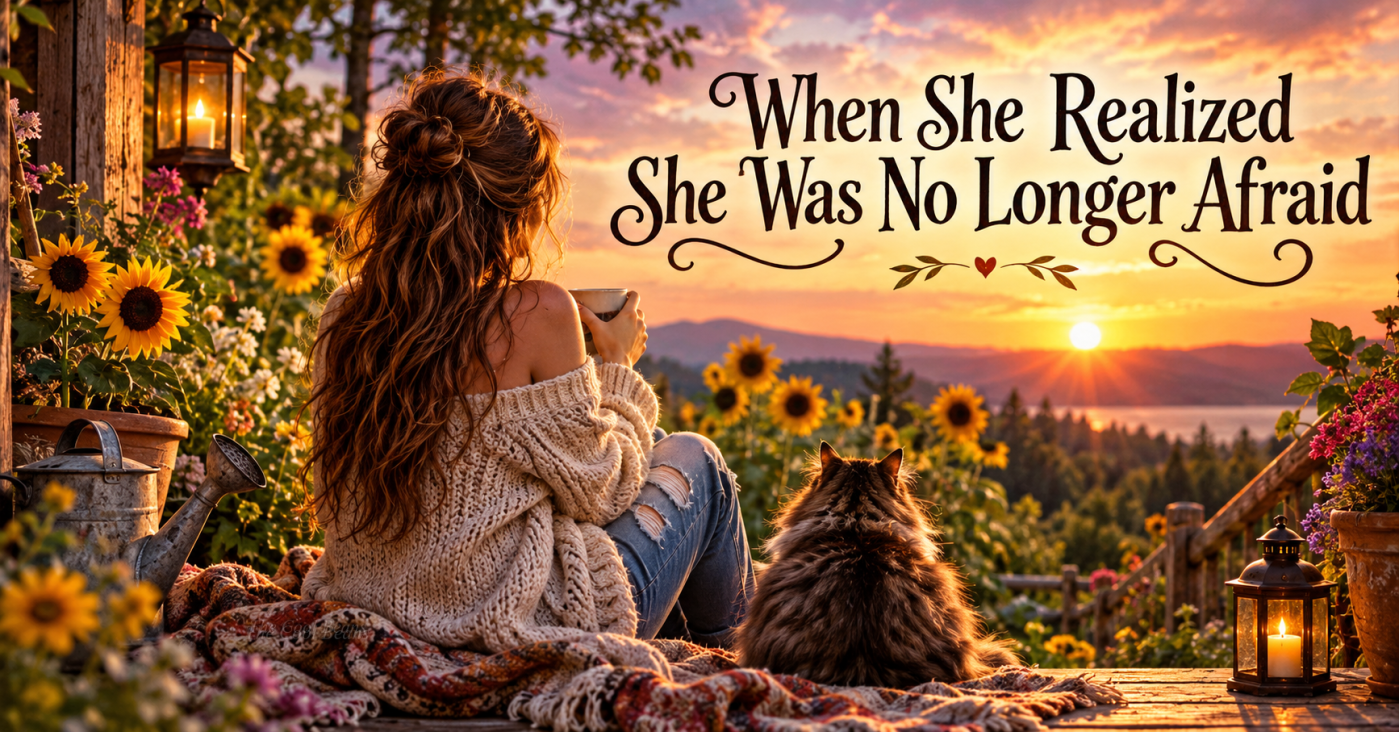
For a long time, Leah believed that healing would arrive like a thunderstorm. She imagined there would be one extraordinary morning when she would wake up, stretch her arms toward the ceiling, and discover that everything that had happened to her had somehow stopped hurting. The memories would be gone, her confidence would return, and she would become the woman she had been before her world fell apart.
But healing, she eventually discovered, was nothing like a thunderstorm.
It was more like the first warm day after a very long winter. So subtle that you almost missed it. So ordinary that you didn’t realize something beautiful was happening until you noticed the flowers.
Three years earlier, Leah had walked away from a situation that had slowly stolen her confidence, her sense of safety, and the parts of herself she had once loved most. She had spent so long questioning her own thoughts and feelings that, even after she was free, making the simplest decisions felt overwhelming.
She remembered standing in a grocery store one afternoon, staring at two different jars of strawberry jam, unable to decide which one to buy. It seemed ridiculous to cry over jam, but she did. Right there between the peanut butter and the breakfast cereal.
A kind older woman had noticed her tears and gently asked whether she was all right.
Leah had laughed through her embarrassment and replied, “Apparently, choosing jam is my villain origin story.”
The woman smiled, picked up one of the jars, and said, “Well, sweetheart, the wonderful thing about jam is that if you choose the wrong one, you can always try another.”
It was such a simple observation. Almost silly, really. But Leah carried those words home with her that afternoon.
She could choose something. She could make a mistake. She could change her mind. The world would not collapse around her.
And perhaps, for the first time in years, she began to understand what freedom actually meant.
At first, she made small changes. She painted her bedroom a ridiculous shade of yellow that reminded her of buttercups. She bought mismatched coffee mugs because she liked their cheerful colours. She played music while cooking and occasionally danced around the kitchen with a wooden spoon, much to the disapproval of her elderly cat, Rhubarb.
She began taking walks through the little park behind her house. Some mornings she walked confidently, enjoying the birds and the sunlight. Other mornings, an unexpected sound or an old memory would send her heart racing, and she would return home feeling as though she had made no progress at all.
Those were the hardest days.
She had expected that once she started feeling better, she would continue feeling better. Nobody had warned her that healing could sometimes resemble trying to climb a staircase while someone occasionally moved the steps.
One particularly difficult evening, she called her friend Naomi and announced that she was officially terrible at recovering.
Naomi listened patiently before asking, “Leah, when you learned to ride a bicycle, did you fall off?”
“Repeatedly,” Leah replied.
“And did anyone tell you that falling meant you’d never learn?”
“No.”
“Then why are you telling yourself that now?”
Leah was quiet for a moment.
“You’re annoyingly wise for someone who once microwaved a metal spoon,” she finally said.
“Personal growth,” Naomi replied solemnly. “We all have our journeys.”
They laughed until Leah’s stomach hurt, and for the first time in days, she went to bed without feeling defeated.
Over the following months, she began doing things she had once believed were beyond her. She joined a pottery class despite being convinced that she possessed the artistic talent of a confused potato. Her first bowl looked like something that had survived a small earthquake, but she proudly placed it on her kitchen windowsill.
She started meeting friends for breakfast. She learned to say no without offering a seventeen-page explanation. She stopped apologizing for having preferences, needing rest, or taking up space in a room.
Perhaps most importantly, she stopped measuring her progress against the person she had been before everything happened.
She was not going backward to find that woman, she was becoming someone new.
Someone who understood her own strength a little better. Someone who recognized kindness without mistaking it for weakness. Someone who could acknowledge what had happened without allowing it to dictate every decision she made.
Then, one Saturday morning in early spring, something extraordinary happened.
Or rather, something wonderfully ordinary.
Leah woke to sunlight spilling across her yellow bedroom walls. Rhubarb was asleep on her feet, snoring like a miniature tractor. Somewhere outside, a neighbour was attempting to start a lawnmower with the determination of a man preparing for battle.
She made herself coffee, opened the kitchen window, and began humming along to a song playing on the radio.
And then she realized something.
She was happy.
Not the kind of happiness that demanded fireworks or grand declarations. Just a quiet, uncomplicated feeling of contentment. She was standing barefoot in her own kitchen, thinking about whether she should plant tomatoes or sunflowers in the garden, and the past wasn’t occupying every corner of her mind.
For several beautiful minutes, she hadn’t thought about what happened to her at all. She had simply been living. Leah put down her coffee and leaned against the counter. Tears filled her eyes, but they were different tears this time. She wasn’t crying because she was frightened, she was crying because she had finally experienced a moment of peace without having to fight for it.
That afternoon, she drove to a little garden centre on the outskirts of town. She wandered between rows of flowers until she found a tray of bright yellow sunflowers, their tiny leaves reaching eagerly toward the sky.
An employee approached and asked whether she needed help choosing.
“I think I’ve found what I’m looking for,” Leah said.
She bought twelve sunflower seedlings, a bag of compost, and a gardening trowel that was far more expensive than any gardening trowel had a right to be.
By sunset, her hands were muddy, her knees were aching, and she had accidentally planted one sunflower considerably farther away from the others.
She considered moving it, then decided against it.
“Everyone deserves a little personal space,” she told the lonely sunflower.
Throughout the summer, she watched her garden grow. Some plants flourished immediately, while others struggled through heavy rain and unexpected cold. A few needed extra support. One stubborn little sunflower leaned sideways for weeks before finally straightening toward the light.
Leah loved that one most.
One evening in August, Naomi came over for dinner. They sat in the garden beneath the towering sunflowers, sharing homemade lemonade and laughing about Leah’s latest pottery disaster, a ceramic vase that looked suspiciously like a disgruntled turnip.
Naomi studied her friend for a moment before saying, “You seem different lately.”
Leah glanced toward the garden. “Different good or different ‘should I be concerned about your collection of ugly pottery’?”
“Different happy.”
Leah smiled. “I think I am.”
“Does that mean everything’s better?”
She considered the question carefully. There were still difficult memories. Certain places still made her uncomfortable. Sometimes she needed reassurance, or quiet, or a little extra time to feel safe. She knew there might be difficult days ahead, and she no longer considered that a failure.
“No,” Leah said gently. “Not everything. But my life is good again. And I think that’s enough.”
Naomi reached across the table and squeezed her hand. They stayed outside until the stars appeared, talking about ordinary things: holidays they wanted to take, books they wanted to read, and whether Rhubarb was secretly plotting world domination.
Later that night, after Naomi had gone home, Leah stood at her bedroom window and looked out over the garden.
The sunflowers swayed softly in the breeze.
She thought about the woman she had been three years earlier, frightened and exhausted, struggling to choose a jar of strawberry jam. She wished she could reach back through time and sit beside that version of herself, just for a little while.
She wouldn’t tell her that everything would be easy because it wouldn’t have been true. She wouldn’t promise that the memories would disappear or that she would never feel afraid again. Instead, she would tell her something much more important.
There would come a morning when she would laugh without immediately wondering whether she deserved to. There would be friendships that felt safe, decisions that belonged entirely to her, and rooms where she could speak without carefully choosing every word.
There would be sunshine and terrible pottery and dancing in the kitchen. There would be sunflowers, ridiculous conversations, and a grumpy old cat who loved her in his own deeply judgmental way.
There would be a life beyond what had happened.
And she would get to live it.
Leah turned off the bedroom light and slipped beneath the covers. Rhubarb immediately claimed his usual spot at her feet.
Tomorrow, she decided, she would go back to the garden centre and buy something completely unnecessary. Maybe a rosebush or a birdbath or maybe one of those ridiculous garden gnomes with it’s pants falling down. Just the thought of it made her laugh.
And as she drifted off to sleep, Leah understood something she had spent years trying to learn.
Moving on didn’t mean pretending the past had never happened. It didn’t mean forgiving someone who hadn’t earned forgiveness, forgetting the lessons she’d learned, or becoming the person she used to be.
It meant allowing herself to have a future that was bigger than her pain.
The past would always be part of her story, but it no longer had to be the author of every chapter.
And somewhere outside her window, beneath a sky full of stars, a little sunflower that had once grown crooked stood tall among the others, reaching toward the promise of another beautiful morning.
Enjoying what you find here? 💜 Consider subscribing and becoming part of our little community. It’s a simple way to stay connected, support what we do, and make sure you don’t miss what’s coming next. We’d truly love to have you here. 🌿✨


Leave a Reply