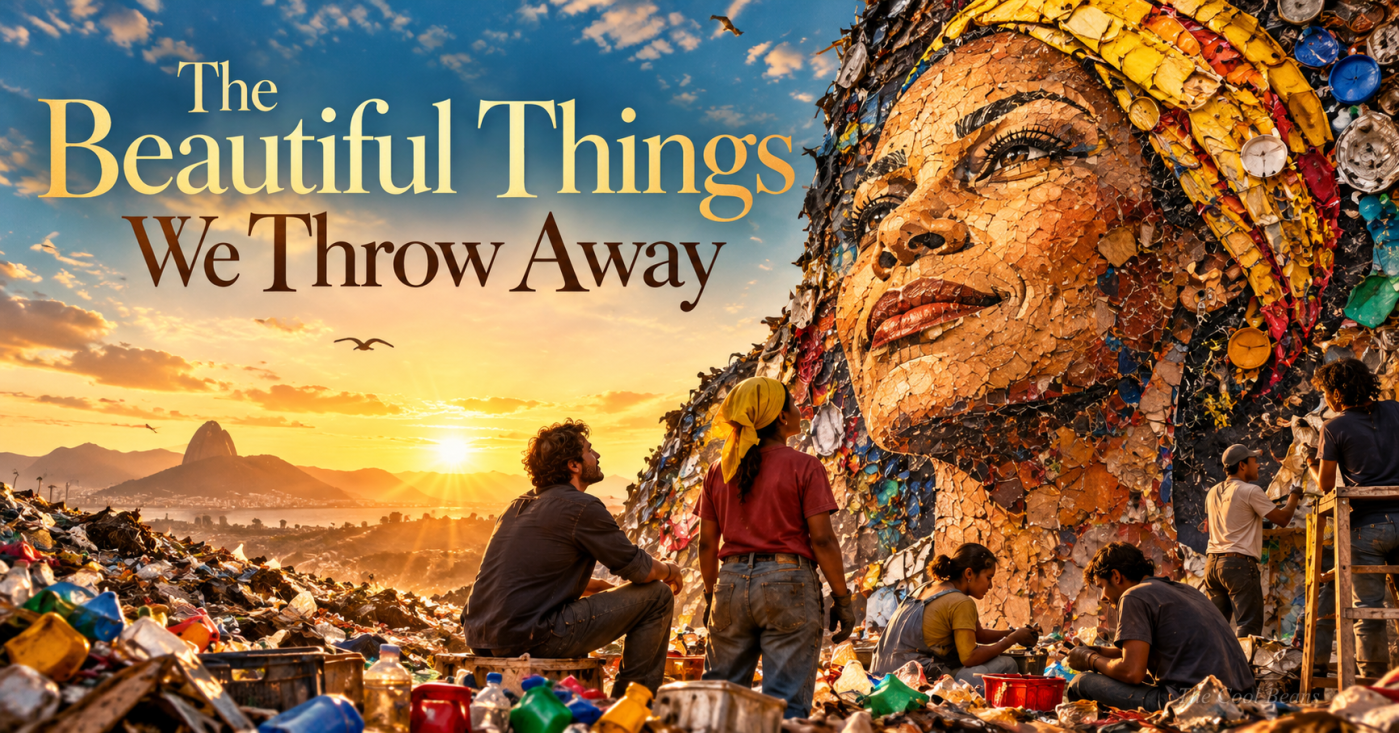
For most of his life, Beau Marco had been paid extraordinary amounts of money to make beautiful things for people who already owned everything. His sculptures stood in the entrance halls of luxury hotels in Dubai. His paintings hung in private collections in Paris, London, and New York. One of his installations, a twelve-foot chandelier made from thousands of hand-blown glass butterflies, had sold for more than three million dollars to a businessman who immediately placed it in a room nobody was permitted to enter.
Beau had once found that amusing. Lately, however, he had begun to wonder whether his greatest creations were disappearing into rooms where nobody would ever truly appreciate them. At forty-six, he was considered one of the most important contemporary artists in the world. His exhibitions sold out before they opened, and his name appeared in glossy magazines alongside photographs of yachts, penthouses, and jewellery worth more than most people earned in a lifetime. He had everything he had ever dreamed of achieving. Yet somewhere along the way, he had lost the feeling that had made him fall in love with art in the first place.
As a child, Beau had painted on discarded cardboard because his family couldn’t afford proper canvases. He had built miniature cities from cereal boxes, turned broken buttons into colourful mosaics, and once made his mother a necklace from sea glass he had collected along the shore. She had worn it everywhere, proudly telling anyone who complimented it that her son had made it himself. “It’s the most beautiful thing I own,” she had told him.
Back then, Beau had believed that art was a way of making the world a little brighter. Now he wondered when he had started measuring beauty by the price someone was willing to pay for it.
The realization came during a private exhibition in Geneva, where a billionaire had commissioned Beau to create a sculpture entirely from gold-plated porcelain. The piece was magnificent. It represented a human heart suspended inside an enormous glass cube, with delicate golden arteries reaching outward like the roots of a tree. The billionaire studied it for approximately twelve seconds before asking whether it would appreciate in value.
Beau smiled politely. “Does it matter what it means?” he asked. The man laughed and replied, “Of course. It means I bought it before anyone else could.”
That evening, Beau returned to his hotel suite and sat beside the enormous windows overlooking the city. For the first time in years, he wasn’t thinking about his next commission, exhibition, or sale. He was remembering his mother’s sea-glass necklace. He wondered whether he could create something that would make someone feel the way she had felt when he gave it to her, something that would matter long after the applause faded.
Three weeks later, he cancelled several commissions, arranged for his studio to operate without him, and boarded a plane to Brazil. He had recently watched a documentary about Jardim Gramacho, a vast landfill outside Rio de Janeiro, once among the largest open-air dumps in the world. For decades, thousands of people had earned their living there by sorting through mountains of discarded material, recovering anything that could be recycled and sold.
The documentary showed people standing among towering piles of refuse beneath a sky filled with circling birds. Trucks arrived continuously, unloading the unwanted remains of a city that rarely thought about where its garbage went. But what Beau remembered most was not the mountains of waste. It was a woman laughing.
She stood beside an enormous pile of plastic bottles, wearing mismatched gloves and a bright yellow headscarf. Someone behind the camera had asked how she could possibly find happiness working in such a place. She had grinned and replied, “Because I know how to find what other people overlook.”
Beau watched that moment seventeen times. Something about the woman’s confidence, humour, and remarkable ability to find value where others saw nothing had stayed with him. He wanted to meet her.
The smell reached him before the landfill came into view. It was a heavy mixture of rotting food, damp paper, chemicals, and things he couldn’t identify. The heat made it worse, and the flies seemed determined to accompany him wherever he went. His driver stopped at the edge of a dusty road and refused to go farther, leaving Beau to continue on foot.
He stepped out wearing clean jeans, sturdy boots, and a plain white shirt. Within minutes, his boots were covered in mud, and sweat had soaked through his collar. Before him stretched an enormous landscape of discarded possessions: broken furniture, torn clothing, plastic containers, twisted metal, crushed cans, mountains of cardboard, and shattered glass. People moved across the piles with remarkable speed, searching, sorting, and carrying enormous sacks over their shoulders.
Beau had never seen anything like it, and he had never felt more certain that he had something important to learn.
“You’re lost,” someone said behind him. Beau turned to find a woman in a faded red shirt watching him, one hand resting on her hip. She was perhaps fifty, with dark hair pulled into a knot and a face that suggested she had little patience for foolishness.
“I’m looking for someone,” Beau explained. The woman shrugged and replied, “Everyone is looking for something.”
“A woman named Rosa. She wears a yellow headscarf.”
The woman raised an eyebrow. “Why?”
“I saw her in a documentary. I wanted to speak with her.”
“About what?”
Beau hesitated before answering. “Art.”
The woman stared at him for a moment, then burst into laughter. It was the same wonderful laugh he had heard in the documentary. “You came all the way here to talk about art?” she asked incredulously.
Beau smiled. “I suppose I did.”
“Well, congratulations,” she said. “You found me.”
Her name was Rosa Almeida, and she had spent twenty-three years collecting recyclable materials from the landfill. She was a mother of three, a grandmother of four, and, according to her, the best person in the entire district at spotting valuable copper beneath a pile of useless junk. She was also deeply suspicious of Beau and his sudden interest in her work.
When he explained that he was a professional artist, she shrugged and said, “Good for you.” When he told her his work sold for millions, she narrowed her eyes and asked why someone with that much money would willingly spend his afternoon standing in garbage.
“Because I think I’ve forgotten what art is supposed to do,” Beau admitted.
Rosa studied him thoughtfully. “Maybe it isn’t supposed to do anything,” she said. “Maybe you’re supposed to.”
Beau laughed. It was the most sensible advice anyone had given him in years.
He returned the next morning, and the morning after that. For two weeks, he did nothing except work alongside the collectors. He learned how to separate plastics, identify metals, and recognize cardboard that could still be sold. He learned that the collectors called themselves catadores, and that their work kept enormous quantities of recyclable material from disappearing into the landfill forever.
More importantly, he learned their names and their stories. There was Paulo, who had once wanted to become a history teacher but had left school to support his younger siblings. There was seventeen-year-old Daniela, who dreamed of studying architecture and drew buildings in the margins of discarded notebooks. There was Miguel, a grandfather who could repair almost anything mechanical and believed that throwing away a perfectly good washing machine was a personal insult. And there was Rosa, who somehow knew everybody’s birthday, everybody’s troubles, and exactly when someone needed a meal.
Beau had arrived imagining that he might teach these people something. Instead, they were teaching him. They showed him how much beauty could exist in ordinary acts of generosity, how much intelligence was required to survive in circumstances most people preferred not to acknowledge, and how easily dignity could be overlooked when society decided a person’s work was beneath its notice.
One afternoon, Daniela discovered a box of old photographs among the rubbish. She spread them across a sheet of cardboard, revealing wedding pictures, family portraits, a little boy blowing out birthday candles, and an elderly woman holding a newborn.
“Imagine,” Daniela said quietly, “being someone’s whole world, and then ending up here.”
Beau looked at the photographs and then at the people around him. Suddenly, he had an idea. It wasn’t simply an idea for another piece of art, but something that could celebrate the remarkable people he had come to know.
The following Monday, he arrived carrying a camera, several enormous rolls of paper, and a question. “What if we made portraits?” he asked Rosa.
“Of who?”
“Of you.”
Rosa laughed. “Why would anyone want a picture of me?”
“Because you’re extraordinary.”
“You’re getting sunstroke,” she replied, shaking her head.
But Beau persisted. He explained that he wanted to photograph the collectors and use the discarded materials surrounding them to recreate their portraits on an enormous scale. These wouldn’t be ordinary paintings or small photographs. They would be portraits so large they would have to be assembled on the floor of a warehouse, with each piece of plastic, metal, paper, and glass becoming part of the image. From the ground, the materials would appear chaotic, but from above, they would form recognizable faces. Their faces.
At first, nobody understood why this mattered. Then Daniela asked whether people would know who they were, what they did, and how they lived. Beau assured her that the portraits would tell their stories, not simply display their faces. When she asked whether people would finally see them as people rather than as part of the landfill, Beau smiled and told her that was the whole point.
Daniela thought about it for a moment before announcing that she wanted to participate. Rosa, however, had a more practical question.
“And who gets paid?”
Beau paused, realizing he hadn’t properly considered that part.
“You heard me,” Rosa continued. “People come here with cameras all the time. They take pictures of us, tell sad stories, and leave. Sometimes they win awards. We stay here.”
The warehouse went quiet. Beau realized she was absolutely right. If this project was going to mean anything, it couldn’t simply benefit his reputation. It needed to belong to the people whose lives and talents would make it possible.
“Everyone involved,” he promised. “We’ll decide together how the money is used.”
Rosa considered him for a long moment before smiling. “Then maybe we can talk about art.”
The first portrait was of Rosa. Beau photographed her standing with her arms folded, chin lifted, looking directly into the camera. She refused to smile, informing him that she was not a decoration. The resulting image was magnificent, capturing her confidence, determination, and the quiet strength that had helped her guide her family and community through years of hardship.
They rented an abandoned warehouse near the landfill and projected her photograph onto the concrete floor. Then they began filling the enormous outline with materials collected from the dump. Black plastic formed the shadows of her hair, brown cardboard created the warmth of her skin, silver bottle caps caught the light in her eyes, and a thousand fragments of yellow packaging became the headscarf she wore so proudly.
The work took twelve days, and everyone contributed. Miguel constructed a platform so they could photograph the finished piece from above. Daniela organized the materials by colour and texture, while Paulo developed a system for recording every object used. Rosa complained constantly about the mess, the heat, and the fact that nobody seemed capable of making decent coffee, but she also arrived before everyone else each morning.
When the portrait was finally complete, Beau climbed onto the platform with his camera. Looking through the lens, he found himself momentarily speechless. Below him, assembled from thousands of things the world had discarded, was Rosa’s face. She wasn’t portrayed as a symbol of poverty or hardship. She was simply herself: powerful, defiant, beautiful, and impossible to overlook.
He printed the photograph and brought it to her the following morning. Rosa stared at it without speaking before slowly sitting down. For a long time, she simply looked at the enormous image of herself, tracing the outline of her face with one finger.
“That’s me?” she whispered.
“That’s you,” Beau replied.
“I’ve never looked like that before.”
Beau sat beside her and asked what she meant.
“Like someone important.”
He gently shook his head. “Rosa, you were important long before I ever picked up a camera.”
She smiled. “I know that. But it’s rather nice to see it hanging on a wall.”
Then she laughed, the wonderful, infectious laugh that had brought Beau halfway around the world.
Over the next six months, they created eleven more portraits. Paulo was photographed holding a book, surrounded by an enormous halo of discarded pages. Daniela stood before an imaginary city skyline made from crushed cans and coloured glass. Miguel sat like a king on a throne assembled from broken machinery, his hands resting proudly on the tools that had supported his family for decades.
Each portrait told a story chosen by the person it represented, and each was created collectively. The project gradually became much more than an artistic experiment. It became a place where people gathered after work to talk, laugh, argue, share ideas, and imagine futures that had previously seemed impossible.
Daniela began teaching younger children to draw. Paulo started organizing evening literacy classes, and Miguel built tables and benches from salvaged wood. Rosa insisted that everyone eat together on Fridays because, as she liked to remind them, nobody could change the world on an empty stomach.
Word spread. A local newspaper published photographs, followed by an international arts magazine that sent a journalist to document the project. Soon, museums and galleries began contacting Beau, eager to learn more about the remarkable portraits and the community behind them.
His agent called for the first time in months without shouting. “Beau,” she said breathlessly, “do you understand what you’ve created?”
He looked across the warehouse, where Rosa was arguing with Miguel about whether a particular shade of blue came from detergent packaging or candy wrappers.
“Yes,” he said quietly. And for once, he truly believed it.
The invitation arrived several weeks later in a thick cream envelope embossed with gold. A prestigious international auction house wanted to present the portraits at its annual contemporary art sale in London. The expected buyers included collectors, foundations, museums, and some of the wealthiest people in the world.
Six months earlier, Beau would have celebrated without hesitation. Now, however, he felt uneasy. He worried that the portraits might become fashionable possessions for wealthy collectors who admired their beauty without understanding the lives behind them.
He took the invitation to Rosa, who read it slowly before asking whether these were the same people who bought his million-dollar decorations. When Beau admitted that some of them were, she looked around at the others gathered near the table.
“Then I think we should let them,” she announced.
Beau explained his concerns, but Rosa leaned forward and reminded him that they couldn’t control what people thought when they looked at the portraits. What they could control was what happened with the money.
They spent the next three weeks making those decisions together. Every participant would receive compensation for their work, and the proceeds remaining after agreed expenses would be directed into a community-controlled fund. The collectors themselves would decide how that money was spent, prioritizing education, housing improvements, medical care, equipment, and opportunities for families who had spent generations living on the edge of survival.
Nothing would be imposed from outside, and nothing would be decided by Beau alone. The community would own its future.
On the night of the auction, Beau stood backstage wearing a tuxedo that suddenly felt ridiculous. Beside him stood Rosa in a deep blue dress. She had borrowed a pair of earrings from her daughter and insisted on wearing her old work boots beneath the gown, claiming they brought her luck.
Daniela had travelled with them, too. It was her first time outside Brazil, and she could hardly contain her excitement. Looking through a gap in the curtain, she watched the elegantly dressed guests taking their seats and asked whether everyone in the room was rich.
“Most of them,” Beau replied.
Daniela considered this before asking whether any of them knew how much a kilogram of cardboard sold for. Beau admitted that they probably didn’t.
“Then tonight they might learn something,” she said with a grin.
The first portrait appeared on the enormous screen. It was Paulo, standing beneath his halo of discarded pages. The bidding began at twenty thousand pounds, quickly rising to forty thousand, then seventy-five thousand. Beau watched the numbers climb, barely believing what he was hearing. When the hammer finally fell at £180,000, Daniela grabbed Rosa’s hand and squeezed it so tightly that Rosa protested.
The second portrait sold for even more, followed by Miguel’s and Daniela’s. With each sale, the atmosphere grew more electric, and the three friends found themselves laughing, crying, and staring at one another in disbelief.
By the time Rosa’s portrait appeared, the room was filled with anticipation. Her enormous face dominated the screen, assembled from thousands of discarded objects, her eyes looking directly at the people seated beneath glittering chandeliers. The auctioneer introduced her story, speaking about her decades of work, her leadership, and the community that had helped create the extraordinary image.
The bidding began at one hundred thousand pounds and quickly climbed to two hundred thousand, then four hundred thousand. Rosa stood perfectly still, watching the numbers rise. At six hundred thousand, she whispered that the entire thing was absurd. At eight hundred thousand, tears began rolling down her cheeks.
When the hammer finally fell at £1.1 million, Rosa covered her mouth with both hands. The room erupted in applause, but she wasn’t looking at the audience. She was looking at Beau.
“Do you know what this means?” she whispered.
He nodded, but she wanted to say it aloud. It meant Daniela could go to university. It meant Miguel could stop worrying about his medicine. It meant Paulo could teach, and some of their children might never have to work on that mountain.
Then Rosa looked back at the enormous portrait on the screen.
“And it means they finally saw us.”
Beau took her hand and told her that people were going to remember her, too. Rosa laughed through her tears and replied that they certainly should, considering how expensive the picture had been.
By the end of the evening, the auction had raised more than five million pounds. After the agreed costs, the remaining proceeds went into the community fund, administered by representatives elected by the collectors.
The money didn’t solve every problem overnight, but it opened doors that had once seemed permanently closed. Families repaired homes that had leaked for years, children received school supplies and scholarships, and a cooperative recycling centre purchased safer equipment while creating new opportunities for workers. A small health clinic opened, and Daniela, who had once drawn buildings in the margins of discarded notebooks, enrolled in architecture school.
For the first time, many families could plan beyond the next week or the next month’s bills. Parents began saving for their children’s education, young people started businesses, and neighbours helped one another improve their homes. The community continued finding new ways to grow, with people discovering opportunities they had never imagined would be available to them.
Perhaps the most wonderful change was the confidence that blossomed among the people who had created the portraits. They had always possessed talent, intelligence, determination, and creativity. Now they had more opportunities to put those qualities to work.
Three years later, Daniela returned with her first major architectural design. It was a community arts centre built from reclaimed materials, with classrooms, workshops, a library, and welcoming spaces where people of all ages could learn and create. She named it Casa Rosa, in honour of the woman who had encouraged so many people to believe in themselves.
Beau never returned to making gold-plated sculptures simply to satisfy wealthy collectors. He continued working as an artist, but his projects changed. He began collaborating with communities rather than creating work about them, ensuring that participants retained control over their stories and shared in the benefits. He still received invitations to extravagant parties, but he rarely attended. He had discovered that the most meaningful celebrations often took place around crowded tables with homemade food and people who genuinely enjoyed one another’s company.
Several years after the auction, Beau returned to Brazil for the grand opening of Casa Rosa. The building was extraordinary. Its walls incorporated reclaimed brick and glass, colourful mosaics covered the entrance, and inside were classrooms, studios, a library, and a workshop where people learned to turn discarded materials into useful and beautiful objects.
Children raced through the hallways while music drifted from an open window. A mural painted by local teenagers stretched across an entire wall, depicting flowers growing from a mountain of broken objects. Above the flowers were the words, Nothing beautiful is ever truly lost.
Rosa stood near the entrance, older now, her hair almost entirely grey. She wore a yellow headscarf, just as she had on the day Beau first met her. When she saw him approaching, her face broke into a smile, and she opened her arms.
“You did it,” Beau told her as they embraced.
Rosa pulled away and gave him the same skeptical look she had worn years earlier.
“We did it,” she corrected him.
Inside the main hall hung a reproduction of her enormous portrait. Beneath it was a small plaque bearing the words, Everything has value. Sometimes the world simply needs to learn how to see it.
Beau smiled and asked whether Rosa had written it. She shrugged and explained that Daniela had come up with the words, proudly adding that Daniela was the educated one now. They both laughed, delighted by how much had changed and how much remained wonderfully familiar.
Later that afternoon, Beau wandered into a classroom where a dozen children were building pictures from bottle caps, paper scraps, and broken tiles. A little girl with two crooked braids sat alone at a table, carefully arranging blue plastic fragments into the shape of a butterfly.
Beau crouched beside her and told her that her butterfly was beautiful. She looked up and asked whether he thought it was worth money.
He considered the question. Once, he would have told her that art was valuable because someone was willing to pay for it. Now he knew better. He explained that the butterfly was worth something much more important because it had made her happy to create it, and it had made him happy to see it.
The little girl studied her butterfly thoughtfully before pushing a handful of blue plastic pieces toward him.
“Would you like to make one too?”
Beau sat down beside her, and for the next hour, the world-renowned artist made butterflies out of rubbish. Nobody asked what they were worth, nobody discussed investment potential or resale value, and nobody cared whether they would ever hang in a museum. Beau couldn’t remember the last time he had enjoyed creating something so much.
When they finished, the little girl carefully placed their butterflies side by side. She explained that hers was blue because blue was her favourite colour, then asked why Beau had made his yellow.
He looked at the little butterfly resting in his palm. It was uneven, with one wing slightly larger than the other. Its body was made from a broken pencil, and its wings had been fashioned from pieces of yellow packaging. He thought about the first day he had arrived at the landfill, the laughter of a woman wearing a yellow headscarf, and all the wonderful things that had happened because he had decided to follow a question instead of another commission.
“Because yellow reminds me of sunshine,” he told her. “And sometimes a little sunshine changes everything.”
The girl beamed and suggested that they should make lots more butterflies. Beau agreed, and before long, several other children had joined them. By the end of the afternoon, the classroom windows were filled with butterflies of every imaginable colour. There were red ones, green ones, purple ones, and a particularly spectacular orange butterfly that Miguel insisted looked more like a flying carrot.
Everyone laughed, and the sound filled the building with a happiness Beau knew he would remember for the rest of his life.
As the sun began to set, Beau stepped outside with Rosa. Across the courtyard, Daniela was showing a group of children the plans for a new community garden. Paulo was carrying books into the library, and Miguel was helping two teenagers repair an old bicycle. Everywhere Beau looked, people were learning, sharing, creating, and helping one another.
The place was alive with possibility.
Rosa followed his gaze and smiled. “Funny, isn’t it? All those years, we spent our days finding things other people didn’t want. And then you came along looking for something you couldn’t buy.”
Beau looked at her warmly. “And you helped me find it.”
Rosa shook her head. “We found it together.”
For a while, they stood in comfortable silence, watching the children chase one another across the courtyard. Then Rosa reached into her pocket and slipped something into Beau’s hand.
It was a necklace made from a small piece of sea glass, polished smooth and threaded onto a simple cord. Daniela had told Rosa about the necklace Beau had made for his mother when he was little, and Rosa had decided that he deserved another one.
Beau stared at the gift. After all the awards, exhibitions, and extraordinary sums of money that had passed through his life, this small handmade necklace touched him more deeply than he could explain.
“It’s beautiful,” he whispered.
Rosa grinned. “Of course it is. I made it.”
He laughed and fastened it around his neck.
Years later, when people asked Beau Marco which of his creations had been the most valuable, he never mentioned the million-dollar sculptures, the prestigious exhibitions, or even the extraordinary auction in London. Instead, he told them about a warehouse filled with discarded materials, a group of people who taught him what genuine creativity looked like, and a little girl who believed the world needed more butterflies.
He told them about Rosa, whose laughter had led him to a place where he discovered that the greatest works of art weren’t always the ones hanging on expensive walls. Sometimes they were the friendships built between strangers, the opportunities created for children, the dreams given room to grow, and the simple kindnesses that made life more beautiful.
Whenever he finished telling the story, Beau would reach for the little sea-glass necklace he still wore around his neck. It reminded him that happiness was never something he needed to chase across the world or purchase with a fortune. It was something he could create, share, and discover in the most unexpected places.
And as the years passed, Beau found himself returning to Casa Rosa again and again. He watched children grow into confident young adults, saw families build businesses and pursue dreams, and celebrated as the community continued to flourish. Daniela eventually opened her own architectural firm, Paulo became a beloved teacher, and Miguel continued repairing anything anyone was foolish enough to throw away.
Rosa remained the heart of it all, greeting newcomers with her unmistakable laugh and reminding everyone that a person’s worth had never depended on their circumstances, their possessions, or the opinions of others.
One spring morning, Beau arrived to find the courtyard filled with children planting flowers in brightly painted containers made from discarded materials. Sunflowers stretched toward the sky, colourful butterflies fluttered among the blossoms, and laughter spilled from every corner of the building.
He stood beside Rosa, watching the children work, and realized that the most beautiful thing they had created wasn’t a portrait, a building, or even the community fund that had opened so many doors.
It was hope.
Hope that had grown into opportunity, opportunity that had blossomed into confidence, and confidence that had inspired people to dream bigger than they ever had before.
Beau smiled as a little boy ran past carrying a watering can almost as large as himself. Nearby, a young girl carefully planted a sunflower seed, pressing the soil around it with her fingertips.
“What do you think it’ll look like when it grows?” Beau asked her.
The girl looked up at him with a bright smile.
“Beautiful,” she answered confidently.
Beau laughed. “How can you be so sure?”
She shrugged, as though the answer were the simplest thing in the world.
“Because we’re going to take care of it.”
And in that moment, Beau understood something wonderful. Beauty wasn’t always something that appeared fully formed, waiting to be admired. Sometimes it was something people created together, patiently and lovingly, through the simple act of caring.
The world was filled with extraordinary people, overlooked possibilities, and beautiful things waiting to be discovered. Sometimes all it took to change a life was someone willing to look a little closer, believe in what was possible, and offer a hand.
After all, a single piece of discarded glass could become a treasured necklace. A handful of forgotten objects could become a masterpiece. One small act of kindness could grow into something that transformed an entire community.
And just like the sunflower seed nestled in the earth, even the smallest beginning could blossom into something extraordinary when given a little care, encouragement, and sunshine.
Beau had spent years believing that success meant creating something the world would admire. Now he understood that the greatest success was helping create a world where more people had the chance to shine.
And that, he decided, was the most beautiful masterpiece of all.
This story is fiction. It is inspired by Brazilian artist Vik Muniz and his collaboration with recyclable-material collectors at Jardim Gramacho
Enjoying what you find here? 💜 Consider subscribing and becoming part of our little community. It’s a simple way to stay connected, support what we do, and make sure you don’t miss what’s coming next. We’d truly love to have you here. 🌿✨


Leave a Reply