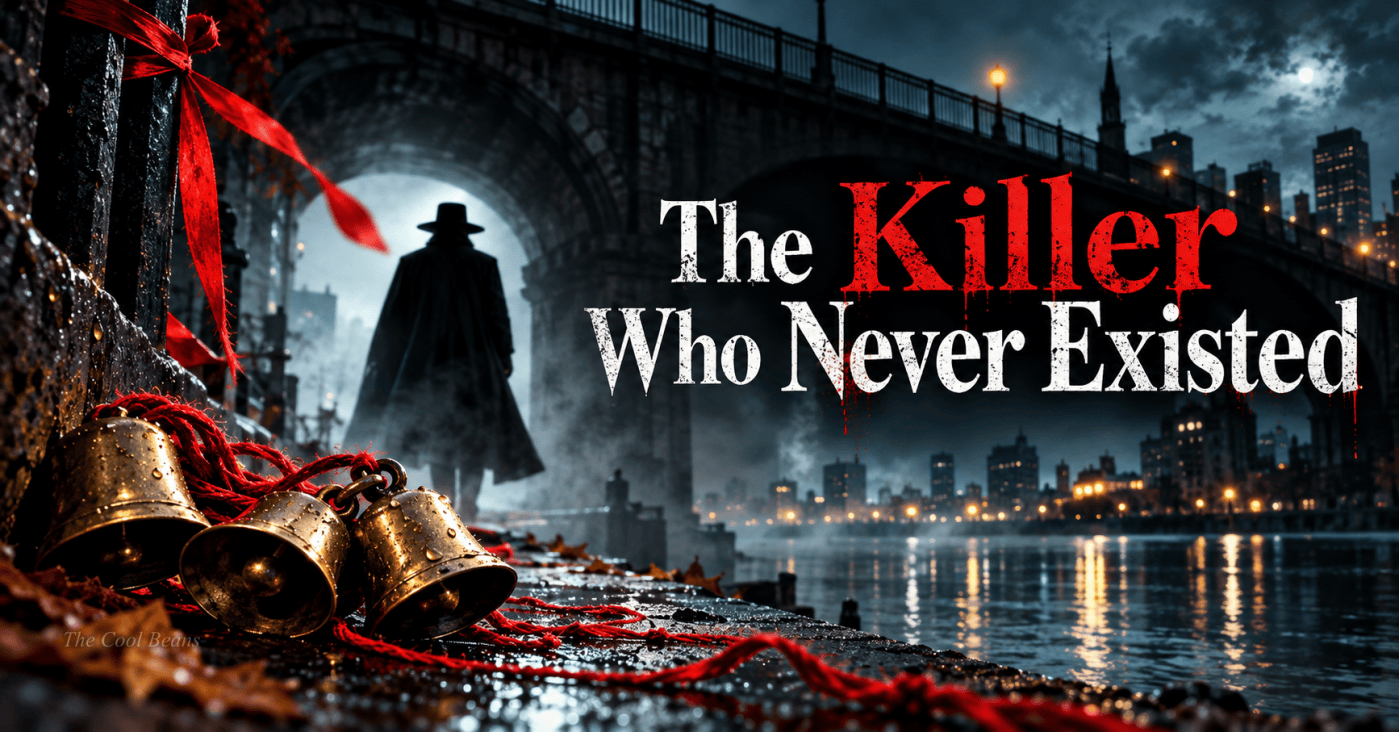
The first body was discovered at 4:17 on a Tuesday morning, beneath the railway bridge on Mercer Street, where the river ran black between the old factory buildings.
Detective Evelyn Cross had been awake for thirty-one hours when her phone rang. She had spent the previous evening interviewing a domestic violence suspect, the night before that reviewing surveillance footage from a convenience store robbery, and the better part of the last six months wondering whether she was still any good at her job. She almost let the call go to voicemail, but instead, she answered, listened for twenty seconds, and said, “Please tell me somebody’s already called forensics.”
By the time she arrived, rain had begun falling in thin, miserable sheets. Two patrol officers stood beneath the bridge, looking uncomfortable, while a crime scene technician photographed something on the concrete embankment. The victim was a man in his early forties, dressed in an expensive charcoal suit. His shoes had been placed neatly beside him. A strip of black fabric covered his eyes, and three small brass bells had been arranged in a triangle near his right hand.
Evelyn crouched beside the body and asked about the cause of death. Dr. Simon Davis, the medical examiner, explained that it was too early to tell, but there was something he wanted her to see. He pointed toward the victim’s left wrist, where someone had tied a narrow length of red thread.
Evelyn stared at the thread, then at the bells. Something about the arrangement seemed strangely familiar, although she couldn’t understand why. One of the patrol officers shifted uneasily and explained that his grandmother had told him stories about something called the Bellman.
According to the old legend, the Bellman came for people who had committed terrible acts. He covered their eyes so they couldn’t see him approaching, tied red thread around their wrists so their souls couldn’t escape, and left three bells behind. Each bell represented a chance to confess their sins before judgment arrived.
Evelyn stood and looked down at the dead man. “Wonderful,” she muttered. “A murderer with a hobby.”
She had no idea that by sunrise, half the city would be talking about the Bellman. By the end of the month, people would be leaving bells on their windowsills, painting red thread symbols on their doors, and accusing their neighbours of crimes they had never committed.
The legend was older than the city itself. According to historical archives, the Bellman first appeared in newspaper accounts from 1912, following the disappearance of a factory foreman named Albert Rusk. Rusk had been accused of mistreating children employed at the Holloway Textile Mill, although the allegations were never formally prosecuted. His body had supposedly been found beneath a railway bridge, blindfolded, with three brass bells beside him.
A local newspaper described an unidentified figure in a long black coat who had been seen wandering the factory district shortly before the discovery. Witnesses claimed they heard bells ringing in the fog, even though the church bells had been silent that night. Over the decades, the story changed. Sometimes the Bellman was a murdered factory worker seeking revenge. Sometimes he was the ghost of a priest driven mad by the suffering of the poor. In another version, he had been a railway conductor who murdered corrupt businessmen before disappearing into the river.
But every version contained the same warning. If you had done something wicked and heard three bells ringing outside your window, you had until sunrise to confess. Otherwise, the Bellman would come for you.
Evelyn learned all of this from a twenty-six-year-old civilian analyst named Noah Bennett, who appeared at her desk the following morning carrying three coffees, a laptop, and the kind of enthusiasm she found personally offensive before nine. He announced that she was investigating the most famous murder in city history, but Evelyn reminded him that they had only one victim.
“Not according to the internet,” Noah replied, turning his laptop toward her.
The first photograph of the crime scene had leaked at 6:42am. By eight, someone had created an account called @TheBellmanReturns. By ten, a video explaining the legend had accumulated nearly two million views. A local paranormal podcast had already announced a special episode, and someone had posted a grainy photograph of a figure in a dark coat standing near the railway bridge. The caption declared that the Bellman had never left.
Evelyn recognized the photograph immediately. It was from a Halloween ghost tour held several years earlier. Noah confirmed that he had found the original photograph from 2019 and had already posted a correction. Unfortunately, the false image had been shared another fourteen thousand times, while his correction had received only seventeen likes.
The victim was identified as David Erickson, a property developer who had made a considerable fortune buying distressed buildings, renovating them, and raising rents. He had enemies, and plenty of them. Tenants had accused him of intimidation, former business partners described him as ruthless, and a woman named Clara Whitcomb had filed a civil lawsuit after her elderly father was evicted from an apartment building David had purchased.
Evelyn interviewed Clara two days after the murder. She was thirty-eight, a nurse with tired eyes and a carefully controlled voice. When Evelyn asked whether she hated David Erickson, Clara admitted that she did. However, when asked whether she hated him enough to kill him, she firmly denied it. She explained that she had been working a twelve-hour hospital shift on the night of the murder, and hospital records confirmed her attendance.
Evelyn crossed Clara off her immediate suspect list, although something about the woman’s composure bothered her. She had encountered grief, anger, and resentment often enough to recognize them, but Clara seemed to be holding something back.
The first forensic results arrived on Thursday. The red thread was ordinary cotton, sold in hundreds of craft stores. The brass bells were inexpensive decorations, the sort used for Christmas ornaments, and the blindfold had been cut from commercially available fabric. Beneath David’s fingernails, however, investigators found skin cells belonging to an unidentified male. There was no match in the criminal database.
Evelyn studied the report and considered what it suggested. A man had killed David Erickson, apparently knowing enough about the Bellman legend to stage the murder accordingly. He had gone to considerable trouble to make his crime resemble folklore, and Evelyn suspected he would strike again.
She was right about another murder coming. She was wrong about almost everything else.
The second victim was discovered nine days later. Her name was Rebecca Sloan, a forty-nine-year-old family court judge. She had been found in her garage, seated in the driver’s seat of her car. Her eyes were covered with black fabric, red thread circled her wrist, and three brass bells rested on the dashboard. The killer had even placed a handwritten note beneath the windshield wiper. It read, “Three chances. None taken.”
By noon, the city was in a frenzy. People began posting lists of supposedly corrupt officials, abusive employers, and unfaithful spouses. The Bellman had become something more than a ghost story. He had become an imaginary executioner, and thousands of people were cheering him on.
One popular video called him the justice system the city deserved. Another claimed the victims had been selected because they belonged to a secret organization descended from the Holloway Textile Mill owners. A woman livestreaming outside police headquarters announced that the Bellman was not a person at all, but a supernatural force summoned by collective anger.
Evelyn watched the video for precisely fourteen seconds before switching it off. “Humanity was a mistake,” she told Noah.
But the forensic evidence was even more troubling than the public hysteria. DNA recovered from beneath Rebecca Sloan’s fingernails belonged to a woman, and it did not match the DNA from David Erickson’s murder. The knot securing the blindfold was different, the bells came from another manufacturer, and the red thread was synthetic rather than cotton.
Even the staging suggested a different personality. The first scene had been deliberate and orderly, while the second looked hurried, with several items moved after the victim’s death. Evelyn brought both reports to the conference room and explained that they might be dealing with two killers.
Captain Marcus Bell, her supervisor, wanted to know whether the killers were working together or whether the second murder was a copycat crime. Evelyn studied the photographs pinned to the evidence board and admitted that she didn’t know. It was the first time she had said those words aloud in weeks.
Three days later, a third victim appeared.
His name was Peter Halden, a retired police sergeant who had spent thirty-two years with the department. He was found in the basement of his home, blindfolded, with red thread around his wrist and three brass bells arranged beside his body.
The city stopped sleeping. Schools received threats, businesses closed early, and a man wearing a black coat was assaulted outside a grocery store because someone thought he resembled the figure in the viral photograph. Police received hundreds of tips, most of them about people who had recently purchased bells.
One elderly woman was accused of being the Bellman because she owned a collection of antique railway memorabilia. Someone spray-painted the word “CONFESS” across the front of a church. Then a rumour spread that the Bellman only killed people whose names appeared on a secret list.
A website appeared, inviting visitors to submit names of people who deserved to be punished. Within forty-eight hours, it contained more than eleven thousand entries. Teachers, landlords, former spouses, neighbours, local politicians, and even a sixteen-year-old boy accused of cheating on his girlfriend had been named.
Evelyn stared at the list in disbelief. She warned Noah that someone was going to get killed because of it, but he had already found a news report about a man in the eastern suburbs who had been attacked by three strangers after his name appeared on the website. He was hospitalized with serious injuries. His alleged crime had been refusing to return a security deposit.
Evelyn closed her eyes. Somewhere in the city, three people were dead, and the living had begun hunting one another.
The third forensic report arrived on a Sunday morning. Evelyn was sitting in her car outside a twenty-four-hour diner, drinking coffee that tasted like burnt cardboard, when Dr. Davis called. Investigators had recovered DNA from a drinking glass at Peter Halden’s house. It belonged to an unidentified third person and matched neither of the earlier crime scenes.
Evelyn sat very still as Dr. Davis explained that although a group of killers could not yet be ruled out, the physical evidence pointed toward three separate perpetrators. The materials, methods, and trace evidence differed significantly, and there was no forensic indication of a common offender.
When the call ended, Evelyn stared through the windshield at the rain sliding down the glass. Three murders, three different killers, and one identical legend. She suddenly understood something that made her stomach tighten.
They weren’t dealing with a serial killer. They were dealing with three people who wanted the world to believe there was one.
The breakthrough came from a detail everyone else had dismissed. Noah was reviewing old newspaper clippings when he discovered that the Bellman legend had never included red thread until 1987. Before that, accounts described a strip of red ribbon. The change appeared in a self-published local history book written by a schoolteacher named Eleanor Pike.
The phrase “three chances, none taken” was newer still. It first appeared in a viral internet story published seven years earlier by an anonymous writer using the name TheMidnightArchivist.
Someone had combined pieces of the legend from different eras, not because they knew its history, but because they had learned it online. Noah traced the versions circulating before each murder and discovered something extraordinary. The first killer had used details from a popular documentary uploaded six months earlier. The second had copied elements from a podcast episode released after David Erickson’s death. The third had used details from a viral reconstruction video published only four days before Peter Halden was killed.
Evelyn studied the timeline and realized the killers weren’t communicating with one another. Each was copying the same story, but each was copying a different version. Every murder had given the next killer a better script.
For the first time, the pattern made sense. The Bellman wasn’t a person. He was a costume, and the internet was sewing it together.
Clara Whitcomb’s younger brother, Thomas, was arrested first. Investigators had identified a familial lead linking him to the male DNA recovered from David Erickson’s fingernails, and subsequent testing confirmed the match. Thomas had a history of violent confrontations but no previous convictions. When detectives questioned him, he initially denied everything.
Then Evelyn placed a photograph of David Erickson on the table and mentioned that Thomas’s father had died six weeks after losing his home. Thomas looked away before explaining what David had allegedly said to his father during the eviction. According to Thomas, David had told him that people like them should learn to live within their means.
Thomas’s voice cracked as he explained that his father had worked for forty-six years and paid his rent every month. David had purchased the building and found a way to force him out. Thomas had spent months following David, documenting his movements, and waiting for an opportunity to confront him.
When that confrontation finally happened, it became violent, and Thomas killed him. Afterward, he staged the scene to resemble the Bellman legend, hoping investigators would focus on the supposed serial killer rather than someone with a personal grievance.
When Evelyn asked why he had chosen the legend, Thomas gave a bitter laugh. He explained that he wanted people to know what kind of man David had been. Evelyn reminded him that he could have told people, but Thomas insisted that nobody had listened. He had decided to make them listen.
Thomas had not known the other victims. He had never met Rebecca Sloan or Peter Halden, and he had no idea that his attempt to conceal a personal murder would inspire two more.
The second killer was a woman named Melissa Grant, a thirty-four-year-old former social worker whose younger sister had lost custody of her children after a prolonged court battle. Judge Rebecca Sloan had presided over the case.
Melissa believed the judge had ignored evidence of abuse. Court records showed the proceedings had been complex and contentious, but investigators found no proof of the corruption Melissa alleged. That distinction no longer mattered to Melissa, who had spent years reading online communities dedicated to exposing supposedly corrupt judges.
After David Erickson’s murder, someone posted a message suggesting the Bellman might be targeting powerful people who had escaped accountability. Melissa saw an opportunity. She purchased bells, thread, and fabric, watched videos about the legend, and began following Rebecca Sloan.
When detectives arrested her, she was almost relieved. She admitted that she had thought the authorities would blame the Bellman. Evelyn told her there was no Bellman, and Melissa quietly acknowledged that she knew.
When Evelyn asked why she had committed the murder, Melissa’s eyes filled with tears. She explained that, for the first time, people were paying attention to what had happened to her sister.
Evelyn felt a familiar exhaustion settle over her. There it was again: a real grievance, a terrible decision, and a mythology that made murder feel like justice.
The third killer was someone Evelyn had known.
His name was Andrew Keene, a forty-one-year-old former police officer dismissed after an internal investigation into evidence tampering. Peter Halden had testified against him, and Andrew had spent seven years blaming Halden for destroying his career.
During those years, Andrew had written anonymous posts about police corruption, many containing elaborate conspiracy theories. When the Bellman murders began, he recognized the opportunity immediately. He knew how investigators worked, understood forensic procedures, and believed staging Halden’s death as another Bellman killing would send detectives chasing the wrong suspect.
He was careful, but he made one mistake. Forty-three minutes before Halden’s body was discovered, Andrew posted an anonymous comment beneath a Bellman video suggesting that men who spent their lives hiding behind police badges would eventually hear the bells coming for them.
The comment attracted little attention at first. Then Noah noticed that the same account had previously posted a photograph of a retired police officers’ reunion. Peter Halden was standing in the background, with Andrew Keene beside him.
When detectives obtained the appropriate records and warrants, the evidence began falling into place. A vehicle matching Andrew’s had been captured near Halden’s home. Fibres recovered from the crime scene were consistent with material found in Andrew’s garage, and the DNA from the drinking glass matched his.
During questioning, Andrew remained calm. He listened to Evelyn explain the evidence without interrupting, then smiled and told her that she was missing the point.
He insisted that he hadn’t created the Bellman. Evelyn agreed, pointing out that he had simply used him.
Andrew leaned back in his chair and replied, “Everybody did.”
The arrests should have ended the hysteria. Instead, they made it worse.
Within hours of the police announcing that three unrelated suspects had been charged, conspiracy theories began spreading. Some claimed the arrests were staged, while others insisted the three suspects had been manipulated by a hidden organization. A popular livestreamer declared that the police had invented the separate-killer explanation because they could not admit the Bellman was real.
The theory received more than four million views.
A photograph of Evelyn leaving police headquarters was circulated with a caption calling her the woman who knew the truth. Someone posted her home address, and someone else claimed she had been seen carrying brass bells. By the following morning, strangers were standing outside her house.
Evelyn spent the night at a hotel, sitting on the edge of the bed and watching footage of people chanting beneath the railway bridge. Some wore black coats, some carried bells, and others had red thread tied around their wrists. They were celebrating a killer who had never existed.
Three people had committed three murders for three separate reasons, but the city had decided that the legend was more interesting than the truth. Now, thousands of people were helping keep it alive.
Two weeks later, Evelyn attended a press conference. She had prepared a statement explaining the evidence, the separate motives, and the forensic distinctions between the cases. But when she approached the microphone, she looked out at the reporters and decided to say something else.
She told the city that, for the past month, its residents had been afraid of a man who did not exist. Three people had been murdered by three separate individuals who had made deliberate choices. Those choices were not supernatural, inevitable, or acts of justice.
Each killer had used a story to conceal what they had done. Every time that story was shared without question, it became easier for someone else to use it.
A reporter asked whether Evelyn was suggesting that the public was responsible for the murders. She firmly rejected that idea, explaining that the killers alone were responsible for their crimes. But she reminded everyone that people were responsible for what they chose to believe, what they repeated, and how they treated others because of those beliefs.
When another reporter asked whether the Bellman legend would finally disappear, Evelyn thought about the thousands of people who had watched the videos, the online lists, the threats, and the innocent man beaten because his name appeared on a website. She thought about the three dead people whose lives had been reduced to symbols in a story.
“No,” she said quietly. “I don’t think it will.”
The following October, the city organized a Bellman Festival.
There were costume contests, ghost tours, souvenir bells, and guided walks beneath the Mercer Street railway bridge. A streaming service announced a documentary series, a clothing company began selling black coats with red-thread embroidery, and a restaurant introduced a cocktail called Three Chances.
The families of the victims protested, but their objections were largely ignored.
Evelyn, who had taken a leave of absence and moved to a quiet town several hours away, learned about the festival from Noah. He sent her a photograph of the railway bridge decorated with red ribbons. Beneath it, someone had painted a mural of a tall man in a black coat, his face hidden in shadow, with three bells hanging from his outstretched hand.
Underneath were the words, “HE SEES WHAT YOU’VE DONE.”
Evelyn stared at the photograph for a long time before calling Noah. She asked him whether anybody remembered the victims anymore. Noah was silent for several moments before admitting that, from what he had seen, they didn’t.
Evelyn looked out her kitchen window. The trees were turning orange, and somewhere outside, a dog barked. The world seemed perfectly ordinary, but something about Noah’s answer disturbed her more than anything else that had happened.
“They remember every detail of a man who never existed,” she said. “But they’ve forgotten three people who did.”
On the night of October 30, a seventeen-year-old boy named Lucas Bennett stood beneath the railway bridge with three friends. They were filming a video, and Lucas was wearing a long black coat with a strip of red thread tied around his wrist.
His friends laughed as he rang three brass bells into the darkness. One of them encouraged him to imitate the Bellman’s voice, and Lucas lowered his head dramatically before warning that everyone had three chances to confess.
The others burst into laughter, but then a noise came from the far end of the bridge. Footsteps echoed through the darkness, slow and measured, and the laughter stopped.
A figure emerged from the shadows wearing a long black coat and a wide-brimmed hat that concealed its face. Three brass bells hung from one hand. For several seconds, nobody moved. Then the figure raised its head, Lucas dropped his phone, and his friends ran.
The video ended there.
By morning, it had been viewed six million times. Police later determined that the mysterious figure was another teenager staging a prank, but that explanation received almost no attention. People had already decided what they wanted the video to mean.
Somewhere in the city, someone was watching it. Someone angry, lonely, and convinced that another person had escaped punishment. Someone who had just discovered that an old ghost story could provide the perfect disguise.
That night, in an apartment overlooking the river, a pair of hands opened a small cardboard box. Inside lay a length of red thread, a folded strip of black fabric, and three brass bells.
The person picked up one of the bells and turned it slowly between their fingers before opening a laptop. On the screen was a photograph of someone they hated. Below it was a headline asking whether the Bellman had returned and whether the legend might have been real after all.
The person smiled.
Because the Bellman had never existed.
And that was precisely why anyone could become him.
💜 Enjoying the chaos that is my life? Subscribe to The Cool Beans! It’s cheaper than therapy and slightly more organized 🤣


Leave a Reply