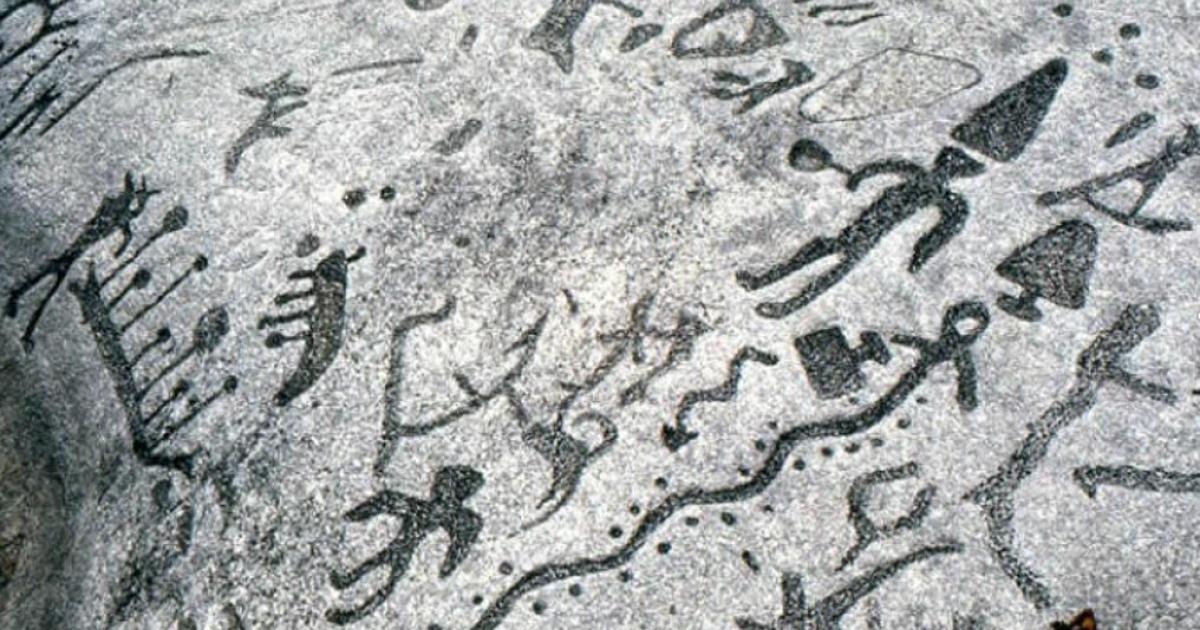
Located within Petroglyphs Provincial Park in Woodview, Ontario, hold Canada’s largest known concentration of Indigenous rock carvings. Etched into a broad shelf of white crystalline limestone bedrock, the site features more than 900 ancient carvings depicting animals, humans, and sacred spiritual symbols. Known to the Anishinaabe (Ojibwe) people as Kinomagewapkong, or “The Teaching Rocks,” this deeply sacred ceremonial site dates back roughly 1,000 to 1,200 years.
Ancestors of the Algonkian people etched these figures into the limestone between 900 and 1400 C.E.. The images include detailed renderings of turtles, snakes, and birds, alongside shamans, deep abstract designs, and representations of the Great Spirit.
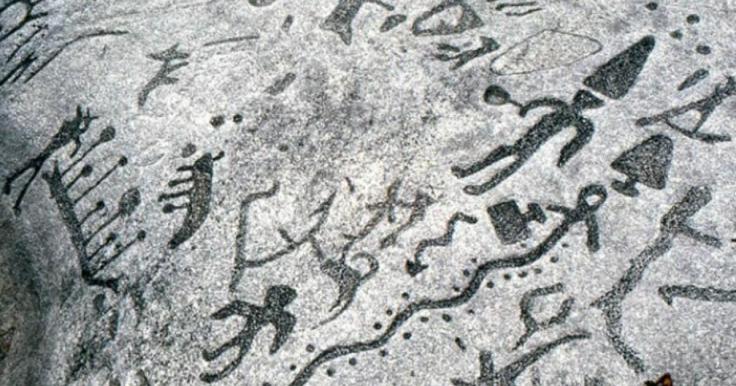
The limestone bedrock features a massive natural fissure with an underground stream running through it. In Anishinaabe cosmology, this physical crevice represents a direct portal between the physical world and the spirit world (Manitou). The echoing sounds of rushing water filtering up through the limestone crevices are traditionally understood to be the audible voices of the Spirits and Ancestors speaking directly to the people. In Anishinaabe culture, ancient rocks are respected as M’Shoomisnaan (our Grandfathers) because they have witnessed the entire passage of time and hold the oldest memories of creation.
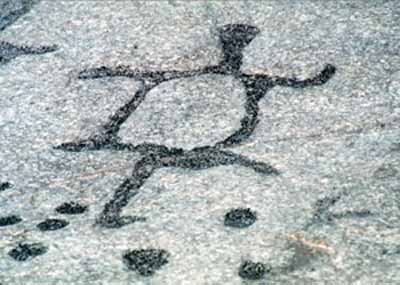
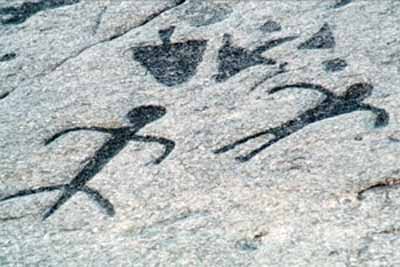
Medicine men (also referred to as Shamans) traditionally visited the site to fasting, pray, and document their profound spiritual visions using hammerstones on the limestone. Several core figures from Indigenous mythology are etched into the rock face. The carvings illustrate the creation stories and sprawling travels of Nanabush (Weneboozhoo), the cultural trickster, teacher, and Elder Brother of the Anishinaabe people. Striking, massive carvings of snakes (some measuring up to three meters long) represent the underwater serpent spirits (The Serpentine Spirit). In regional mythology, these powerful beings control the waters and the underworld. A famous carving features a human-like figure wearing a horn-like or radiating headdress (The Shaman with Horns). This represents a powerful Shaman or spiritual leader channeling supernatural energy and wisdom. Multiple carvings of turtles mirror the foundational Indigenous Creation Story of Turtle Island (North America). The turtle (Mishigi-bik) represents truth, Mother Earth, and the cyclical blueprint of life. Stylized avian figures represent the mythical Thunderbirds, the fierce guardians of the upper world who create thunder by flapping their wings and shoot lightning bolts from their eyes.
The Seven Grandfather Teachings
The petroglyphs function as a visual curriculum used to guide individuals through different stages of the Anishinaabeg life cycle. The carvings are deeply tied to the Seven Grandfather Teachings, which provide a moral blueprint for living life in a balanced, harmonious way, known as Bimaadiziwin (“The Good Life”)
Love (Zaagi’idiwin) – Symbolized by the Eagle
Respect (Manaaji’idiwin) – Symbolized by the Buffalo
Courage (Aakwade’ewin) – Symbolized by the Bear
Honesty (Gwekwaadiziwin) – Symbolized by the Sabe/Bigfoot
Wisdom (Nibwaakaawin) – Symbolized by the Beaver
Humility (Dabaadendiziwin) – Symbolized by the Wolf
Truth (Debwewin) – Symbolized by the Turtle
To this day, traditional spiritual leaders and members of the Curve Lake First Nation act as the cultural custodians of the site. They continue to use the Teaching Rocks for ceremonies, leaving sacred offerings of tobacco (asemaa), flowers, and food on the bedrock to honor the spirits.
The area was officially designated as the Peterborough Petroglyphs National Historic Site in 1981 to protect its profound archaeological and spiritual value.
A little information if you plan to visit
Because of its cultural vulnerability and ongoing use as an active sacred site, the rock face is fully enclosed within a large glass pavilion designed to protect the carvings from the elements. Photography and filming are strictly prohibited inside the pavilion.
The Learning Place Visitor Centre: Managed in collaboration with the Curve Lake First Nation, the interpretive center offers exhibits based on the teachings of the medicine wheel. Visitors can request a screening of the award-winning short film, The Teaching Rocks.
McGinnis Lake: Located within short hiking distance, this is one of Canada’s rare meromictic lakes. Because its layers of water do not mix, the lake retains a stunning, distinct turquoise hue.
Hiking Trails: The park offers scenic, rugged routes like the Nanabush Trail (5.5 km), which spans diverse wetlands, and the Marsh Trail (7 km), winding through thick pine forest.
Sources: Parks Canada, Canadian Encyclopedia, Northern Explorers, Ontario Heritage


Leave a comment