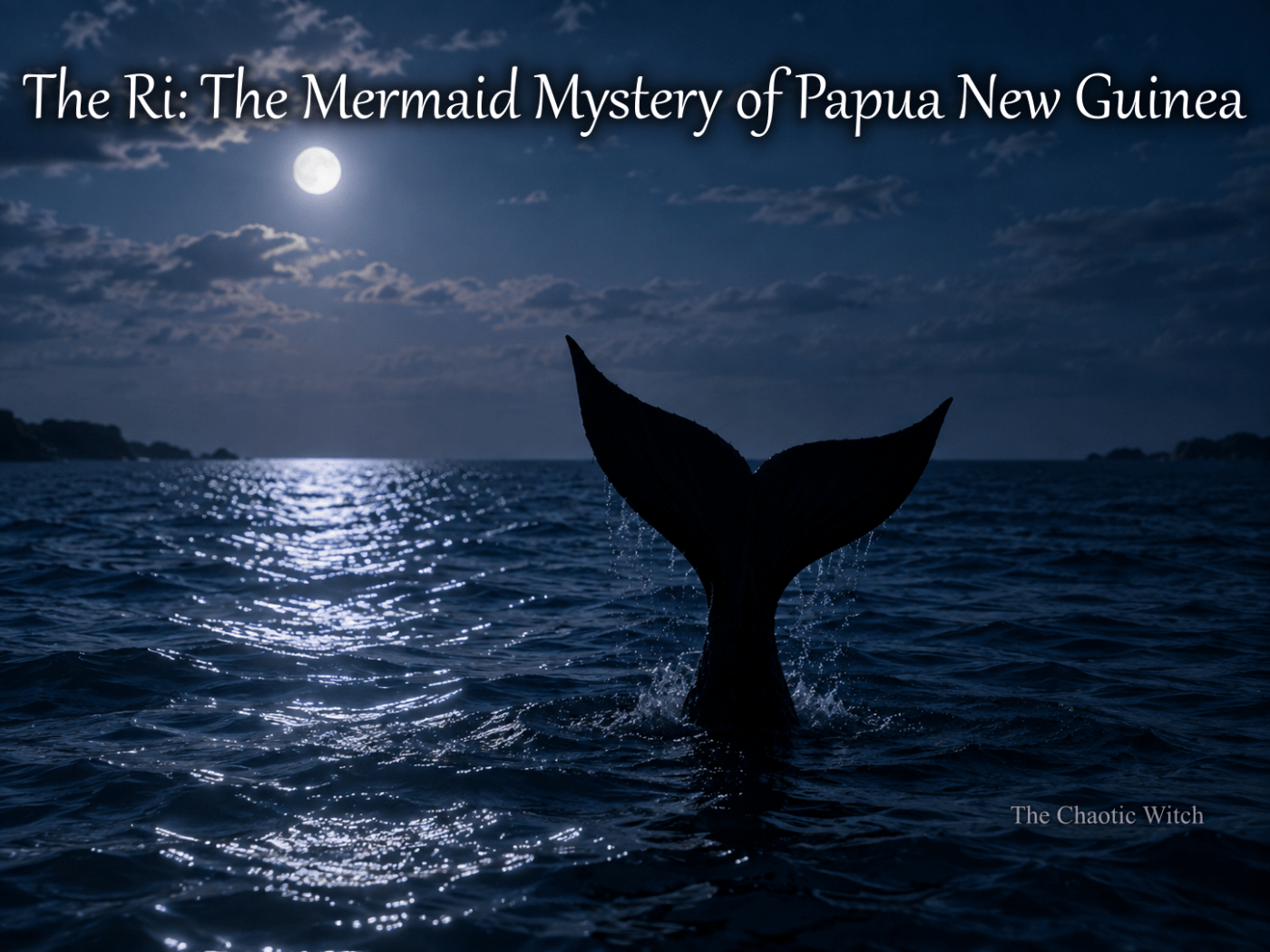
Far off the northeastern coast of Papua New Guinea lies New Ireland, a long, narrow island surrounded by warm tropical waters. For generations, people living along parts of its coastline told stories about a strange creature that moved through the shallows. It breathed air, surfaced only briefly, and disappeared beneath the water almost as quickly as it appeared. In some communities, the mysterious animal became known as the Ri.
Descriptions of the Ri varied, but some were remarkably humanlike. Witnesses described a brownish marine creature perhaps five to seven feet long, with a head and upper body that could appear almost human from a distance. Its front limbs were sometimes compared to arms, while the lower portion of its body was distinctly aquatic. Female creatures were reportedly described as having visible breasts, giving the Ri an unmistakable resemblance to the mermaids found in folklore around the world.
There was one detail that made these stories particularly intriguing to outsiders. The people of New Ireland lived alongside dugongs and were familiar with the animals inhabiting their waters. Yet according to accounts later collected by researchers, some witnesses maintained that the Ri was something different.
The mystery eventually caught the attention of American anthropologist Roy Wagner, who conducted fieldwork in New Ireland. In November 1979, Wagner was at Ramat Bay when he reportedly saw something unusual moving through the water. From a distance, he observed a long, dark animal travelling horizontally along the surface. People with him identified the creature as a Ri.

Wagner had not seen it clearly enough to determine exactly what it was, but the encounter intrigued him. Rather than dismissing the story as folklore, he began gathering accounts from people who claimed to know the animal. His research eventually resulted in a 1982 paper titled The Ri: Unidentified Aquatic Animals of New Ireland, Papua New Guinea.
By then, the mysterious creature had attracted the attention of cryptozoological researchers. If witnesses really were distinguishing the Ri from the familiar dugong, perhaps there was an unidentified marine mammal living around New Ireland.
In 1983, Wagner returned as part of an expedition that included cryptozoologist J. Richard Greenwell and other investigators. Their objective was simple: find the Ri and determine what it was.
On July 5, while the team was in the Elizabeth Bay area, members of the expedition reportedly spotted an animal in the water. It surfaced briefly before disappearing and later resurfaced. Additional observations followed during the expedition. The researchers had apparently found the animal people had been describing, but they still didn’t have enough evidence to identify it conclusively.
For a brief period, the possibility remained that the Ri could represent something genuinely unknown.
Two years later, another expedition arrived in New Ireland. This time, investigators hoped to obtain something far more valuable than eyewitness testimony: photographs.
In February 1985, members of an expedition aboard the Reef Explorer spotted an animal that a local observer reportedly identified as an Ilkai, another name associated with mysterious marine creatures in the region. Captain Kerry Piesch entered the water wearing scuba equipment and managed to photograph it beneath the surface.
Those photographs dramatically changed the mystery.
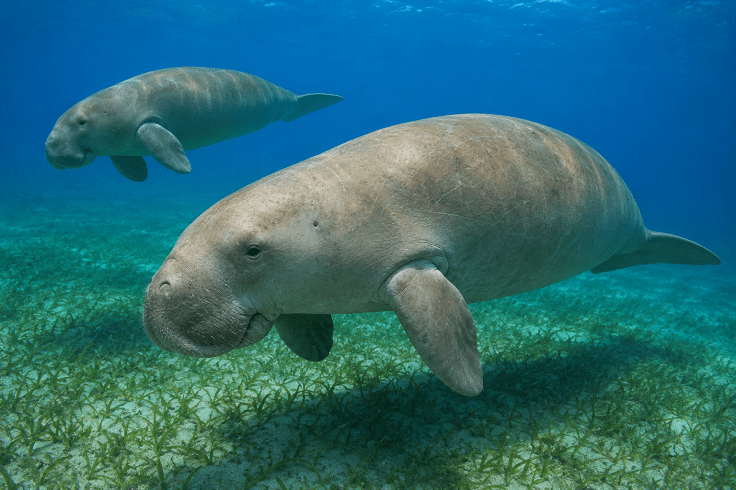
The creature was a dugong.
Further observations reinforced the identification. Later that month, investigators reportedly witnessed villagers bringing ashore a large marine animal that had been killed. Once again, the supposedly mysterious creature was identified as a dugong.
The discovery offered a remarkably straightforward explanation for at least many of the Ri sightings. Dugongs are large marine mammals related to manatees, and viewed under the right circumstances, their appearance can be surprisingly suggestive of something human. Their front flippers can resemble arms from a distance, while females have mammary glands located near the base of those flippers. A female nursing or swimming closely with her calf could therefore produce an unexpectedly human-looking silhouette to someone observing from a boat or shoreline.
They also behave in ways that can make encounters tantalizingly brief. Dugongs must surface to breathe, sometimes exposing only portions of their bodies before quietly disappearing beneath the water again. In poor light, rough water or at considerable distance, an observer might see only a head, back or flipper before the animal vanished.
Yet identifying photographed Ri as dugongs doesn’t necessarily explain every aspect of the legend.
Researchers studying the accounts have cautioned that terms such as Ri and Ilkai existed within local cultural traditions and may not correspond perfectly with Western ideas of biological species. Different communities could use similar words differently, and stories involving real animals can accumulate spiritual, symbolic and folkloric elements over generations. What an outside investigator interprets as a claim about an undiscovered species may have had a more complicated meaning to the people telling the story.
That possibility makes the Ri unusual among cryptid tales.
Researchers didn’t merely hear stories about a mysterious creature and speculate about its identity. Expeditions actually travelled to New Ireland looking for it. They spoke with witnesses, watched animals identified locally as the mysterious creature and eventually photographed one underwater.
What appeared through the camera lens wasn’t a surviving prehistoric reptile, an unknown marine mammal or a flesh-and-blood mermaid.
It was a dugong.
But perhaps that doesn’t make the story any less fascinating. Instead, the Ri offers a rare opportunity to watch the boundary between zoology and folklore begin to blur. A strange but completely real animal, glimpsed briefly through tropical water and interpreted through generations of local storytelling, could become something that sounded almost human.
And in that sense, the investigators may have solved the question of what was swimming beneath the waters of New Ireland without completely solving the mystery of the Ri itself.
Sometimes the most interesting cryptid stories aren’t about monsters that remain undiscovered, they’re about discovering how a monster was born.
A little magic is always waiting. Subscribe and step inside the circle. 🖤🔮✨


Leave a comment