High in the Himalayas in 1951, a group of experienced mountaineers stumbled upon something that would become one of the most famous mysteries in the history of cryptozoology.
They weren’t searching for the Yeti.
They were looking for a way up Mount Everest.
British explorer Eric Shipton was leading a reconnaissance expedition into the remote mountains surrounding Everest, searching for possible routes that might eventually allow climbers to reach the summit. The expedition ventured into isolated territory near the Nepal-Tibet border, including the Menlung Basin, a high and desolate landscape of glaciers, snow and towering mountains.
It was there that Shipton, physician and mountaineer Michael Ward, and Sherpa Sen Tensing noticed something strange crossing the snow.
Footprints.
Not just one impression or an indistinct mark in the ice, but a trail stretching across the glacier.
Some of the tracks were difficult to make out, but others were remarkably clear. The men stopped to examine them.
Whatever had made them appeared to have walked across the glacier before disappearing into the vast Himalayan landscape.
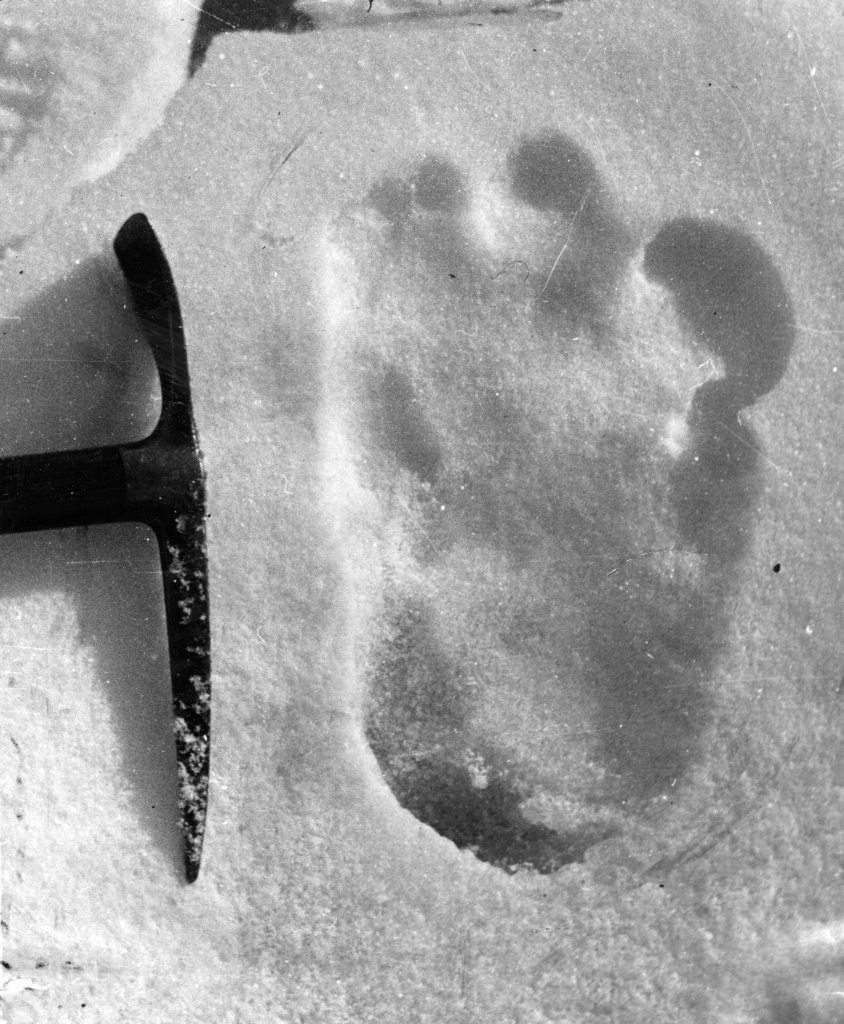
One particular footprint immediately stood out.
It was enormous compared with an ordinary human foot, measuring approximately 12 to 13 inches long and considerably wider than Ward’s climbing boot. The impression appeared to show a broad big toe accompanied by several smaller toes.
The men had no proper measuring equipment with them, so they improvised.
Shipton placed Ward’s boot beside one of the clearest impressions and photographed it. An ice axe was also positioned beside another section of the tracks to provide scale.
Those photographs would eventually travel around the world.
But standing on that glacier in 1951, the men had something even more remarkable in front of them than the photographs would later reveal.
They had the trail itself.
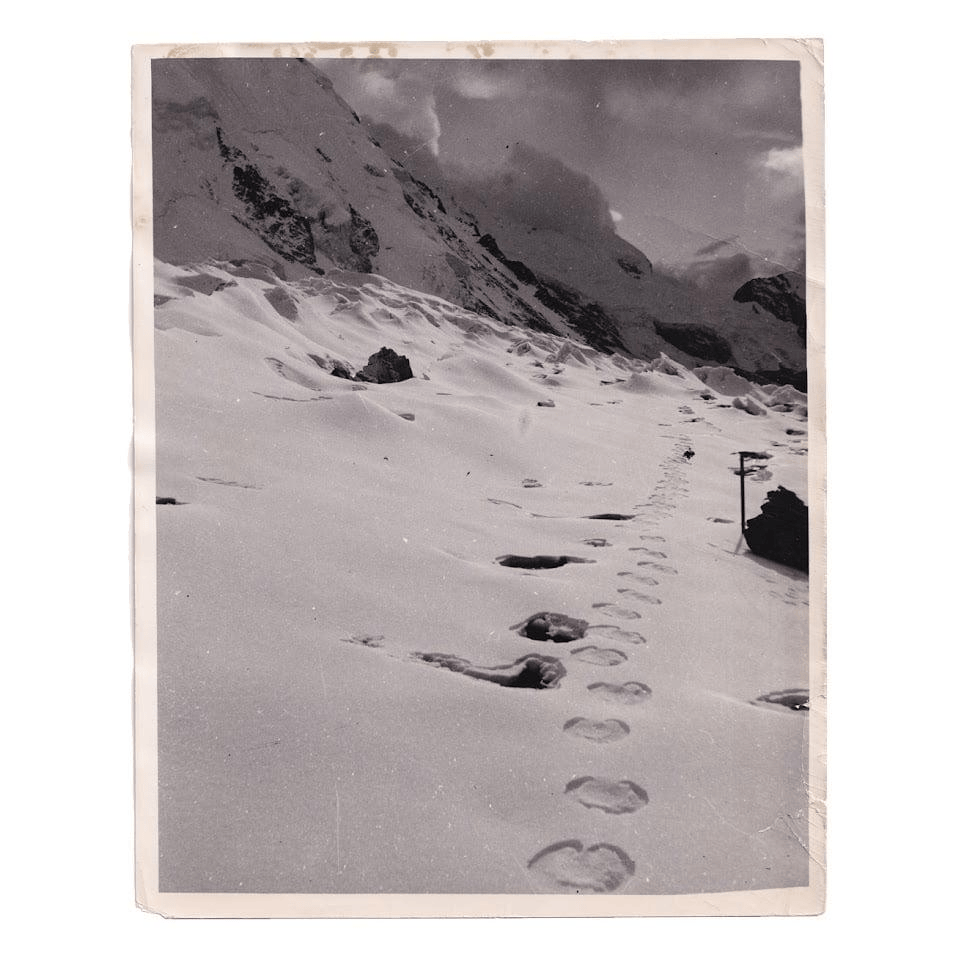
Rather than simply photographing one footprint and continuing their expedition, they followed the tracks.
The mysterious footprints continued across the glacier for a considerable distance. Later accounts from members of the expedition indicated that the trail may have been followed for the better part of a mile.
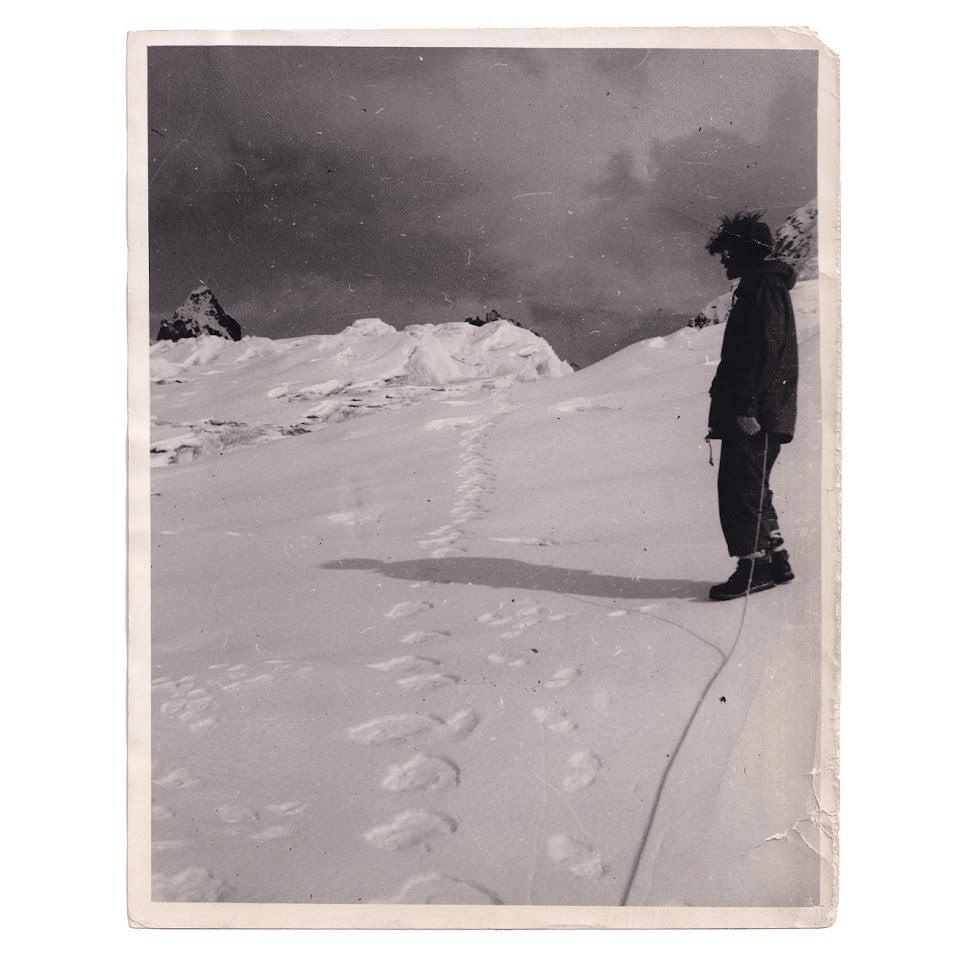
At points along the route, the tracks approached narrow crevasses cutting through the glacier.
Michael Ward later remembered noticing something particularly strange around these areas.
Some of the toe impressions appeared to contain marks resembling claws.
Whatever had crossed the glacier seemed to have moved confidently through terrain that would have been treacherous for almost anything wandering through those mountains.
The men photographed what they could.
Then they continued on.
When other members of the expedition reached the area approximately two days later, the Himalayan weather had already begun erasing the evidence. Sun and wind had changed the footprints, softening their edges and destroying much of the remarkable detail Shipton and Ward had witnessed.
The trail was disappearing.
But the photographs remained.
When Shipton returned from the expedition, the images caused an international sensation.
One photograph in particular became legendary.
It shows a huge, bare-looking footprint pressed deeply into the snow. Beside it sits Michael Ward’s climbing boot.
The difference is striking.
The mysterious print appears extraordinarily broad, with an unusual arrangement of toes unlike anything most people expected to see wandering across a remote Himalayan glacier.
And there was something about the circumstances that made the photographs especially difficult to forget.
Eric Shipton wasn’t a tourist wandering through the mountains hoping to encounter something mysterious. He was one of Britain’s most respected Himalayan explorers.
Michael Ward was an experienced mountaineer and physician.
They were members of a serious expedition exploring one of the most remote environments on Earth.
Yet there, far from settlements and high among the glaciers, they encountered a long trail of footprints they couldn’t readily identify.
The photographs helped ignite worldwide fascination with the Yeti.
Within only a few years, expeditions were travelling into the Himalayas specifically searching for the mysterious creature described for generations in stories from the region.
Mountaineers, explorers and researchers began collecting accounts from Himalayan communities. Strange footprints were reported in other remote locations. Stories emerged of large, elusive creatures inhabiting valleys and mountains rarely visited by outsiders.
But the 1951 photographs remained different.
They captured something tangible.
A footprint.
A trail.
Evidence that could still be examined decades after the snow itself had disappeared.
And perhaps the most haunting part of the story is what the photographs cannot show.
They cannot show what Shipton and Ward saw when they looked beyond that single footprint.
A line of mysterious tracks stretching across the glacier.
Something had travelled through the Menlung Basin before the expedition arrived.
It had crossed the snow.
Passed over the glacier.
Moved among the crevasses.
And continued toward the mountains.
The men followed its trail for as long as they could.
But eventually the footprints disappeared into the enormous Himalayan wilderness.
Whatever had made them was already gone.
More than seventy years later, Eric Shipton’s photographs remain among the most famous images ever connected with the Yeti.
The snow that preserved those footprints melted long ago.
The trail vanished.
The expedition returned home.
But the photographs survived.
And somewhere behind those photographs remains the question that has followed them since 1951:
What walked across that lonely Himalayan glacier before Eric Shipton arrived?
A little magic is always waiting. Subscribe and step inside the circle. 🖤🔮✨


Leave a Reply