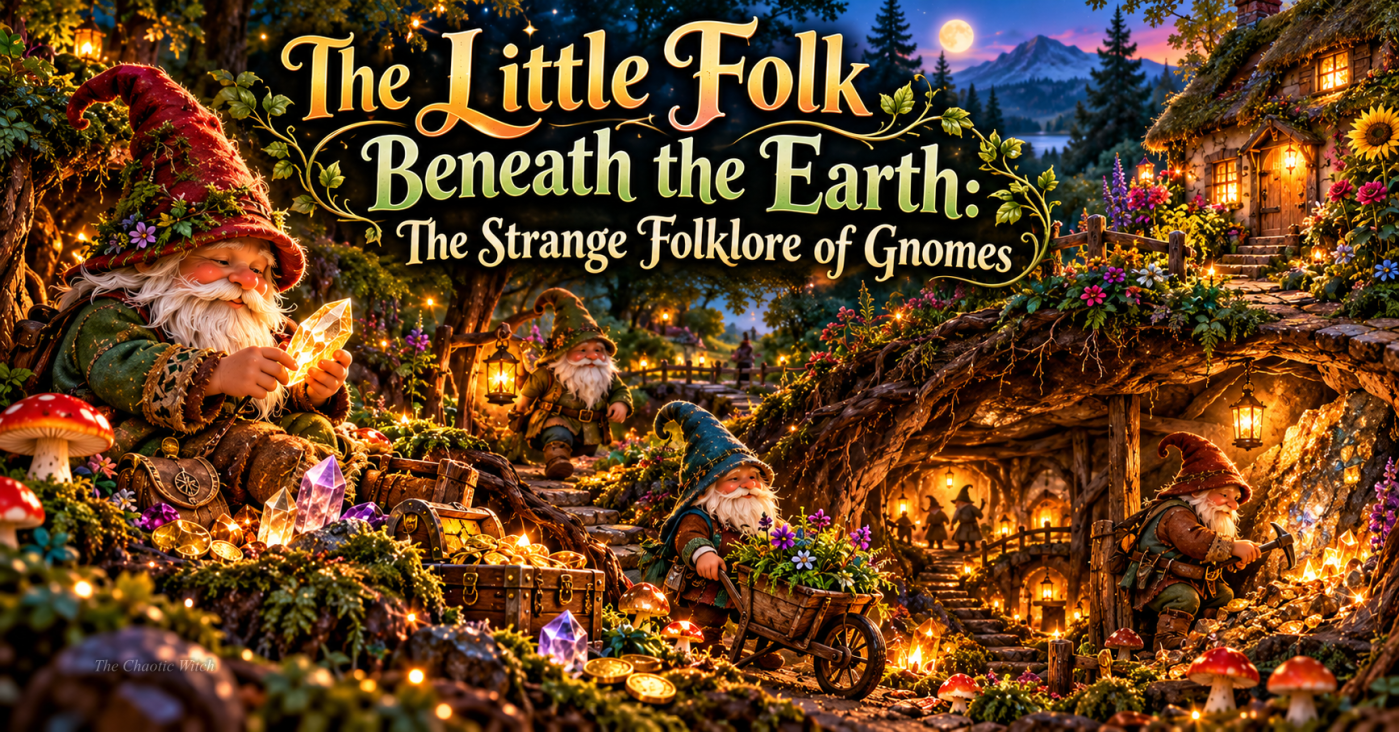
Long before cheerful little men in red hats began appearing beside garden ponds and flower beds, European folklore imagined something considerably stranger living beneath the ground.
They were small, secretive beings connected to the earth and the riches hidden inside it. They knew places human beings could not reach. They moved through stone, guarded underground treasures and possessed knowledge that people could obtain only at considerable risk.
The creature we now call the gnome, however, has an unusual history. Unlike fairies, elves and household spirits whose traditions stretch deep into oral folklore, the gnome as a specifically named supernatural being became prominent through the writings of the 16th-century physician and alchemist Paracelsus.
Paracelsus described elemental beings associated with the four classical elements. There were sylphs of the air, undines of the water, salamanders of fire and beings of the earth that came to be called gnomes.
And his earth beings had a remarkable ability.
To them, solid earth was not an obstacle.
They could supposedly move through rock and soil as easily as a human being walks through air.
That made them natural inhabitants of mountains, caves and underground places and, over time, helped connect the image of the gnome with minerals, precious stones and buried treasure.
But the idea did not exist in isolation. Europe was already filled with stories about mysterious little beings associated with mines, mountains, farms and homes. German-speaking mining communities, for example, told stories about subterranean spirits sometimes called Bergmännlein, little mountain men, and related mine spirits. Miners could interpret mysterious noises underground as warnings, assistance – or mischief – from beings sharing the mountain with them.
That is where the folklore becomes especially interesting.
The underground was dangerous and unpredictable. A strange knocking sound might precede falling rock. A rich vein of ore could suddenly disappear. Tunnels could collapse without warning. In a world before modern geological knowledge and safety equipment, stories of unseen inhabitants gave personality to a landscape that could provide enormous wealth one day and take a life the next.
The little folk therefore weren’t always simply good or evil.
Treat them properly and they might be helpful.
Disrespect them, steal what belonged to them or become too greedy, and things could go very differently.
That theme appears again and again throughout European traditions concerning supernatural household and land spirits: respect matters.
As centuries passed, several different traditions began influencing the popular image of the gnome. The mysterious underground elemental gradually mixed in the popular imagination with dwarfs, mine spirits and helpful household beings. Gnomes became guardians of gardens, homes and hidden places.
Their association with treasure remained.
So did their connection with luck.
But there was often an implied bargain beneath the stories: prosperity was something to be respected rather than endlessly taken.
Imagine, then, an old European cottage at the edge of a forest.
Behind it stands a garden.
Beyond the garden, the trees climb toward rocky hills.
The family living there has heard stories for generations about little people inhabiting the land. Grandmother insists that a portion of the harvest should always be left behind. Grandfather laughs at her stories—but strangely, he never takes the very last apple from the tree.
One autumn, the harvest is unusually abundant.
Potatoes fill the cellar. Apples bend the branches. Mushrooms appear throughout the woods.
The youngest member of the family asks why they shouldn’t simply gather everything.
Grandmother shakes her head.
“Because everything isn’t ours.”
That night she leaves a small portion of food near the garden.
Nobody sees who takes it.
By morning, it’s gone.
The following spring, the garden thrives again.
Was there really a little guardian beneath the earth?
A fox?
A hungry traveller?
Or was the story itself the important thing?
Perhaps that is one reason beings like gnomes endured.
Folklore transformed a simple lesson about restraint, gratitude and coexistence with nature into something people could remember.
Then came the garden gnome.
During the 19th century, ceramic gnome figures became particularly popular in Germany before spreading elsewhere in Europe. Their appearance gradually developed into the familiar figure we recognize today: pointed hat, beard, sturdy clothes and the expression of someone who knows considerably more about your backyard than he’s willing to discuss.
The frightening or mysterious underground elemental had become a garden guardian.
Yet traces of the older stories remained.
He still lived close to the earth.
He still protected the garden.
He was still associated with prosperity.
And he was still watching.
Perhaps that’s what makes gnome folklore so much fun. Beneath the cheerful modern statues lies an older idea—that the landscape might contain inhabitants we cannot see, and that humans are not necessarily the only beings with a claim to the land beneath our feet.
So the next time you see a little red-hatted figure tucked beneath the flowers, you can think of him as more than garden decoration.
His distant folkloric ancestors belonged to mountains, mines, stones and secret underground places.
And according to the old stories, if a gnome ever does decide to favour your home, there’s probably one sensible rule to remember:
Be grateful for what grows there—and don’t get greedy. 🍄🌿✨
A little magic is always waiting. Subscribe and step inside the circle. 🖤🔮✨


Leave a comment