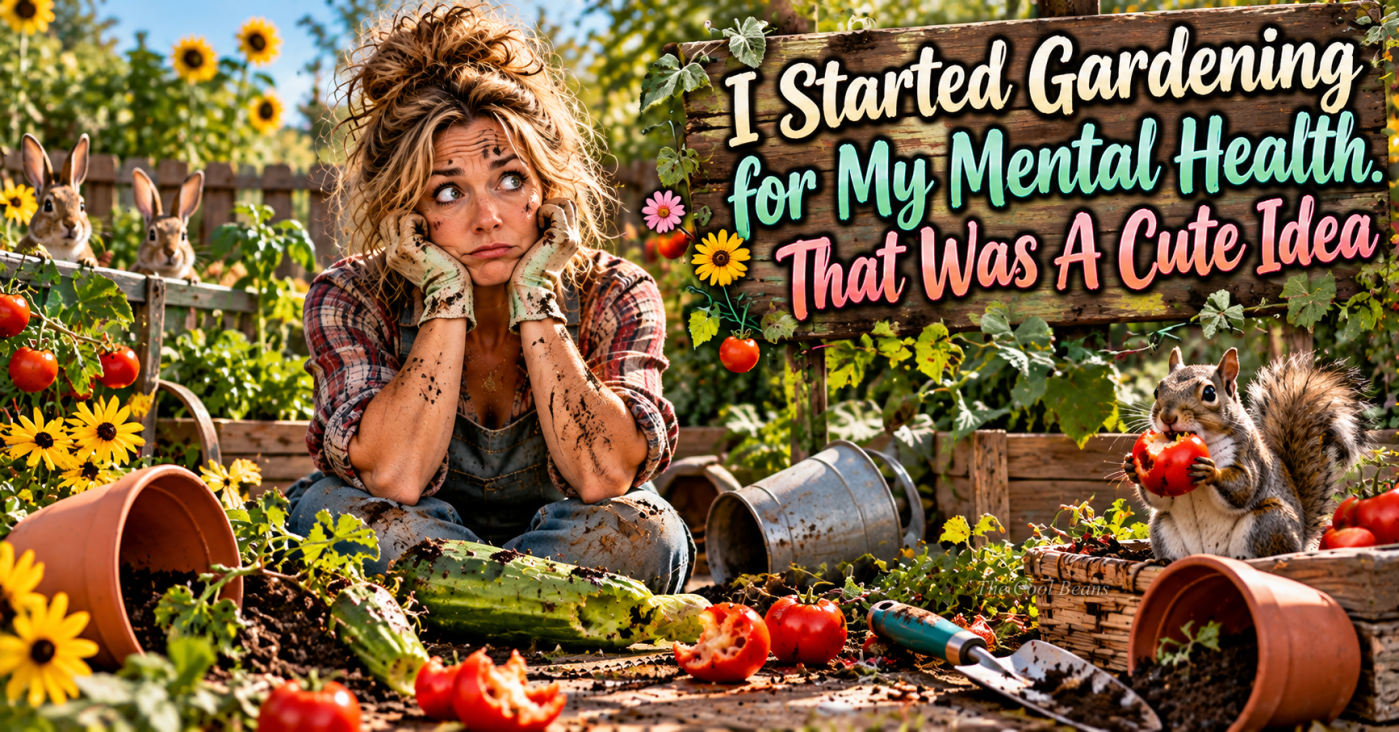
I decided to start a garden because apparently I looked at my already chaotic life and thought, You know what this needs? Several dozen tiny green dependents with very specific emotional needs.
People online made gardening look peaceful. There were videos of women wandering barefoot through immaculate gardens at sunrise, gently gathering tomatoes into wicker baskets while birds sang and butterflies landed respectfully nearby. Their hair was perfect. Their dresses were white. Nobody was sweating through their underwear. I wanted that.
So naturally, I bought $147 worth of plants to save approximately $11 on vegetables. This is called economics.
I started small, which in gardening apparently means coming home with tomatoes, peppers, cucumbers, lettuce, basil, rosemary, strawberries and something I couldn’t remember buying but was now emotionally responsible for. I arranged everything beautifully, stood back to admire my little kingdom and announced, “This is going to be relaxing.”
The universe heard me. The universe loves comedy.
On the first morning, I went outside with my coffee to admire my garden and discovered something had eaten half a lettuce plant. Not the lettuce. Half of one lettuce plant. This felt personal. Whatever did it apparently took three bites, decided my lettuce was mediocre and left the rest as a Yelp review. Two stars. Fresh, but lacked seasoning.
I blamed the rabbits. The rabbits denied everything by sitting ten feet away staring at me with the cold confidence of creatures who know the prosecution has no physical evidence. So I installed fencing.
The next morning, another plant was missing. Not eaten. Missing. There was just a tiny hole where it used to be.
“WHO STOLE THE BASIL?”
Nobody answered.
The rabbit continued washing its face.
Suspiciously.
Then came the squirrels. I don’t know what squirrels actually want from a garden, but I’m fairly certain their primary motivation is destabilizing local government. They didn’t eat my tomatoes. They picked them, took one bite and then LEFT THEM ON THE GROUND.
That’s not hunger. That’s psychological warfare.
I started finding half-eaten tomatoes strategically positioned around the yard like tiny red threats. Nice garden. Shame if something happened to it.
At this point I began Googling things like “how to keep squirrels away from tomatoes.” The internet suggested cayenne pepper. Excellent. I sprinkled cayenne everywhere.
The next morning the squirrels returned, presumably ate spicy tomatoes and discovered Mexican cuisine.
Fantastic.
I had opened a restaurant.
Meanwhile, the cucumber plant had apparently signed a contract with Satan. It grew six feet overnight. One day it was politely sitting inside its little garden bed. The next morning it had climbed the fence, strangled a tomato plant, crossed into the neighbour’s yard and was halfway toward Toronto.
I tried redirecting the vines. The cucumber disagreed. We wrestled. I lost. Eventually I just started pointing visitors toward it and saying, “That’s Gerald. We don’t make eye contact.”
Then came the weeds. I pulled them. They returned. I pulled them again. They returned with friends. At one point I pulled what I swear was the same weed three times in one week, which means either weeds regenerate or I was being gaslit by vegetation.
Meanwhile, the plant I had been carefully watering, fertilizing, encouraging and checking every morning was dying. Three inches away, growing through a crack in the concrete, was a weed approximately the size of a Buick.
Apparently my tomato needed perfect soil, six hours of sunlight, consistent moisture, nutrients, emotional validation and perhaps a small retirement account.
The weed required hatred.
Then my tomatoes developed spots.
I Googled them.
Big mistake.
According to the internet, my tomatoes had either a fungal infection, bacterial disease, nutrient deficiency, too much water, not enough water, too much sun, not enough sun, poor airflow or childhood trauma.
It was like WebMD for plants.
I stared at the plant. “What do you WANT from me?”
The tomato remained emotionally unavailable.
Then one glorious morning, after weeks of watering, pruning, fertilizing, defending and negotiating international treaties with wildlife, I saw it.
My first perfect tomato.
It was beautiful. Round. Red. Untouched. I nearly cried. I decided I’d leave it on the vine one more day so it could become perfectly ripe.
Veteran gardeners already know where this is going.
The next morning I practically skipped outside.
The tomato was gone.
On the fence sat a squirrel.
He was holding it.
We made eye contact.
He took a bite.
I swear he chewed in slow motion.
“You son of a—”
He ran.
I chased him. Barefoot. Across the yard. At seven in the morning. While wearing pajama shorts and carrying a watering can.
This was not the peaceful gardening woman from Instagram. There were no butterflies. There was only vengeance.
My neighbour happened to be outside and cautiously asked, “Everything okay?”
“THE SQUIRREL HAS MY TOMATO.”
He nodded.
There are apparently moments in adulthood when everyone simply understands.
By August, my garden looked nothing like the picture I’d imagined. The cucumbers had annexed several neighbouring territories. The lettuce had surrendered. The basil had disappeared under mysterious circumstances. Something had eaten all the strawberries before I’d managed to taste a single one, and I was fairly certain the squirrels had established a homeowners’ association.
But I had tomatoes.
Not many.
Approximately seven.
Seven tomatoes that had cost me $147 in plants, $63 in soil, $38 in fencing, $29 in fertilizer and what I estimate to be several hundred dollars in emotional damages.
I carried them inside like precious jewels. Someone looked at my tiny harvest and said, “That’s it?”
I stared at them.
They had no idea what we’d been through.
These weren’t tomatoes.
These were survivors.
I ate one immediately.
And annoyingly?
It was delicious.
Like, really delicious.
Which meant I was going to do this again next year.
Because apparently gardening is just repeatedly being bullied by nature and then forgetting everything the moment someone hands you a fresh tomato.
So yes, gardening is relaxing. You spend time outdoors. You connect with nature. You get exercise. You learn patience.
And occasionally you stand barefoot in your backyard at seven in the morning screaming, “DROP THE TOMATO, YOU LITTLE BASTARD!”
Very therapeutic.
Five stars.
Already planning next year’s garden. 🌱🍅😂
💜 Enjoying the chaos that is my life? Subscribe to The Cool Beans! It’s cheaper than therapy and slightly more organized 🤣


Leave a comment