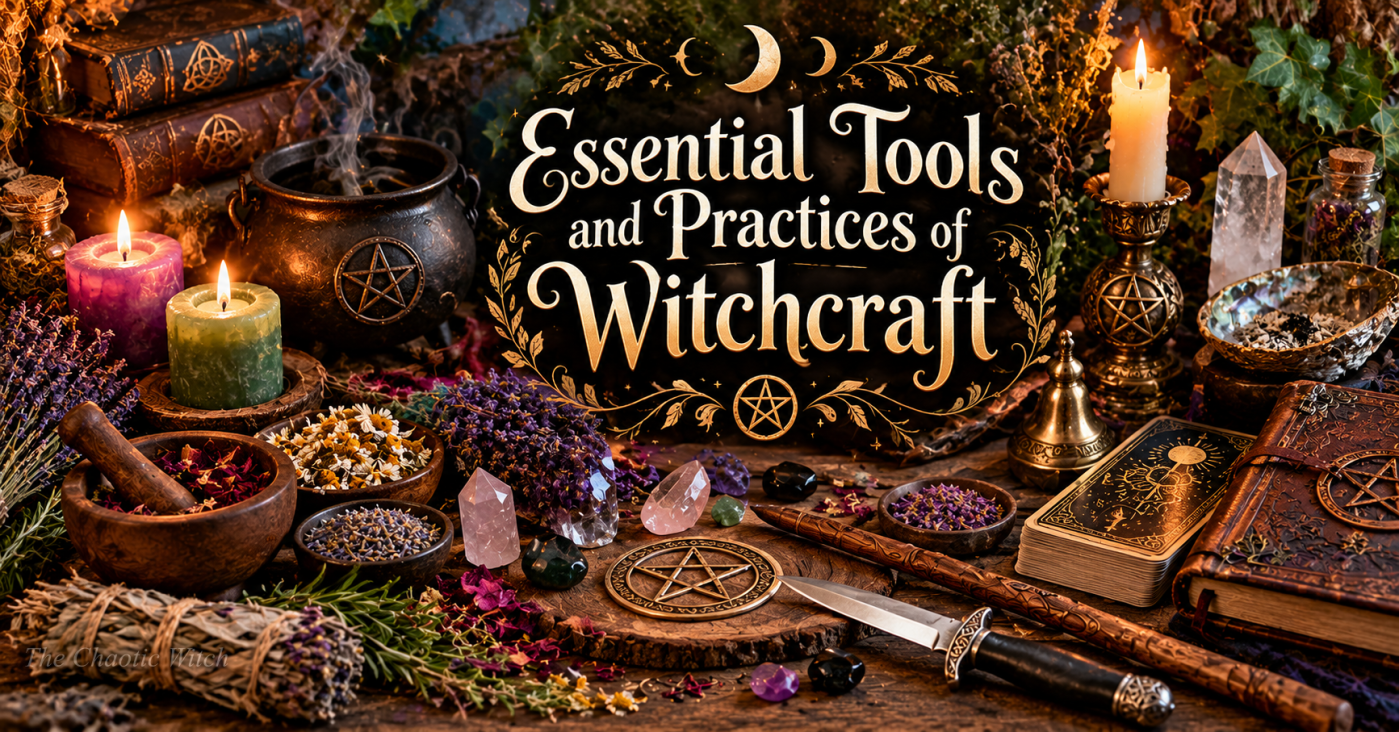
Witchcraft is a diverse spiritual and magical practice that draws upon nature, intention, symbolism, folklore, and personal intuition. For centuries, practitioners have worked with herbs, candles, stones, and rituals to seek protection, encourage prosperity, honour natural cycles, and deepen their connection with the world around them. Although traditions differ, many witches believe that the most powerful tool they possess is their own focused intention.
You don’t need an elaborate altar, expensive crystals, or a collection of mysterious objects to begin exploring witchcraft. Many of its traditional tools are ordinary household items given symbolic meaning through ritual and practice.
Essential Tools of Witchcraft
The Altar
A dedicated space for meditation, spellwork, offerings, and spiritual reflection. Altars may include candles, seasonal flowers, meaningful objects, and representations of the four elements. Even a small shelf or windowsill can become a personal sacred space.
Candles
Candles symbolize transformation, illumination, and focused intention. In many modern traditions, white represents peace and protection, green symbolizes prosperity, pink represents affection, and purple is associated with intuition and spiritual wisdom.
Herbs and Botanicals
Plants have long been used in folk magic and spiritual customs. Rosemary is commonly associated with remembrance and protection, lavender with peace, bay leaves with wishes and success, and cinnamon with warmth and prosperity. These meanings vary by tradition.
Crystals and Stones
Crystals are used symbolically in contemporary witchcraft. Clear quartz represents clarity, rose quartz symbolizes self-love, amethyst is associated with intuition, and black tourmaline is commonly used as a protective talisman.
The Cauldron
A symbol of transformation, creation, and renewal. Cauldrons can hold herbs, water, written intentions, or other ritual materials. They are especially associated with Celtic-inspired and modern Pagan imagery.
The Wand and Athame
Wands are used to symbolically direct energy and establish sacred boundaries. The athame, a ceremonial blade used in some traditions such as Wicca, generally serves a symbolic purpose rather than a practical cutting function.
Divination Tools
Tarot cards, pendulums, runes, and scrying mirrors are used for contemplation, symbolic interpretation, and exploring possible paths forward. Many practitioners view divination as a way to strengthen intuition rather than predict an unchangeable future.
The Book of Shadows or Grimoire
A personal collection of spells, rituals, herbal correspondences, moon observations, reflections, and magical discoveries. It can be a beautifully decorated journal or a simple notebook that grows alongside the practitioner’s experience.
Essential Practices of Witchcraft
Intention Setting and Visualization: Many rituals begin with identifying a clear purpose and imagining the desired outcome. Visualization, breathwork, and affirmations help practitioners focus their attention and give personal meaning to their actions.
Cleansing and Protection: Cleansing rituals may involve sound, sweeping, water, smoke, or visualization. Protective practices include charms, symbolic boundaries, and blessings for the home. Smoke is optional, and good ventilation and fire safety are important.
Moon Magic: Some witches align rituals with lunar phases. The new moon is associated with beginnings, the waxing moon with growth, the full moon with culmination, and the waning moon with release. These are symbolic correspondences rather than scientifically established effects.
Elemental Magic: Earth symbolizes stability, air represents thought and communication, fire symbolizes transformation and courage, and water represents emotion and intuition. Practitioners may incorporate these elements into rituals to create a sense of balance.
Spellwork and Knot Magic: Spells combine symbolic actions with focused intentions. Knot magic uses cords or ribbons to represent commitments, wishes, or boundaries. Candle spells, written petitions, and charm bags are other accessible practices.
Seasonal and Nature-Based Rituals: Many modern witches observe the changing seasons through planting, harvesting, gratitude rituals, and festivals such as Samhain, Beltane, and Yule. These celebrations can help strengthen a connection to nature and the passage of time.
A Simple Beginner’s Witchcraft Ritual
You can explore the symbolic foundations of witchcraft with just a candle, a small bowl of water, and a meaningful intention.
- Find a quiet place and take several slow breaths to settle your thoughts.
- Place a bowl of water beside an unlit white candle, representing emotional clarity and peaceful energy.
- Light the candle safely and imagine a warm, gentle glow surrounding you.
- Say: “With earth beneath and sky above, I welcome peace, strength, and love. May clarity guide the path I take, and kindness grow with each new day.”
- Spend a moment reflecting on one positive action you can take toward your intention. Extinguish the candle before leaving.
The Most Important Tool Is You
One of the most meaningful lessons in witchcraft is that magical practice does not depend on owning particular objects. A candle is simply a candle until someone gives its light a purpose. A stone becomes a talisman because of the meaning attached to it, and a ritual becomes personal through the attention, reflection, and care invested in it.
Witchcraft can be religious, spiritual, secular, or deeply individual. Not every witch uses the same tools, follows the same traditions, or believes in supernatural forces. Some approach magic as sacred practice, while others value its symbolism, mindfulness, and connection to nature.
At its heart, witchcraft is an invitation to live with intention, honour the natural world, explore your intuition, and discover meaning in the ordinary things around you.
A little magic is always waiting. Subscribe and step inside the circle. 🖤🔮✨


Leave a Reply