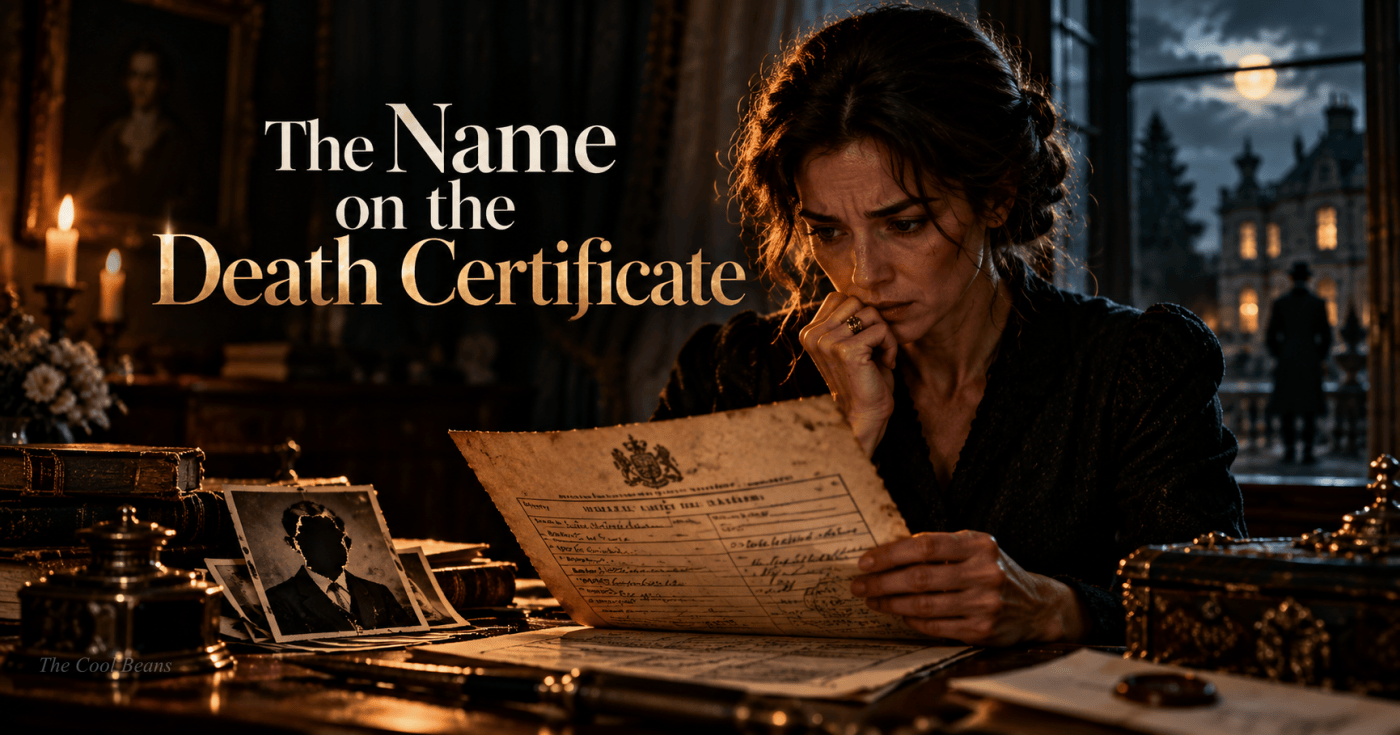
Jessie had spent twenty-four years mourning Daniel Mercer, and now she was beginning to wonder whether she had ever been given the truth about his death at all. She had believed she killed him in the fire at St Catherine’s, only to discover that he survived and lived for another six months. She had learned that her mother changed the ammunition in the gun Daniel intended to use as part of a desperate escape plan. And now, after a telephone call from a frightened woman named Helen Ward, Jessie was facing another possibility she had never considered: that the official record of Daniel’s death might not belong to Daniel Mercer at all.
The question Helen had whispered before the call ended was still echoing in her mind. Whose name was on Daniel’s death certificate? Jessie stood beside the hotel window, watching the first grey light of morning spread across Hamilton. She had barely slept in three days, and exhaustion was beginning to turn ordinary sounds into irritations. The elevator chimed too loudly. Someone laughed in the hallway. A delivery truck reversed outside, its warning signal repeating until Jessie wanted to throw something through the glass. She settled for closing the curtains.
Rebecca sat at the small table with her laptop open, reviewing the information they had collected from Daniel’s recordings, Catherine’s statements, and the files recovered from Second Life. Michael stood beside her, looking over a photocopy of a medical record. Gabriel was on the telephone with the detective, while Rachel and Sophie had gone downstairs to bring back coffee and something resembling breakfast. Anna remained near the door, listening to the conversation with a quiet concentration Jessie had learned to respect.
“There’s no registered death under Daniel Mercer that matches the date Catherine gave us,” Rebecca said.
Jessie turned. “Are you sure?”
“Not completely. We don’t have direct access to every record, and some documents may be sealed or indexed differently. But the detective is checking through the proper channels. What we have so far doesn’t establish a death registration under Daniel’s name.”
Michael frowned. “Daniel was already using another identity after the fire.”
“David,” Jessie said.
Michael nodded. “David Hale. At least for a while.”
Jessie remembered Sophie mentioning a man who had visited Rachel and called himself David. She had thought the name belonged to another stranger in the long list of people connected to her forgotten past. Now she knew Daniel had stood before her under that name, alive and breathing, while her altered memory prevented her from recognizing the person she loved.
Rebecca began typing again. “Then we need to establish whether David Hale was a complete identity or just an alias he used informally.”
“Thomas helped create it,” Michael said. “I remember Daniel complaining that his new birth date made him younger than Michael.”
Jessie looked at him. “Did you know where he was living?”
“Some of the time. He moved constantly. He was afraid Miriam would find him.”
“And he was right to be.”
Michael nodded.
Gabriel ended his call and slipped his phone into his pocket. “Police reached Helen Price’s house. She’s alive.”
Jessie felt her shoulders loosen. “Thank God.”
“She’s frightened and has a minor injury, but she’s been taken somewhere safe. The officers found evidence that someone forced the back door. Whoever came for her left before police arrived.”
“Did she identify them?”
“Not yet. She says she recognized the voice, but she wants a lawyer present before giving a detailed statement.”
“Good,” Jessie said. “She should have one.”
Gabriel looked at her with a faint smile. “There was a time when you considered lawyers an unfortunate consequence of getting caught.”
“There was also a time when I considered climbing into buildings through the ventilation system a reasonable way to spend a Saturday.”
“Your knees have thanked you for retiring.”
“My knees have filed several formal complaints.”
For a moment, the tension in the room eased. Jessie had begun to appreciate those moments. They reminded her that the people around her were more than frightened survivors or reluctant witnesses. They were people with lives, personalities, irritating habits, and the occasional ability to make her laugh when she least expected it.
Rebecca’s expression suddenly changed.
“What?” Jessie asked.
“I found a reference in one of Thomas’s financial documents. A payment to a private clinic outside Hamilton, made three days after Catherine says Daniel died.”
“Under whose name?”
Rebecca turned the laptop toward her.
The entry read: Thomas Wilson. Deceased patient settlement.
Jessie stared at the screen.
“My brother?”
“That appears to be the name they used.”
“But Thomas is alive.”
“Exactly.”
Michael stepped closer. “Then they registered Daniel’s death under Thomas’s identity.”
“Possibly,” Rebecca said. “We need the underlying documents before we can know that.”
Jessie felt a cold sensation settle beneath her ribs. Thomas had been legally erased while continuing to live and investigate the organization. Daniel had apparently died without a death certificate in his own name. The arrangement would have suited Miriam perfectly. One man could disappear into anonymity, while the other became officially dead and therefore easier to silence if he ever attempted to return.
But it also meant someone had deliberately connected their identities at the moment Daniel died.
“Why Thomas?” she asked.
Anna answered quietly. “Because Miriam couldn’t control him anymore.”
Everyone turned toward her.
“Thomas escaped the program twice. He knew how the original institution worked, and he knew which people had financed it. As long as he existed legally, he could challenge the records. Declaring him dead gave Miriam another way to erase him.”
“And Daniel?” Jessie asked.
“His body could be hidden under Thomas’s name. Two problems solved with one document.”
Jessie looked at the screen again. She hated how efficiently it made sense.
“Then Thomas has been living as a dead man for twenty-three years.”
Michael nodded slowly. “And Daniel died without the world knowing it was him.”
Jessie swallowed.
She wanted to find some reason to reject the conclusion, but she knew that wanting a different answer was not the same as having evidence. The records could still be false. Daniel might have been moved somewhere else. The person who died under Thomas’s name might have been someone entirely different.
She would not decide the truth before the investigation did.
“Send it to the detective,” she said. “Everything. The payment, the account numbers, the date. Let him determine who was registered as deceased.”
Rebecca nodded.
Jessie looked toward the window again. The sky had brightened, but the city still seemed trapped beneath a layer of grey. Somewhere in Hamilton, Thomas was being held by Miriam Sloane. Somewhere else, Julia was hiding Emily and Mrs. Alvarez. And in Quebec, Catherine was preparing to surrender the blackbird pendant she had kept from Jessie for most of her life.
Every piece of the story was moving toward the same place.
She only wished she knew what would happen when they finally came together.
By midmorning, the detective had confirmed that Helen Ward was willing to speak with investigators. She had requested legal representation, and arrangements were being made for her to provide a full statement. She had also supplied the address of the former private clinic connected to Miriam’s organization, along with the names of two former employees who might still have access to its records. Police were working with the appropriate authorities to secure the necessary warrants.
Jessie had expected that information to bring relief. Instead, it made her restless. She knew exactly where she wanted to be, and it wasn’t sitting in a hotel room while other people followed leads she would once have pursued herself.
Gabriel noticed her pacing.
“You’re wearing out the carpet.”
“Then the hotel can send me a bill.”
“Jessie.”
“I know. We wait.”
He studied her. “You don’t sound convinced.”
“I’m convinced it’s the right thing to do. I’m not convinced I have to enjoy it.”
Gabriel smiled.
She sat down across from him.
“Do you remember the night we first met?” she asked.
“Unfortunately.”
“You say that as though I wasn’t charming.”
“You stole my car.”
“I borrowed your car.”
“You drove it through a locked gate.”
“The gate was an obstacle.”
“You also threatened to tie me to a chair.”
“You were being difficult.”
Gabriel laughed, but the amusement faded as he remembered what followed. “You were trying to get Anna out. You wouldn’t tell me who was after her. You just said she needed help.”
“Did I tell you about Thomas?”
Gabriel shook his head. “Not directly. You mentioned someone who taught you how to notice things other people ignored.”
Jessie leaned forward. “What things?”
“Patterns. The way people follow routines. The way institutions make their own rules and then forget anyone might be watching.”
“That sounds like Thomas.”
Gabriel nodded. “You said he taught you that the people who believed they were untouchable were usually the easiest to surprise.”
Jessie smiled faintly. She could almost hear her brother saying it.
“There was something else,” Gabriel continued. “You kept talking about a second chance.”
“Second Life?”
“No. You said everyone deserved a second life, but nobody should have to give up their first one to get it.”
Jessie stared at him.
The words settled somewhere deep in her memory.
A second life.
Not a replacement.
Not a new identity imposed by someone else.
A chance to continue living without the people who had hurt you deciding who you were allowed to become.
Perhaps that had been Catherine’s original intention. Perhaps Daniel and Thomas had spent years trying to recover it. And perhaps Miriam had understood from the beginning how easily the promise of a second chance could be twisted into an excuse to take someone’s identity away.
Jessie looked at Gabriel. “Miriam didn’t just corrupt Second Life.”
“What do you mean?”
“She reversed it. She took something meant to help people reclaim their lives and used it to convince them their old lives no longer belonged to them.”
Gabriel considered that.
“And Continuity?” he asked.
“Maybe it’s the same idea on a larger scale. Instead of replacing a person with someone who looks like them, she replaces their understanding of themselves.”
Gabriel’s expression darkened. “And Rebecca.”
Jessie nodded.
“Laura’s daughter. A psychologist. Someone who understands the manipulation well enough to challenge it.”
“Which makes her dangerous to Miriam.”
“Or useful.”
Gabriel looked away.
Jessie reached across the table and touched his arm.
“Rebecca gets to decide how she responds. You know that.”
He sighed. “I know. It’s just difficult to remember when it’s your child.”
Jessie thought of Catherine, Rachel, Thomas, and all the people who had made terrible decisions because they were frightened for someone they loved.
“Then maybe that’s the lesson we’re all supposed to learn,” she said. “Being afraid for someone doesn’t give us permission to take their choices away.”
Gabriel nodded slowly.
“I hate how sensible you’ve become.”
“I’m deeply disappointed in myself.”
Rachel and Sophie returned shortly afterward with coffee, sandwiches, and a paper bag filled with pastries. The ordinary act of distributing breakfast felt strangely comforting. Anna insisted Jessie eat something before attempting to solve another twenty-four-year-old mystery, and Sophie threatened to call Mrs. Alvarez and report that Jessie was neglecting herself.
“You can’t call her,” Jessie pointed out.
“I’ll save the complaint for when we find her.”
Jessie smiled.
It was the first time that morning anyone had spoken about finding Mrs. Alvarez as something certain rather than something desperately hoped for.
The feeling lasted until Jessie received another message.
This one came from Julia.
THOMAS IS STILL ALIVE. I HAVE A WAY TO REACH HIM, BUT MIRIAM KNOWS I HAVE DANIEL’S RECORDING. I NEED TO SPEAK TO YOU.
Jessie immediately forwarded the message to the detective.
Then she replied.
I WANT TO HELP. BUT WE NEED TO DO THIS SAFELY. EMILY AND MRS. ALVAREZ COME FIRST. CAN THEY SPEAK TO THE POLICE DIRECTLY?
The response took several minutes.
YES. THEY’RE WILLING. I’LL ARRANGE IT.
Jessie exhaled.
Another message appeared.
I DIDN’T KNOW WHAT IT WOULD FEEL LIKE TO SEE YOU AGAIN.
Jessie stared at the words.
She could have ignored them. She could have focused only on the information about Thomas and the people Julia was protecting. But the sentence carried a vulnerability she recognized.
She typed carefully.
I DON’T KNOW WHAT IT WILL FEEL LIKE EITHER. BUT I WANT TO HEAR YOUR STORY.
Julia’s response came almost immediately.
NO ONE EVER ASKED ME THAT BEFORE.
Jessie closed her eyes for a moment.
She thought of a fifteen-year-old girl standing in front of a mirror while adults corrected her expression, her posture, and the way she laughed. She thought of Julia spending years believing she was valuable only because she could become someone else.
Then she thought of the woman who had saved Jessie’s life in a burning building.
Whatever else Julia had done, she deserved the chance to tell her own story.
By early afternoon, police had established direct contact with Emily Carter and Mrs. Alvarez through arrangements made with Julia. Both women confirmed their identities and told investigators they were safe at a temporary location. Emily said Julia had warned them that someone was coming to Mrs. Alvarez’s apartment and had helped them leave before the person arrived. Mrs. Alvarez, apparently unimpressed by the entire ordeal, insisted on explaining exactly why she had bitten the man who entered her kitchen.
Jessie listened to the detective’s summary with growing relief.
“She bit him?” Gabriel asked.
“According to Mrs. Alvarez, he grabbed her arm,” the detective replied. “She defended herself.”
Jessie pressed a hand over her mouth.
Gabriel looked at her. “Don’t laugh.”
“I’m not laughing.”
“You’re shaking.”
“I’m experiencing complicated emotions.”
The detective continued, sounding as though he was making a deliberate effort to remain professional. “We’re arranging for both women to be brought to a secure location. Julia is cooperating through counsel, although she hasn’t agreed to surrender herself or disclose Thomas’s location yet.”
“Does she know where he’s being held?” Jessie asked.
“She claims she does. We’re working on establishing whether the information is reliable.”
“Please tell her I’m not asking her to trust me blindly,” Jessie said. “I know what was done to her. I know enough to understand why she’s afraid.”
“I’ll pass that along.”
When the call ended, Jessie sat down and finally allowed herself to feel some of the relief she had been resisting. Emily and Mrs. Alvarez were alive. They had spoken to the police. They were no longer simply faces in a threatening photograph.
For the first time in days, the fear around them had loosened.
It did not disappear.
Thomas was still missing.
And Miriam still had the original records.
Late that afternoon, Catherine arrived in Hamilton.
She did not come directly to the hotel. Instead, she contacted the detective and arranged to meet at a police facility where she could provide a statement and surrender the evidence in her possession. Rachel insisted on attending, and Jessie agreed to accompany her. Rebecca came as well, bringing copies of the documents they wanted Catherine to clarify.
Jessie had not seen her mother in person since she was young. Even after learning Catherine was alive, some part of her had continued imagining the woman she remembered: dark-haired, energetic, perpetually distracted, with a voice that could soothe a frightened child or silence an entire room.
The woman waiting in the interview room was seventy-three, with silver hair pulled into a loose knot and deep lines around her eyes. She wore a plain grey coat and held a small wooden box in both hands.
But when she looked up, Jessie recognized her immediately.
Not because of her face.
Because of the way she looked at her daughters as though she could still protect them from everything that had happened.
Rachel stopped in the doorway.
Catherine stood.
For a moment, nobody spoke.
Then Rachel crossed the room and embraced her mother with an intensity that seemed to contain years of grief, anger, and bewilderment. Catherine held her tightly. Jessie remained near the door, watching them, unsure whether she wanted to join them or leave before either woman turned toward her.
Catherine looked over Rachel’s shoulder.
“Hello, little bug.”
Jessie’s breath caught.
“No,” she whispered. “That was Thomas’s name for me.”
Catherine nodded, tears gathering in her eyes. “I know.”
Jessie stared at her mother.
“Don’t use it to make this easier.”
Catherine lowered her gaze. “You’re right.”
They sat down.
The detective explained that Catherine would be interviewed formally and that any physical evidence she surrendered would be documented and preserved. Catherine agreed. She then placed the wooden box on the table and opened it.
Inside lay a small blackbird pendant.
Jessie stared.
The pendant was dark silver, worn smooth along the wings, with a tiny amber-coloured stone set where the bird’s eye should have been. She remembered wearing it as a child. She remembered Thomas fastening the chain around her neck and telling her it would help her find her way home whenever she felt lost.
Catherine lifted it carefully and placed it on the table between them.
“I kept it because Thomas asked me to,” she said. “He told me it would be safer with me until you were old enough to understand.”
Jessie looked up sharply. “You told me it was lost.”
“Yes.”
“And when I was old enough?”
“I was already hiding.”
Jessie closed her eyes.
Another decision. Another secret. Another person who had believed that protecting someone meant removing the truth from their reach.
“Do you know what’s inside it?” she asked.
“No. Thomas wouldn’t tell me.”
Jessie studied the pendant.
She remembered the two small wooden boxes Thomas had shown her when she was nine. One had a brass latch. The other appeared to have no opening. She had chosen the one without a latch as the safer hiding place, and Thomas had smiled.
The safest place to hide something is where someone thinks they already understand it.
Jessie reached for the pendant but stopped before touching it.
“May I examine it?” she asked the detective.
He explained that it would need to be handled as evidence, then arranged for her to inspect it under supervision with suitable precautions.
Jessie turned the pendant carefully in her fingers.
The bird’s wings were slightly raised. The amber eye caught the light. Along the underside, almost invisible beneath years of wear, three vertical lines were crossed by a diagonal stroke.
Their symbol.
Names. Choices. Truth.
Still here.
Jessie felt a memory open.
Thomas was sitting beside her on the back steps of their childhood home. The blackbird pendant lay in his palm, and he was pretending to be a magician. He made a coin disappear behind her ear, then held out the pendant and asked whether she thought it contained a secret.
She had shaken it.
Nothing happened.
She had pressed the wings.
Nothing happened.
Then Thomas had laughed and told her she was looking at the wrong part of the bird.
“Birds don’t keep their secrets in their wings,” he had said. “They keep them where they see.”
Jessie looked at the tiny amber eye.
She pressed it gently.
Nothing happened.
She frowned, then remembered the second part of the lesson.
Thomas had told her that a bird needed both eyes to see, even if only one was visible.
Jessie examined the other side.
There was no second stone.
But there was a tiny indentation, almost imperceptible, where the opposite eye would have been.
She pressed both points together.
A faint click sounded.
The back of the pendant shifted.
Jessie froze.
The detective leaned forward.
Inside was a tiny compartment containing a tightly rolled strip of thin, transparent material.
It was not large enough to hold a written letter. It looked like a fragment of photographic film or microfilm, carefully sealed against moisture.
Jessie stared at it.
Thomas had trusted a nine-year-old girl to remember how to open a pendant containing evidence that could destroy an entire organization.
For a moment, she wanted to laugh.
Then she wanted to cry.
The detective carefully secured the material for examination.
“What is it?” Rachel whispered.
Jessie shook her head.
“I don’t know.”
Catherine began crying silently.
Jessie looked at her mother. “You really never opened it?”
“No.”
“Even when Thomas disappeared again?”
“He told me that if anyone forced it open, the evidence might be ruined. And he told me something else.”
“What?”
Catherine wiped her eyes.
“He said the secret wasn’t mine to give away.”
Jessie stared at her.
For once, her mother had kept a secret because someone else had asked her to respect their choice.
It was an uncomfortable irony.
The examination took several hours. The material was photographed, stabilized, and reviewed by specialists working with investigators. Jessie was told only that it appeared to contain a series of miniature images requiring further processing. She did not demand immediate access or insist on handling it herself. Whatever Thomas had hidden, it needed to survive as evidence.
While they waited, Catherine provided a formal statement about the fire, the ammunition, Miriam Sloane, and Daniel’s final months. She described the private clinic where Daniel had been taken after his injuries, and she confirmed that Thomas’s identity had been used to conceal Daniel’s death.
But when the detective asked who had signed the death certificate, Catherine hesitated.
Jessie felt her stomach tighten.
“Mother,” she said quietly.
Catherine looked at her.
“Who signed it?”
“Miriam.”
Jessie stared.
“Dr. Miriam Sloane?”
“Yes.”
“And whose name was recorded as deceased?”
Catherine closed her eyes.
“Thomas Wilson.”
Rachel covered her mouth.
Jessie felt a strange, terrible calm settle over her.
Daniel had died beneath her brother’s name.
Thomas had been declared dead while continuing to live.
And Miriam had controlled the official account of both men’s lives.
“Was Daniel actually dead?” Jessie asked.
Catherine opened her eyes.
“Yes.”
Jessie looked at her for a long moment.
“Did you see his body?”
“Yes.”
“Did Thomas?”
“Yes.”
“And you’re certain it was Daniel?”
Catherine’s expression crumpled.
“I held his hand when he died.”
Jessie looked away.
There it was.
Not an answer she wanted, but an answer that had been withheld for twenty-three years.
She had imagined Daniel alive. She had imagined him hiding somewhere, waiting for the right moment to return. She had hated herself for imagining it because hope felt like a betrayal of the grief she had carried for so long.
Now Catherine was telling her that he really had died, and that she had been there.
Jessie swallowed.
“Why didn’t you tell me?”
Catherine’s voice was barely audible.
“Because Miriam threatened to take you back into the program if I contacted you. Thomas said your memory suppression was the only thing keeping you beyond her reach. He believed Miriam would stop looking if she thought you’d forgotten enough.”
“And you believed him?”
“Yes.”
Jessie shook her head.
“Maybe that kept me alive. Maybe it kept Miriam away. But you also let me believe I killed Daniel.”
“I know.”
“You let me build a life around a lie.”
“I know.”
“And every time I asked questions, everyone acted as though remembering would destroy me.”
Catherine began crying again.
Jessie looked at her mother with an exhaustion that went beyond anger.
“The truth hurts,” she said. “But so does having your life decided for you.”
Catherine nodded.
For the first time, she did not attempt to explain.
That mattered more than Jessie expected.
Later that evening, the detective called with the preliminary results from the material hidden inside the pendant.
It contained photographs of documents.
Not just financial records, but records identifying the original administrators of Second Life and the private research program operating behind it. Names, dates, transfers, and signed agreements appeared across several frames. Some documents were incomplete, and the investigators cautioned that they would need to authenticate them before drawing conclusions.
But one name appeared repeatedly.
Miriam Sloane.
And beneath it, in a different column, another name.
Helen Ward.
Jessie stared at the report.
“Helen was involved?”
The detective nodded. “Her name appears as an administrative witness on several documents. That doesn’t establish the full extent of her role, but it’s something we’ll need to ask her about.”
Jessie thought of the frightened woman who had called her in the middle of the night.
Perhaps Helen had spent years trying to undo what she had helped create.
Perhaps she had been coerced.
Perhaps she had been complicit.
Or perhaps all three things were true.
“What else?” Rebecca asked.
The detective hesitated.
“There’s a reference to a project that predates the candidate program. It appears to have been called Continuity before Vale ever used the term.”
Jessie frowned.
“How much earlier?”
“Approximately fifteen years.”
Anna went pale.
Jessie noticed immediately. “Anna?”
Anna stared at the document.
“I remember that name,” she whispered.
Everyone turned toward her.
“Continuity wasn’t supposed to be about replacing people.”
“What was it?” Jessie asked.
Anna took a slow breath.
“It was supposed to be about keeping children connected to their families when institutions separated them.”
Jessie stared.
“That’s what Catherine and Eleanor originally wanted,” Anna continued. “They were trying to build records that couldn’t be altered or destroyed. Records that would allow families to find one another.”
“And Miriam took the system over,” Rebecca said.
Anna nodded.
“She turned it into something else. Instead of preserving connections, she studied how to break them and replace them.”
Jessie looked toward the window.
A project intended to help families find one another had become a method of separating them.
A foundation intended to give survivors a second chance had become a structure for controlling their identities.
And a woman who claimed to understand the human mind had spent decades treating people as pieces she could move around a board.
It was almost unbearably cruel.
But it also meant there might still be something worth saving.
“Then we don’t destroy Second Life,” Jessie said quietly.
Gabriel looked at her.
“We expose the people who used it. We preserve the records. We make sure the survivors get a say in what happens next.”
Rebecca nodded.
“And Continuity?”
“We stop whatever Miriam is planning for those thirty-two children before she gets the chance to turn them into another experiment.”
The detective assured them that the investigation was moving forward and that the evidence from the pendant would be handled carefully. Several agencies were now involved, including those responsible for protecting children and investigating financial crimes. The scope of the organization was becoming clearer, but so was the amount of work required to dismantle it without harming people who depended on the legitimate services Second Life provided.
Jessie knew there would be no dramatic moment in which a single arrest made everything right.
There would be interviews, charges, hearings, testimony, records, and long, difficult decisions about what could be repaired.
For the first time in her life, she was willing to accept that justice might require patience rather than brilliance.
She was preparing to leave when her phone rang.
Julia.
Jessie answered immediately.
“Are you safe?”
“For now.”
“Emily and Mrs. Alvarez spoke to the police. Thank you.”
Julia was quiet for a moment.
“I didn’t do it for you.”
“I know.”
“I did it because nobody helped me when I was their age.”
Jessie closed her eyes.
“That’s a good enough reason.”
Julia exhaled shakily.
“I heard Catherine came to Hamilton.”
“Yes.”
“Did she give you the blackbird?”
“She did.”
“Then Thomas was right.”
“About what?”
“That you’d remember how to open it.”
Jessie smiled faintly.
“He always believed I was cleverer than I actually was.”
Julia laughed softly.
“No. He believed you noticed things other people ignored.”
The words were so close to what Gabriel remembered that Jessie felt a strange warmth spread through her chest.
“Julia,” she said, “I know Miriam has Thomas. I know you’re trying to help him. But I need you to work with the investigators. We can’t keep moving people around without anyone knowing where they are.”
“I know.”
Jessie waited.
“I’m tired,” Julia admitted. “I’m tired of hiding. I’m tired of people looking at me and seeing you. I’m tired of being afraid that if I stop pretending, there won’t be anything left.”
Jessie felt tears gather behind her eyes.
“There will be.”
“You don’t know that.”
“No,” Jessie admitted. “I don’t. But I think you deserve the chance to find out.”
Julia was silent for a long time.
Then she said, “Thomas told me you would say something like that.”
Jessie looked down.
“Where is he?”
Julia took a breath.
“I can tell you. But there’s something you need to understand first.”
“What?”
“Miriam doesn’t want the ledger anymore.”
Jessie frowned.
“What does she want?”
“You.”
Jessie closed her eyes.
“Of course she does.”
“No, Jessie. Not because she wants to control you again.”
“Then why?”
“Because Thomas made a copy of the original Continuity records and hid them somewhere only you could find. Miriam believes the blackbird pendant is only the first part.”
Jessie stared at the phone.
“There’s more?”
“Yes.”
“Where?”
Julia hesitated.
“Thomas said you’d understand when you remembered the second half of the rhyme.”
Jessie frowned.
“The river turns to silver. The blackbirds. The cedar. The watchful eye.”
“That was only the first verse.”
Jessie went still.
“There’s another?”
“Yes.”
She heard Julia take a slow breath.
“Thomas said Catherine taught you the first verse. But he taught you the second.”
Jessie closed her eyes.
A memory flickered.
A wooden bridge.
A river.
Thomas standing beside her, holding the blackbird pendant.
He was laughing because she kept getting the words wrong.
She could hear his voice, warm and patient, repeating the lines until she finally managed to say them correctly.
Then the memory vanished.
“Julia,” Jessie whispered, “I don’t remember.”
“I know.”
“Tell me the verse.”
Julia’s voice softened.
“When the shadow leaves the water, when the last light turns to stone, find the place where names are written, and the truth will lead you home.”
Jessie opened her eyes.
The room around her seemed to fade.
Names written.
The table.
The old house where Catherine and Eleanor had begun Second Life.
The table carved with hundreds of names belonging to people who had survived.
Jessie remembered standing before it with Rachel, Sophie, and the others. She remembered running her fingers across the worn wood, reading names of people who had been forgotten by the institutions that once controlled them.
But she also remembered something else.
A section of the table that had been left blank.
At the time, she had assumed there simply hadn’t been enough names to fill it.
Now she wondered.
“Julia,” she said slowly, “is the evidence hidden in the table?”
There was a long silence.
Then Julia whispered, “Thomas hoped you’d remember.”
Jessie looked toward Gabriel.
He had heard enough of the conversation to understand.
“The house,” he said.
Jessie nodded.
The place where Second Life began.
The place where Catherine had carved the names of survivors into wood so they would never be forgotten.
The place everyone had assumed was only a memorial.
Julia spoke again.
“Jessie, please listen. Miriam knows about the house. She sent people there this morning.”
Jessie’s stomach tightened.
“Did they find anything?”
“I don’t know.”
“And Thomas?”
“He’s still alive. But Miriam is moving him tonight.”
“Where?”
Julia hesitated.
Then she gave Jessie an address.
It was the former private clinic Helen had mentioned.
The same building where Daniel had died under Thomas Wilson’s name.
Jessie stared at the address as Julia repeated it.
“Tell the detective,” Julia said. “Tell him everything. I don’t want anyone else dying because we thought we had to do this alone.”
Jessie felt tears gather in her eyes.
“I will.”
Julia was quiet for a moment.
“Jessie?”
“Yes?”
“I used to hate you.”
Jessie swallowed.
“I know.”
“I hated the way they talked about you. The way they studied you. The way I had to learn everything about you while nobody cared who I was.”
Jessie closed her eyes.
“I’m sorry.”
“It wasn’t your fault.”
“No. But I’m sorry it happened.”
Julia took a shaky breath.
“When I saw you at St Catherine’s, I thought you were everything I was supposed to be. Then I watched you try to save Evan. I watched you refuse to leave Daniel. I watched you make choices Vale couldn’t predict.”
Jessie felt her heart ache.
“And I realized something,” Julia continued. “I didn’t want to become you anymore. I wanted to become someone who could make choices like that.”
Jessie could barely speak.
“You already did,” she whispered. “You saved my life.”
Julia began to cry.
For several moments, neither woman said anything.
Then Julia whispered, “Please find Thomas.”
“We will.”
“And Jessie?”
“Yes?”
“Whatever Miriam tells you about Daniel, remember that he loved you.”
Jessie closed her eyes.
“I know.”
The call ended.
Jessie stood still for a moment, holding the phone.
Then she turned toward Gabriel, Rebecca, Michael, Rachel, Sophie, and Anna.
“We have two locations,” she said. “The clinic where Miriam is holding Thomas, and the original Second Life house. Julia says the remaining records may be hidden in the table.”
Rebecca was already reaching for her phone.
“I’ll tell the detective.”
Michael stood.
“Thomas is alive?”
“Yes.”
He closed his eyes briefly.
Jessie looked around the room.
For twenty-four years, every important decision in her life had been shaped by someone else’s secrets. Vale had stolen her memories. Catherine had hidden the truth. Miriam had built an organization around controlling what people believed about themselves.
But those secrets were finally running out.
The police had evidence.
The survivors were speaking.
Julia had chosen to stop hiding.
And Thomas was still alive.
Jessie reached for Daniel’s letter and slipped it carefully into her bag.
She could not bring him back. She could not undo the night at St Catherine’s or the years she had spent believing she killed him.
But she could finish what he started.
She could help protect the children whose names appeared in the Continuity files.
She could help the survivors reclaim the histories they had been denied.
And she could bring her brother home.
As Rebecca relayed Julia’s information to the detective, Jessie looked once more at the photograph of the woman wearing her face.
For the first time, she did not see a reflection.
She saw Julia.
A woman who had survived something terrible and was finally choosing who she wanted to become.
Outside, the evening sky darkened over Hamilton. Somewhere beyond the city, an old house stood with hundreds of names carved into a wooden table. Somewhere else, a clinic held the man who had spent decades trying to expose the people who stole those names.
And Jessie knew that whatever happened next would bring them closer to the truth than they had ever been.
The past had been buried beneath lies, false identities, and stolen memories.
But Thomas had left a way to find it.
And this time, they were going to follow it together.
Come back tomorrow for the next part
💜 Enjoying the chaos that is my life? Subscribe to The Cool Beans! It’s cheaper than therapy and slightly more organized 🤣


Leave a Reply