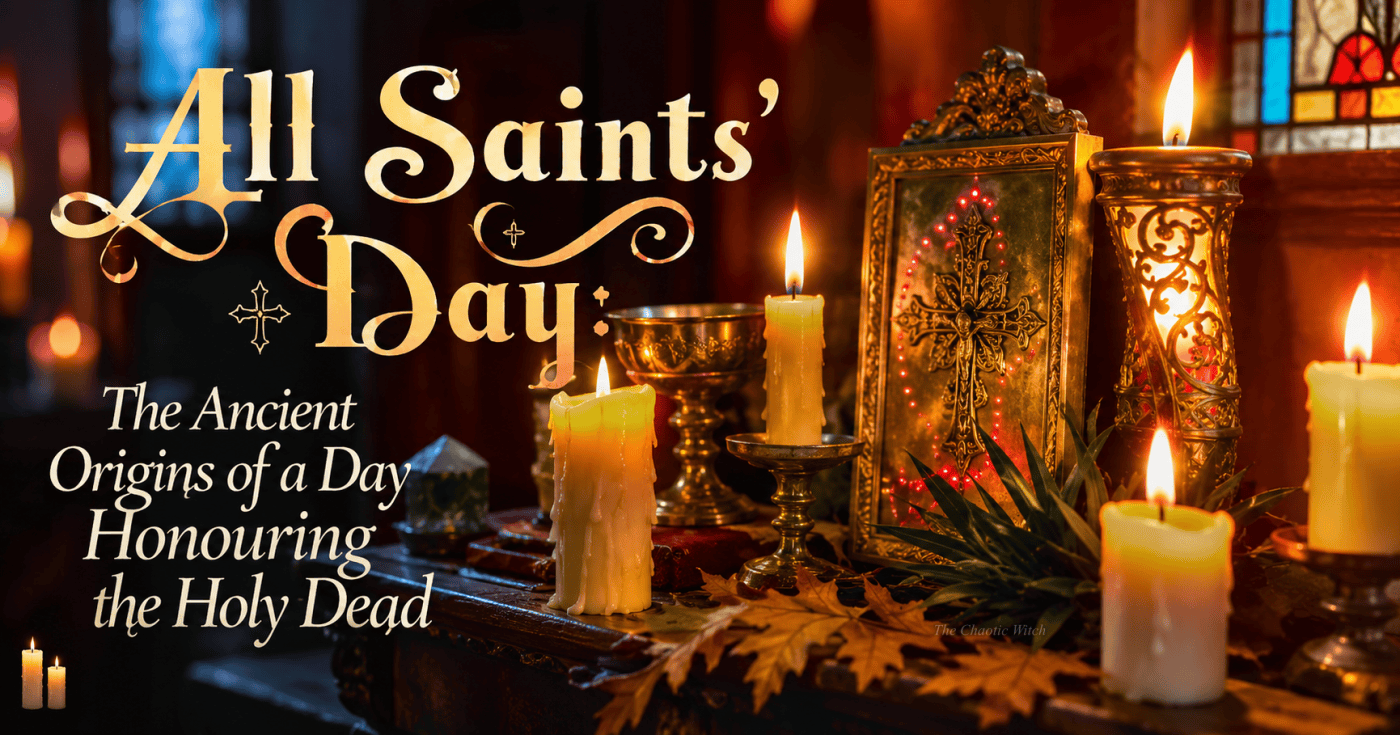
Every year on November 1, Christians around the world observe All Saints’ Day, a sacred occasion dedicated to remembering and honouring the saints, both known and unknown. Also called All Hallows’ Day or Hallowmas, the celebration has roots stretching back more than 1,600 years, long before Halloween developed into the holiday we recognize today.
Its history is a fascinating combination of early Christian remembrance, medieval religious traditions, and the changing spiritual customs of Europe.
The Earliest Beginnings: Remembering the Martyrs
The origins of All Saints’ Day can be traced to the earliest centuries of Christianity, when followers of the faith gathered to commemorate those who had died because of their religious beliefs.
During periods of Roman persecution, particularly under Emperor Diocletian in the late third and early fourth centuries, many Christians were executed for refusing to renounce their faith. These individuals became known as martyrs, and their deaths were remembered through prayers, gatherings, and annual commemorations.
Initially, individual martyrs were honoured on the anniversaries of their deaths. However, as the number of recognized martyrs grew, Christian communities began establishing collective days of remembrance.
By the fourth century, churches in parts of the eastern Roman Empire were observing celebrations honouring all martyrs. Some communities held these commemorations around Pentecost, a tradition that survives in Eastern Orthodox Christianity today.
These early observances eventually developed into the broader celebration of all saints, including those whose names had been forgotten by history.
The Pantheon and the First Roman Celebration
An important development occurred on May 13, 609 or 610, when Pope Boniface IV transformed Rome’s ancient Pantheon into a Christian church dedicated to the Virgin Mary and all Christian martyrs.
The Pantheon had originally been constructed as a Roman religious monument, and its conversion symbolized the growing influence of Christianity throughout the former Roman Empire.
The dedication became associated with an annual commemoration of the martyrs on May 13.
This event is often described as a significant predecessor of the modern All Saints’ Day, although historians caution that the development of the feast was more complicated than a single founding event.
Why Was All Saints’ Day Moved to November 1?
During the eighth century, Pope Gregory III, who served from 731 to 741, established a chapel in St. Peter’s Basilica dedicated to the saints.
The November 1 celebration became associated with this development, although the precise circumstances surrounding the selection of the date remain debated.
By the late eighth century, the feast was already being observed on November 1 in parts of Europe.
During the ninth century, Pope Gregory IV supported its wider adoption. In 835, Emperor Louis the Pious established the November observance throughout the Frankish Empire, helping standardize the celebration across much of Western Christianity.
Over time, November 1 became the established date for All Saints’ Day in the Western Church.
The Connection to Samhain and Ancient Celtic Traditions
One of the most intriguing aspects of All Saints’ Day is its proximity to Samhain, the ancient Gaelic seasonal festival associated with the end of the harvest and the beginning of winter.
Samhain was traditionally observed around the transition from October into November. In later folklore, this seasonal boundary became associated with spirits, supernatural encounters, and the belief that the separation between the living and the dead was unusually thin.
As Christianity spread through Ireland and Britain, older seasonal customs and Christian religious observances increasingly existed alongside one another.
Some popular histories suggest that the Church deliberately placed All Saints’ Day on November 1 to replace Samhain with a Christian celebration.
However, there is no conclusive historical evidence that replacing Samhain was the reason November 1 was selected. Modern scholarship indicates that the Christian feast had its own longstanding history and that the November observance was established in parts of Europe before its wider ninth-century adoption.
Nevertheless, the proximity of these celebrations helped create a fascinating mixture of religious and folk traditions surrounding the dead, remembrance, and the supernatural.
From All Hallows’ Eve to Halloween
In medieval England, saints were often called hallows, meaning holy people. All Saints’ Day consequently became known as All Hallows’ Day.
The evening preceding it was called All Hallows’ Eve, which eventually became Halloween.
The three consecutive dates developed distinct meanings within Western Christianity:
- October 31 — All Hallows’ Eve, the vigil preceding All Saints’ Day.
- November 1 — All Saints’ Day, honouring all saints, recognized and unrecognized.
- November 2 — All Souls’ Day, dedicated to prayer and remembrance for the faithful departed.
Together, these observances are sometimes called Allhallowtide.
During the Middle Ages, communities marked the season with church services, candlelight, bells, prayers, and visits to burial grounds.
In some regions, people also practised souling, travelling from house to house requesting food in exchange for prayers for the dead. Such customs contributed to the broader history of Halloween traditions.
The Spiritual Meaning of All Saints’ Day
At its heart, All Saints’ Day celebrates the belief that holiness is not limited to famous religious figures.
The feast honours both officially recognized saints and countless individuals whose lives of faith, kindness, courage, and sacrifice may never have been recorded.
Within Catholic tradition, the celebration emphasizes the communion of saints, the spiritual unity of believers on earth with those who have entered heaven.
The day is also observed in Anglican, Lutheran, and other Christian traditions, although customs and theological interpretations vary.
Eastern Orthodox Christians generally celebrate All Saints on the first Sunday after Pentecost rather than November 1.
All Saints’ Day in Folklore and Folk Magic
Beyond its formal Christian meaning, the season surrounding All Saints’ Day acquired additional significance in European folk traditions.
Because it coincided with the transition into winter and followed Halloween, the period became associated in some communities with remembrance, ancestral customs, household blessings, and stories about the dead.
Candles were lit in remembrance, graves were decorated with flowers, and food was sometimes shared or symbolically offered in connection with departed loved ones.
Some later folk-magic and contemporary spiritual practices draw upon these associations, incorporating ancestor altars, prayers for protection, and rituals seeking guidance from the deceased.
However, these customs should not all be understood as original practices of the Christian feast. Many developed in different places and periods, while others represent modern adaptations of older beliefs.
A Celebration That Has Endured for Centuries
What began as early Christian commemorations of martyrs gradually developed into a celebration embracing generations of holy people, both remembered and forgotten.
Although its customs have changed considerably over time, the central purpose of All Saints’ Day has remained remarkably consistent: to honour those who came before and recognize the enduring spiritual importance of their lives.
From the ancient churches of Rome to candlelit cemeteries and modern religious services, November 1 continues to connect the living with the memory of those who have passed.
All Saints’ Day reminds us that remembrance can extend beyond names recorded in history, and that the influence of a life may endure long after that life has ended.
Sources: Encyclopaedia Britannica, historical entries on All Saints’ Day; Catholic Encyclopedia, “All Saints’ Day”; English Heritage, “A Brief History of Halloween, All Saints’ Day and All Souls’ Day”; University of Toronto, Department for the Study of Religion, “The Skeletons in Halloween’s Closet”; and Ronald Hutton, “The Celtic New Year and Feast of the Dead,” published in Folklore.
A little magic is always waiting. Subscribe and step inside the circle. 🖤🔮✨


Leave a Reply