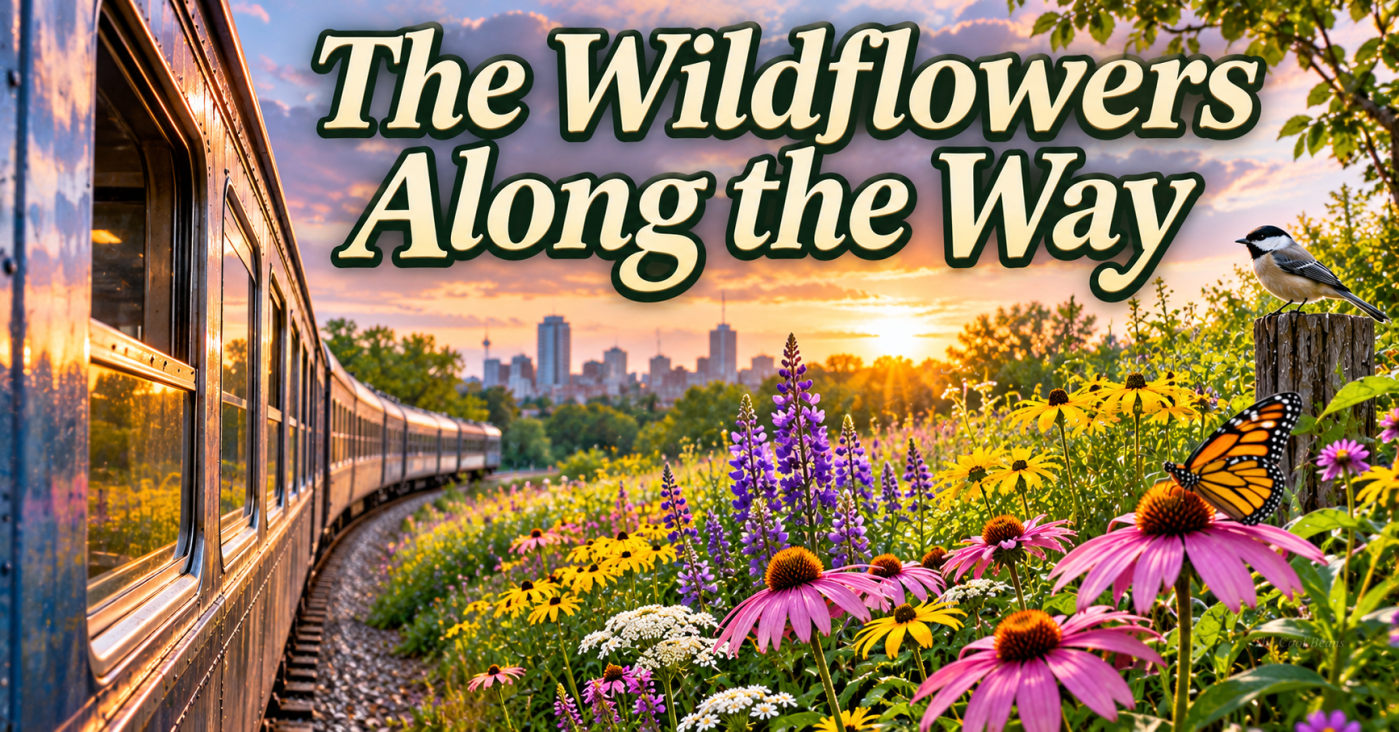
Every morning at 4:45, long before the first commuter train rattled through the sleeping city of Spangola, a man named Tyler Whitaker put on his faded navy-blue work jacket, poured coffee into a battered green thermos, and left his little brick house on Alder Street. He had followed the same routine for twenty-three years, working as a maintenance employee for the Spangola Transit Authority, and there was something comforting about the predictability of it all. The trains arrived, the trains departed, and Tyler made sure the stations and surrounding maintenance areas remained clean, safe, and orderly. He was fifty-eight years old, lived alone, and had developed the peculiar ability to move through a crowded city without attracting anyone’s attention.
Tyler wasn’t unfriendly. He simply didn’t have much to say. He greeted his colleagues politely, remembered birthdays when someone reminded him, and occasionally shared homemade biscuits with the overnight cleaning crew. But he preferred the company of quiet things. He liked the sound of rain against the station windows, the gentle hum of electrical equipment before dawn, and the brief moments when an empty platform belonged entirely to him. Most people assumed he was content with his solitary existence, and for the most part, they were right. What nobody knew was that Tyler carried a secret in the bottom of his work bag, tucked beneath his lunch and a spare pair of gloves.
It was a small cotton pouch filled with little brown balls of clay, compost, and native wildflower seeds.
The idea had begun the previous autumn, when Tyler was standing on the platform at Briar Street Station, watching the first morning train disappear around a bend. The railway ran through some of Spangola’s oldest industrial neighbourhoods, passing abandoned factories, concrete retaining walls, rusting fences, and long stretches of barren ground. Decades of construction and neglect had left much of the surrounding landscape looking tired and lifeless. In summer, heat shimmered above the gravel. In winter, the entire route seemed to disappear beneath a blanket of gray. Even spring arrived reluctantly, bringing little more than stubborn weeds and the occasional dandelion struggling through compacted soil.
Tyler had spent thousands of hours looking at those same stretches of forgotten earth. Yet on that particular morning, he noticed something different. Beside a drainage culvert, safely beyond the tracks, a single purple flower had emerged from a patch of dirt that seemed incapable of supporting anything beautiful. It was small and slightly battered, its petals trembling in the wind created by passing trains. Tyler stood watching it for several minutes, fascinated by the simple fact that something so delicate had managed to survive in such an unforgiving place.
The flower reminded him of his late wife, Maggie.
Maggie had been a primary school librarian with an extraordinary love of gardening. She believed that flowers were one of life’s most generous gifts because they offered beauty without asking anything in return. Their backyard had once been a riot of colour, filled with native asters, black-eyed Susans, wild bergamot, milkweed, and goldenrod. Butterflies visited throughout the summer, bees moved lazily among the blossoms, and birds gathered in the shrubs along the fence. Maggie could identify almost every plant by its leaves, and she had a habit of rescuing neglected flowers from clearance racks at garden centres, insisting that everyone deserved a second chance.
When Maggie died four years earlier, Tyler had struggled to maintain the garden. He watered the plants and pulled the occasional weed, but the joy had gone out of it. Eventually, the beds became overgrown, and he stopped spending much time outside. He told himself he was simply getting older and had less energy for gardening, although he knew the truth was considerably more complicated. The garden had been Maggie’s favourite place, and without her, it sometimes felt unbearably quiet.
That evening, after seeing the little purple flower beside the railway, Tyler went into the garden shed for the first time in months. He found Maggie’s old seed tins stacked on a wooden shelf, each labelled in her careful handwriting. Some contained seeds she had collected from their garden, while others held unopened packets from local native-plant nurseries. Beneath them was a gardening magazine with an article about seed balls, small mixtures of clay and growing material designed to hold seeds together until conditions allowed them to germinate.
Tyler sat at the kitchen table reading the article, remembering how Maggie used to talk about bringing nature back into cities. She had once told him that people spent so much time trying to make urban spaces tidy that they sometimes forgot to leave room for anything wild. She had dreamed of turning vacant lots into wildflower meadows and planting native shrubs beside bus stops, where people could enjoy a little colour while waiting for their ride.
By midnight, Tyler had made his first batch of seed balls.
They were uneven, slightly lumpy, and considerably less attractive than the examples in the magazine. He had researched which of Maggie’s seeds belonged to species native to the Spangola region, and he carefully avoided anything that might spread aggressively or interfere with railway operations. He had no grand plan, no intention of becoming an environmental activist, and certainly no desire to attract public attention. He simply wanted to see whether a few flowers might grow in the neglected dirt patches beside the route he travelled every day.
Over the following weeks, Tyler began quietly placing the seed balls in suitable bare patches along the railway’s outer maintenance grounds during his authorized rounds. He kept well away from the tracks, signals, drainage equipment, and other operational areas. He knew the railway’s safety rules better than almost anyone, and he would never have considered interfering with the trains. The patches he chose were small, forgotten corners where the soil was exposed and nothing seemed to grow. He didn’t tell his colleagues what he was doing, partly because he suspected the transit authority would have questions, but mostly because he wasn’t sure anything would come of it.
Winter arrived before he saw a single sprout.
Snow covered the railway embankments, freezing rain glazed the station windows, and the commuters of Spangola continued their daily journeys with their heads lowered against the wind. Tyler went about his work as usual, sweeping platforms, inspecting maintenance areas, and sharing occasional conversations with the overnight staff. Sometimes he wondered whether the seeds had washed away, been eaten by birds, or simply failed to germinate. He knew that wildflowers were not guaranteed to grow merely because someone wanted them to. They needed suitable soil, moisture, sunlight, and a little luck.
By February, he had almost forgotten about his secret project.
Then came the first warm days of April.
One morning, while checking a maintenance access path near the old Riverside Station, Tyler noticed a cluster of tiny green shoots emerging from a patch of dark soil. At first, he assumed they were ordinary weeds. But when he crouched to examine them, he recognized the distinctive young leaves of a native wildflower he had planted months earlier. A few metres away, another cluster had appeared, followed by several more near the edge of the embankment.
Tyler remained crouched beside the plants for so long that his knees began to ache.
He had spent years moving through the city without expecting anything particularly wonderful to happen. Yet there, beside a noisy railway, something he had placed in the ground months earlier had quietly begun to grow.
He smiled.
It was a small smile, barely noticeable beneath his gray moustache, but it was the first genuinely happy expression he had worn in quite some time.
The flowers arrived slowly. Some seed balls never produced anything, while others gave rise to delicate clusters of greenery. By late May, a few patches of golden alexanders were blooming near the station’s outer fence, their tiny yellow flowers bright against the dull surroundings. Wild columbines appeared in a sheltered corner where the soil remained moist, and young black-eyed Susans began developing their leaves. The plants were scattered and uneven, hardly enough to transform the railway, but to Tyler, they were magnificent.
He began carrying a small notebook in his pocket, recording where the plants appeared and which species seemed to thrive. He noted rainfall, sunlight, and the condition of the soil, gradually realizing that some locations were much better suited to wildflowers than others. He also discovered that compacted ground and old construction debris prevented many seeds from establishing themselves. Maggie would have known that, he thought with a faint smile. She had always insisted that healthy soil was the beginning of a healthy garden.
By June, the first commuters began noticing the flowers.
A young nurse named Wren Carson was among them. She rode the 7:12 train every morning after finishing an overnight shift at Spangola General Hospital. Most days, she was exhausted by the time she reached the station, and the journey home was little more than a blur of concrete buildings and passing traffic. But one morning, as the train slowed near Riverside, she noticed a brilliant patch of yellow flowers growing along the embankment.
The following day, she looked for them again.
A week later, she spotted purple blossoms farther along the route, followed by another cluster of yellow flowers near an abandoned warehouse. She began choosing a window seat on the same side of the train, curious to see what might appear next. Before long, she was taking photographs and sharing them with her friends.
“Something beautiful is happening along the Gray Line,” she wrote beneath one photograph. “I don’t know who’s responsible, but I hope they keep going.”
Her post attracted a surprising amount of attention.
Other commuters began sharing their own photographs. A university student posted a picture of a butterfly resting on a flower beside the railway. A retired teacher photographed a cluster of black-eyed Susans near the old freight depot. Someone created a social media page called Flowers on the Gray Line, inviting passengers to share sightings and identify the plants appearing along their daily journeys.
Tyler knew nothing about any of this until a colleague showed him a photograph during their lunch break.
“Have you seen these?” asked Darryl Price, a cheerful maintenance supervisor who had worked alongside Tyler for nearly fifteen years. “Apparently someone’s been planting flowers along the railway. People are going mad over them.”
Tyler nearly choked on his sandwich.
Darryl scrolled through the photographs, laughing at the comments. Some passengers believed the flowers were part of a secret municipal beautification project. Others suggested that a local gardening club was responsible. One person proposed that the city had hired a landscape designer to improve the route before an upcoming tourism campaign.
“Whoever did it must have a lot of spare time,” Darryl remarked.
Tyler took a careful sip of coffee.
“Maybe they just like flowers.”
Darryl shrugged. “Well, I hope they keep at it. Makes the place look less miserable.”
Tyler said nothing more, but he carried those words with him for the rest of the day.
That summer, the flowers multiplied.
Butterfly milkweed produced brilliant orange blooms, black-eyed Susans opened their cheerful yellow faces toward the sun, and wild bergamot attracted bees and butterflies to the warmer sections of the embankment. Tyler began noticing small changes in the landscape beyond the flowers themselves. Birds perched on nearby fences, insects moved among the blossoms, and the once-barren patches seemed less forgotten. The plants weren’t transforming the entire railway overnight, but they were creating small pockets of life in places that had previously offered little shelter or food.
The commuters responded with an enthusiasm Tyler had never anticipated.
People began looking up from their phones as the trains approached the flowering sections. Children pressed their faces against the windows, searching for butterflies. Elderly passengers pointed out the blossoms to strangers, and office workers who had spent years ignoring the scenery began discussing which flowers might appear next. A local artist started sketching the railway meadows, while a photography club organized an exhibition featuring images taken from train windows.
One particularly memorable photograph showed an elderly woman smiling through a train window as a field of yellow flowers blurred past behind her. The photographer titled it “The Commute That Finally Made Her Smile.”
Tyler printed a copy and pinned it above his kitchen table.
For the first time in years, he began looking forward to the next season.
But the little project nearly ended in August.
A maintenance contractor arrived to clear vegetation along several sections of the railway corridor. The work was necessary to maintain visibility, access, and safe operations, but Tyler watched with dismay as machinery cut through one of his most successful flower patches. By the end of the afternoon, the yellow blossoms were gone, leaving only flattened stems and exposed soil.
He understood why the work had been done. Railway safety could not be compromised for the sake of flowers, no matter how beautiful they were. Still, the loss hurt more than he expected. He had spent months watching those plants grow, and seeing them disappear in a single afternoon made him wonder whether his efforts had been foolish.
That evening, Tyler sat at his kitchen table staring at the photograph of the smiling commuter. He considered putting the remaining seeds back in the shed and forgetting the entire experiment. Perhaps the railway simply wasn’t the right place for wildflowers. Perhaps Maggie’s dream of bringing nature into neglected spaces had been too idealistic for a city governed by maintenance schedules, budgets, and regulations.
Then he noticed a letter lying beside his front door.
It was from Wren Carson.
She had somehow learned that Tyler was one of the maintenance workers responsible for the Riverside section of the line, and she wanted to thank the staff for keeping the stations clean and the surrounding areas pleasant. She mentioned the flowers specifically, explaining that they had become a small but meaningful part of her journey home after difficult hospital shifts.
“I don’t know whether the transit authority planted them,” she wrote, “but I wanted someone to know how much they matter. Some mornings, after a particularly hard night, those flowers are the first beautiful thing I see. They remind me that even in the middle of a busy, exhausted city, life keeps finding ways to surprise us.”
Tyler read the letter three times.
Then he went into the shed and found Maggie’s old gardening notebook.
The next morning, he asked Darryl whether they could speak privately.
Darryl listened without interrupting as Tyler explained everything: the seed balls, the neglected patches, the flowers, and the small secret he had been keeping for nearly a year. Tyler expected a reprimand. He knew he should have sought approval before introducing plants to transit property, and he was prepared to accept whatever consequences followed.
Instead, Darryl stared at him for several seconds before bursting into laughter.
“You?” he exclaimed. “You’re the mysterious flower person?”
Tyler looked embarrassed. “I suppose so.”
Darryl shook his head in disbelief. “The whole city has been trying to figure out who’s responsible, and it’s been you all along?”
When he finally stopped laughing, Darryl became more serious. He explained that planting on railway property without approval was a problem, even with good intentions. Certain areas had to remain clear, and plants needed to be selected carefully to avoid interfering with infrastructure or maintenance. But he also admitted that the public response had been extraordinary.
“Maybe,” Darryl suggested, “we should find a way to do this properly.”
Within two weeks, Tyler found himself sitting in a conference room at transit headquarters, facing a collection of officials, environmental planners, and maintenance supervisors. He had never been comfortable speaking in meetings, and the thought of explaining his secret gardening project to a room full of professionals made him deeply nervous.
He brought his notebook anyway.
Tyler described the patches where the flowers had grown, the species that had succeeded, and the areas where the soil was too poor to support much vegetation. He explained that the project had begun as a personal experiment and acknowledged that he should have requested permission. Then he showed them photographs of the commuters enjoying the flowers.
The room grew quiet.
One of the environmental planners, a woman named Dr. Leila Morgan, studied the photographs with obvious interest. She explained that carefully designed native-plant corridors could provide valuable habitat for pollinators while improving the appearance of urban infrastructure. The idea was not new, she said, but Tyler had demonstrated something important: people were paying attention.
The transit authority agreed to investigate whether a formal planting program could be established along suitable sections of the Gray Line. The plan would require soil assessments, carefully selected native species, clearly defined maintenance zones, and cooperation between the environmental and operations departments. Some areas would remain completely clear for safety, while others could potentially support wildflowers and low-growing native vegetation.
Tyler could hardly believe what he was hearing.
His little secret was becoming an official project.
The following spring, Spangola Transit launched the Gray Line Wildflower Corridor Initiative. Local environmental organizations, native-plant nurseries, schools, and community volunteers were invited to participate. The city provided funding for soil improvements and approved planting areas, while transit staff worked with ecologists to establish a maintenance schedule that would protect both railway operations and the developing habitat.
Tyler was asked to serve as the project’s community ambassador.
He immediately tried to decline.
“I’m not much of a public speaker,” he explained.
Dr. Morgan smiled. “You don’t have to be. You just have to tell people why you started.”
Tyler considered that for a moment.
Then he agreed.
The first official planting day attracted more than three hundred volunteers. Families arrived carrying gloves and water bottles, local gardening groups brought native plants, and schoolchildren helped prepare approved planting beds under supervision. Wren Carson attended with several colleagues from the hospital, and Darryl spent most of the morning enthusiastically telling everyone that he had worked beside Spangola’s mysterious gardener for years without suspecting a thing.
Tyler moved quietly among the volunteers, showing children how to handle young plants and explaining why native wildflowers were important to bees, butterflies, and other insects. He was surprised to discover that speaking about plants felt much easier than speaking about himself. When a little girl asked whether the flowers would attract butterflies, he crouched beside her and explained that some native plants served as food for caterpillars, while others provided nectar for adult butterflies.
The girl considered this information carefully.
“So we’re making a restaurant for butterflies?”
Tyler smiled. “Something like that.”
By the end of the day, thousands of native wildflowers and grasses had been planted in carefully selected sections of the railway corridor. The work was only the beginning, and everyone understood that the plants would need time to establish themselves. But the transformation had started.
Over the next three years, the Gray Line became one of Spangola’s most beloved features.
In early spring, fresh greenery emerged along the embankments, followed by delicate blossoms that signalled the end of winter. By summer, great stretches of the approved planting areas glowed with yellow black-eyed Susans, orange butterfly milkweed, and soft purple wild bergamot. Bees moved among the flowers, butterflies drifted above the vegetation, and birds gathered wherever seeds and insects were plentiful.
Autumn brought another transformation. Goldenrod brightened the railway corridor, while native asters produced clouds of purple and blue blossoms. Even as the days grew shorter and the city prepared for winter, the route remained alive with colour. When the flowers finally faded, their seed heads and dried stems provided texture and seasonal habitat, turning the landscape into something beautiful in an entirely different way.
The Gray Line had once been known as Spangola’s dreariest commute.
Now people deliberately chose it for the scenery.
Tourists rode the line to see the flowers, photographers gathered at public viewpoints, and local businesses began decorating their windows with wildflower displays. A neighbourhood café introduced a drink called the Gray Line Garden Latte, while a bakery created a series of flower-shaped biscuits that sold out almost every morning.
But Tyler’s favourite changes were the smallest ones.
He liked watching children search for butterflies through the train windows. He liked seeing tired commuters smile when the first flowers appeared each spring. He liked hearing strangers discuss the seasons, the weather, and the different birds they had spotted along the route.
Most of all, he liked knowing that people were noticing things they had once passed without a second glance.
The project also changed Tyler’s own life in ways he hadn’t expected.
He began spending more time in his backyard, restoring Maggie’s old garden one bed at a time. He planted new milkweed, divided the asters, and replaced the worn wooden edging around the flowerbeds. Neighbours stopped to ask questions, and before long, Tyler found himself offering gardening advice over the fence. He joined a local native-plant society, attended community events, and occasionally invited colleagues over for coffee beneath the old apple tree.
His house, once painfully quiet, gradually became a place where people gathered.
One Saturday afternoon, Wren arrived with a small group of hospital volunteers who wanted to help establish a pollinator garden outside the hospital’s rehabilitation wing. Tyler showed them Maggie’s seed collection and explained which plants might work best in the available space. By the end of the visit, they had developed a plan for a garden where patients, visitors, and staff could enjoy a little beauty during difficult days.
As Wren prepared to leave, she paused beside the kitchen table and noticed the framed photograph of Maggie.
“Was she your wife?” she asked.
Tyler nodded.
“She loved flowers,” he said. “More than anyone I’ve ever known.”
Wren studied the photograph for a moment.
“She would have loved what you’ve done.”
Tyler looked through the window toward the garden, where bees moved among the blossoms.
“I think she would,” he replied softly.
The following year, the transit authority announced plans to install a small commemorative sign at Riverside Station, recognizing the origins of the Gray Line Wildflower Corridor. Tyler was invited to attend the unveiling, along with city officials, environmental volunteers, and several local school groups.
He arrived wearing his usual navy-blue work jacket, freshly washed and carefully pressed. Darryl had suggested that he wear a suit, but Tyler refused. He had spent his entire working life in that jacket, and he saw no reason to dress differently simply because people had decided to make a fuss over him.
The station platform was decorated with photographs showing the railway before and after the planting program. In the older pictures, the corridor appeared bleak and colourless, its embankments covered with gravel and compacted dirt. The newer images showed a landscape transformed by native flowers, grasses, and the insects and birds they supported.
When the mayor invited Tyler to speak, he approached the microphone with visible reluctance.
He looked at the crowd, then toward the railway, where a train was approaching through a broad ribbon of summer flowers.
“I don’t really know what to say,” he began, prompting a ripple of gentle laughter. “I never intended for any of this to happen. I just saw some empty ground and thought it might be nice if something grew there.”
He paused, searching for the right words.
“My wife used to say that people were always waiting for the perfect time to do something good. She said there was no such thing as a perfect time. You just had to start somewhere, even if it was something small.”
Tyler looked down at his hands.
“When she died, I stopped noticing a lot of things. I went to work, came home, and did the same thing the next day. I suppose I thought that was how the rest of my life would be.”
The crowd grew quiet.
“Then one morning, I saw a little flower growing beside the railway. It reminded me of her. So I planted a few more. I didn’t think anyone would notice.”
He looked toward the wildflowers moving gently in the breeze.
“But people did notice. And then they helped. And now there are flowers all along the route.”
Tyler cleared his throat.
“I guess what I’m trying to say is that sometimes you don’t know how much good a small thing might do. You just have to give it a chance to grow.”
The applause lasted longer than he expected.
When the commemorative sign was unveiled, Tyler discovered that the transit authority had included a dedication beneath the project’s name.
It read:
The Maggie Whitaker Wildflower Corridor
In memory of a woman who believed that every forgotten place deserved a little beauty.
Tyler stared at the sign, unable to speak.
Darryl stood beside him, smiling.
“We thought she should be part of it,” he said quietly.
Tyler reached out and touched the edge of the plaque.
For several moments, he could only nod.
Years passed, and Tyler eventually retired from the transit authority after nearly three decades of service. His colleagues organized a farewell party, presenting him with a framed photograph of the Gray Line in full summer bloom. Someone had also given him a small wooden box filled with packets of native wildflower seeds, each labelled with a handwritten message from a coworker.
Tyler laughed when he opened it.
“You’re not expecting me to plant another railway, are you?”
Darryl grinned. “We thought we’d give you something to keep you busy.”
Retirement suited Tyler better than he had expected. He spent mornings tending his garden, volunteered at a local environmental education centre, and occasionally visited schools to talk about native plants and urban wildlife. He discovered that children were particularly interested in the story of how a handful of seeds had helped transform a railway corridor. They asked whether he had used magic, whether the flowers had grown overnight, and whether he had ever seen a butterfly riding on a train.
Tyler answered every question with the same patient good humour Maggie had once shown her library students.
But once a week, he returned to the Gray Line.
He would board the 10:15 train at Alder Street, find a window seat, and ride the entire route without any particular destination in mind. He liked watching the changing landscape and seeing how the plants matured from year to year. Some areas had developed into colourful meadows, while others remained smaller pockets of native vegetation. The railway still had its concrete walls, busy stations, and industrial buildings, but the flowers had softened the scenery and given the journey a rhythm of seasonal change.
One warm afternoon in June, Tyler boarded the train carrying his familiar green thermos. He found a seat beside the window and settled in as the carriage began moving through the city.
Across from him sat a little boy, perhaps six years old, accompanied by his grandmother. The child was staring through the window with enormous excitement, pointing whenever he spotted a new patch of flowers.
“Look, Grandma! Orange ones!”
His grandmother smiled. “Those are beautiful.”
“And purple ones! And yellow ones!”
The boy pressed his face closer to the glass as the train rounded a bend, revealing a long stretch of wildflowers glowing in the afternoon sunlight. Butterflies drifted above the blossoms, and a small bird disappeared into the greenery near the edge of the embankment.
“Grandma,” the boy asked, “who planted all those flowers?”
His grandmother considered the question.
“I heard it started with a man who worked on the trains,” she said. “Apparently, he planted a few flowers because he thought the railway looked sad.”
The boy turned away from the window.
“Just one man?”
“That’s what I heard.”
He looked back at the flowers, clearly astonished.
“Wow. He must have been really good at growing things.”
Tyler lowered his eyes to his thermos, trying to hide his smile.
The train continued through Spangola, passing old warehouses, apartment buildings, and busy streets. Beyond the windows, the wildflowers swayed in the warm breeze, their colours flowing together like ribbons of paint across the landscape.
The boy watched in silence for several minutes before turning to his grandmother again.
“I think when I grow up, I’m going to plant flowers everywhere.”
His grandmother laughed. “Everywhere?”
“Well, maybe not in the roads,” he admitted thoughtfully. “But all the sad places.”
Tyler felt something tighten gently in his chest.
He thought of Maggie kneeling in their garden, her hands covered in soil and her face bright with happiness. He thought of the first little purple flower beside the drainage culvert, the uneven seed balls drying on his kitchen table, and the tiny green shoots that had appeared after a long winter.
He remembered how lonely he had felt when he first began planting, and how little he had expected from the world.
Now, outside the train window, an entire landscape was blooming.
The boy leaned toward the glass again.
“Grandma, look! There’s a butterfly!”
Tyler followed his gaze.
A monarch butterfly was moving among the orange milkweed flowers, its delicate wings catching the sunlight. For a moment, it seemed to keep pace with the train before drifting away into the greenery.
Tyler smiled.
He had never told the little boy who he was, and he had no intention of doing so. The flowers belonged to the city now, to the people who rode the trains, to the volunteers who cared for them, and to the birds and insects that had found a home among their leaves.
That was exactly how he wanted it.
As the train approached Riverside Station, Tyler looked toward the commemorative sign bearing Maggie’s name. It stood beside a carefully maintained patch of wildflowers, surrounded by purple asters, golden blossoms, and young native grasses.
He could almost hear her voice.
“See, Tyler? All they needed was a little chance.”
He closed his eyes for a moment, letting the warmth of the afternoon sunlight fall across his face.
For years, he had believed that losing Maggie meant the most beautiful part of his life was behind him. He had imagined the future as an endless succession of quiet mornings, ordinary workdays, and evenings spent alone in a house that no longer felt quite like home.
But he had been wrong.
Beauty had returned in ways he could never have predicted. It had arrived in tiny green shoots, in the laughter of children, in the kindness of strangers, and in the extraordinary transformation of a place that thousands of people had stopped noticing.
It had arrived because one quiet man had looked at a forgotten stretch of earth and imagined something better.
And because he had been willing to begin with something small.
The train rolled onward, carrying its passengers through a city that was still noisy, crowded, and imperfect. People hurried to work, worried about bills, argued over ordinary frustrations, and carried private burdens that nobody else could see.
But along the Gray Line, there was something waiting for them.
Something beautiful.
Something alive.
Something that asked nothing of them except, perhaps, that they look up for a moment and remember that the world still held wonderful things.
And every spring, when the first wildflowers opened beside the railway, the city seemed to breathe a little easier.
Because sometimes the most extraordinary changes begin without speeches, grand plans, or anyone watching.
Sometimes they begin with a handful of seeds, a quiet act of hope, and someone who believes that even the saddest places deserve a chance to bloom.
Enjoying what you find here? 💜 Consider subscribing and becoming part of our little community. It’s a simple way to stay connected, support what we do, and make sure you don’t miss what’s coming next. We’d truly love to have you here. 🌿✨


Leave a Reply